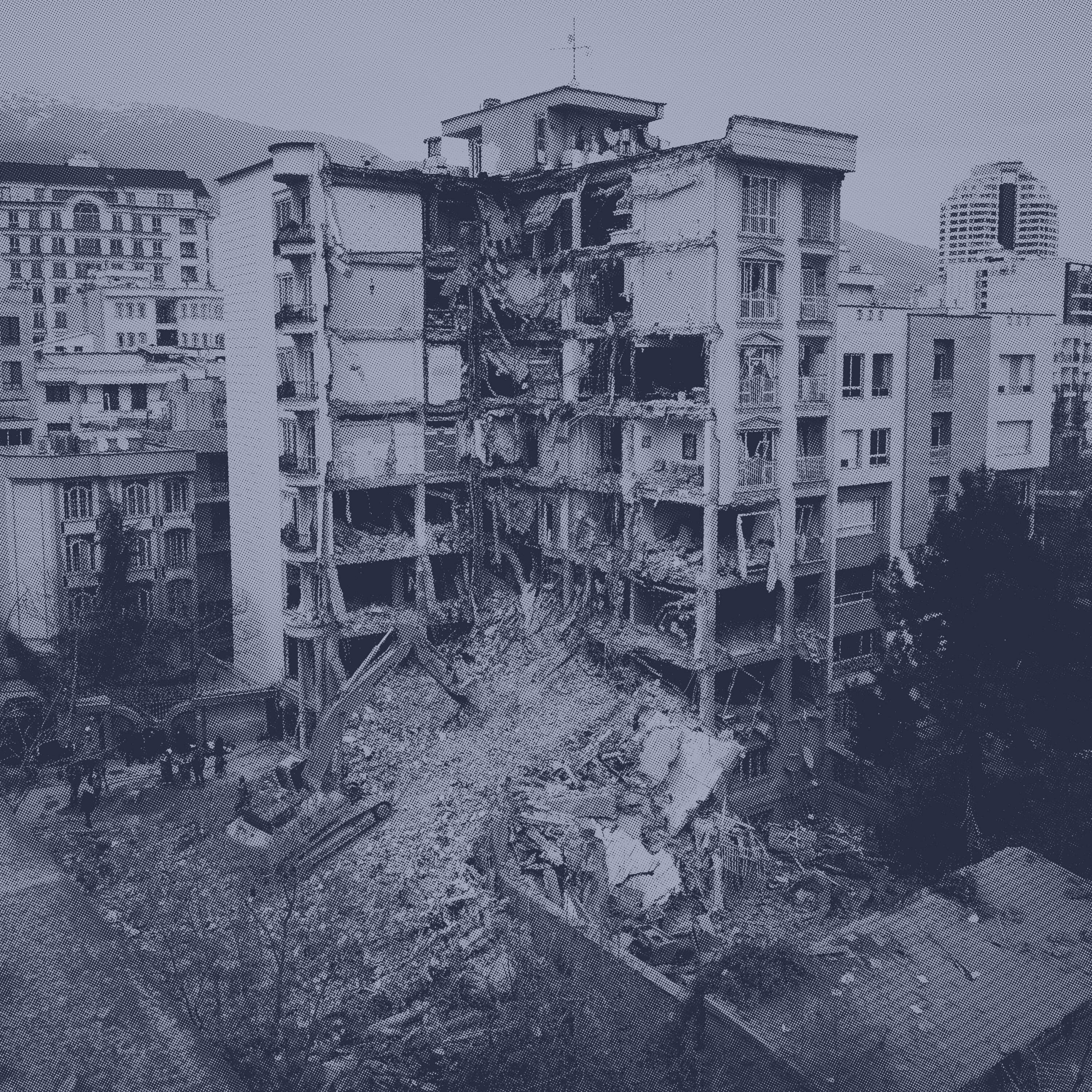
Overview of NPR Politics Podcast — "In Iran, Trump is both escalating and deescalating"
This episode (recorded March 25) features Miles Parks, Frank Ordonez, and Greg Myrie discussing the U.S.–Iran war about a month in. The hosts parse President Trump’s simultaneous public moves toward talks and continued military buildup in the region, the market and political pressures shaping his choices, and the regional consequences of the conflict.
Key takeaways
- President Trump signaled possible negotiations with Iran and announced a five‑day postponement of strikes on Iranian power plants, saying “very good and productive conversations” were underway.
- Trump claimed his envoys (mentioned as Steve Whitcoff and Jared Kushner in the episode) were in contact with a “top person in the regime” who had promised something involving oil and gas; Iran has officially denied direct negotiations with the U.S. and rejected dealing with those envoys.
- Markets reacted strongly to Trump’s de‑escalation signals: oil futures and equities moved on the news; domestic gasoline prices are rising and contributing to political pressure.
- At the same time, the U.S. is increasing forces in the region — roughly 6,000 additional troops (two Marine units and elements of the 82nd Airborne) — adding to an already substantial but not decisive U.S. presence.
- There appears to be no clear battlefield path to forcing Iranian capitulation; most analysts see negotiations as the likeliest route to an end, but both sides remain far apart on key demands.
- Regime‑change as a realistic U.S. goal has receded in rhetoric; Iran’s government and military are degraded but still functioning, so a quick collapse is unlikely.
- Gulf states (hereditary monarchies) strongly oppose the war’s instability; they fear being left vulnerable if the conflict ends without robust security guarantees.
Discussion detail
Trump’s mixed signals: de‑escalation + escalation
- De‑escalation: public suggestion of productive talks, postponement of planned strikes on power infrastructure, promises from a purported Iranian interlocutor (per Trump).
- Escalation: deployments of additional U.S. troops and continued military operations in the region; Trump has not categorically ruled out limited ground operations and keeps rhetorical flexibility.
Negotiations: who, where, how
- Unclear U.S. negotiating leads and venue. The podcast notes previous envoys have credibility problems with Iran due to earlier perceived betrayals.
- Intermediaries and regional partners (Pakistan and other actors) are mentioned as possible intermediaries to arrange indirect or near face‑to‑face talks.
- Core Iranian demands include guarantees against future U.S. attempts to topple the regime; the U.S. wants reopening of the Strait of Hormuz and degradation of Iranian military capabilities.
Military balance & operational limits
- U.S. troop additions are significant for specific missions but do not create a force large enough for a full‑scale ground invasion.
- Iran retains a large active force and asymmetric capabilities (missiles, drones, naval harassment of shipping) that give it time and leverage.
Regional fallout
- Gulf monarchies worry about the long‑term security, economic and reputational costs if the conflict ends without clear protections; their priority is stability.
- The Strait of Hormuz has become a central issue — reopening it would be politically valuable for the U.S. president to claim victory.
Notable quotes / framing points
- “He’s sort of chosen A and B — talking about a possible peace deal and a de‑escalation. But also...more troops are headed to the region.” — framing Trump’s dual approach as simultaneous escalation and de‑escalation.
- “An ‘off‑ramp’ is the phrase everyone uses — but this is not a minor inconvenience. We’re talking about a solution to a major conflict that will reshape the region.” — cautioning against minimizing the stakes.
What to watch next (actionable signals)
- Official confirmation or denial from Iran about direct talks and identification of any interlocutor.
- Any formal negotiations: who represents each side, venue, and whether intermediaries are used.
- U.S. troop movements and specific mission statements (e.g., operations focused on the Strait of Hormuz or limited island seizures).
- Market signals: oil futures, S&P reaction, and gasoline prices — these influence domestic political pressure on the U.S. administration.
- Positions and security guarantees from Gulf states — their stance will shape regional stability after any deal.
Transcript/citation caveats
- The provided transcript contains some likely misattributions and factual inconsistencies (e.g., names and institutional titles). For example, a “Steve Whitcoff” is mentioned as an envoy (this name may be a transcription variant), and a reference to “Tulsi Gabbard, the director of national intelligence” appears inaccurate. Treat individual names and some factual claims in the episode as reported assertions rather than independently verified facts.
- This summary focuses on the podcast’s arguments and reported developments; verify breaking factual details (lead negotiators, troop totals, and official Iranian statements) against primary news sources.