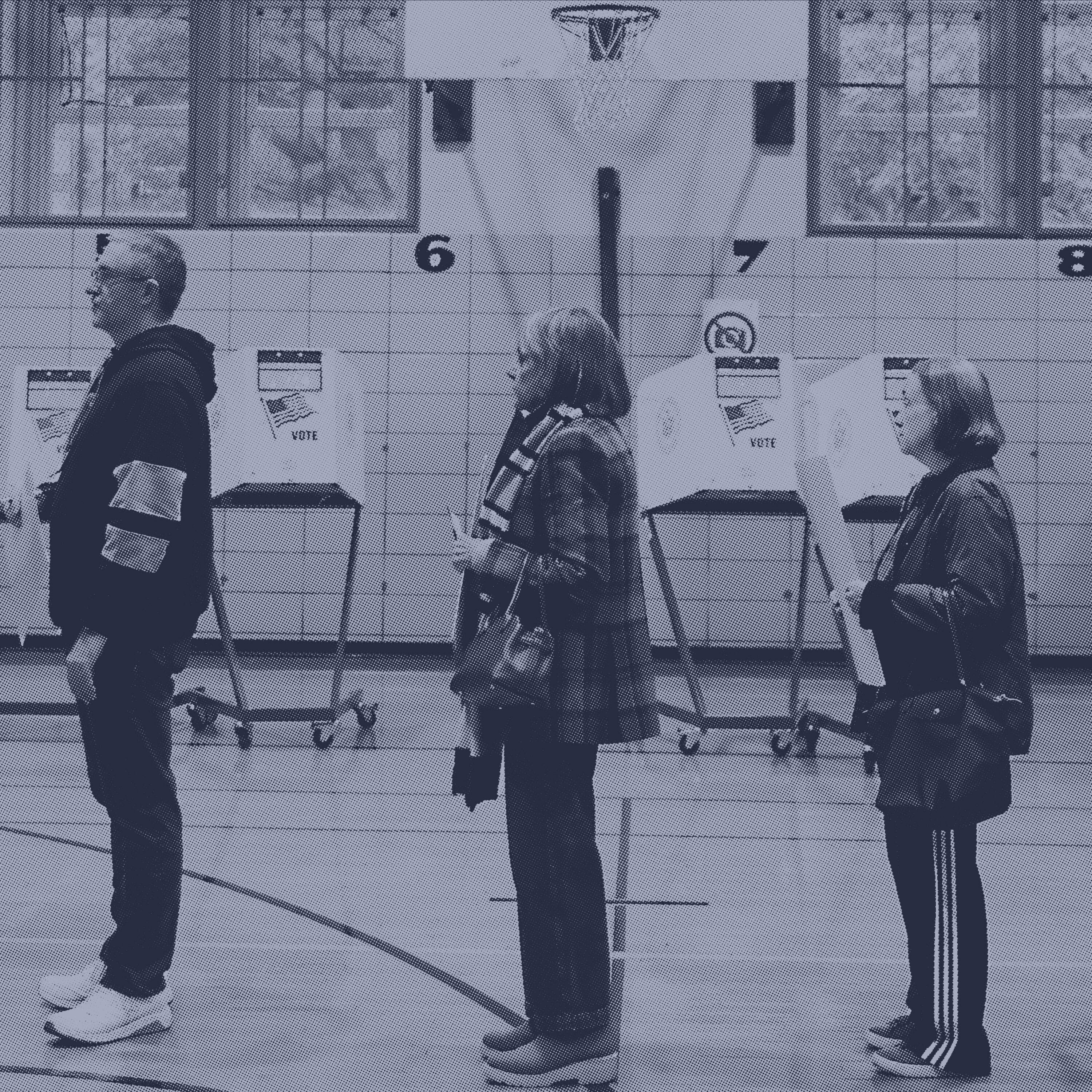
Overview of NPR Politics Podcast's pre-Election Day mailbag episode
In this episode of the NPR Politics Podcast, Tamara Keith, Ashley Lopez, and Domenico Montanaro answer listener questions heading into Election Day. The conversation covers why midterms can be as revealing as presidential elections, how reporters should think about flawed but useful polling, what a Congress controlled by Democrats could mean for presidential power, whether debates still matter, and which races and messages might preview the politics of 2028.
Midterms vs. presidential elections
The hosts generally agreed that presidential years get more attention, but midterms can be especially revealing.
Why presidential years stand out
- Presidential contests are more personal and more visible.
- Voters tend to focus on fewer races, making the stakes easier to follow.
- There’s more “wish-casting” in presidential elections: voters project hopes onto a new leader.
Why midterms still matter
- Midterms act like a report card on the president.
- They force attention on down-ballot races, especially House and Senate contests that often get overlooked.
- Reporters said midterms can surface unusual candidates, oddball campaigns, and local dynamics that don’t get much attention in presidential cycles.
Polls: useful, but not perfect
A listener asked how reporters can rely on polls when some have missed badly. The hosts emphasized that not all polls are equal.
Main takeaways on polling
- Good national polls can still be very informative.
- Pollsters have adapted to lower response rates by using multiple methods, including texts, online recruitment, and bilingual outreach.
- Horse-race precision is overrated; a poll with a 3-point margin of error should not be treated as exact.
- State polling is often messier than national polling, so source quality matters a lot.
- Polls are best used to show direction and trends, not as crystal balls.
Reporter’s role
- Polls provide the “what.”
- Reporting, interviews, and on-the-ground coverage help explain the “why.”
What happens if Democrats win Congress?
A listener asked how the executive branch would be affected if Democrats take the House, Senate, or both.
Likely effects
- Congress would become a stronger check on presidential power.
- Democrats would likely launch more oversight and investigations into executive actions.
- There could be renewed debate over whether impeachment inquiries are politically wise.
Broader political implications
- If Congress changes hands, the president may be forced to engage more directly with lawmakers.
- Much depends on whether Democrats choose a cautious strategy or pursue more aggressive legislative and investigative action.
- Bipartisan lawmaking would likely remain limited to issues with broad public support, such as certain AI-related guardrails.
Are political debates dead?
The hosts do not think debates are dead, though they may be changing.
What’s happening to debates
- There are fewer debates in some races.
- Campaigns increasingly rely on social media and direct-to-voter messaging instead of traditional media appearances.
- That shift may reduce the incentive to participate in debates.
Why debates still matter
- They can force candidates off talking points and onto the record.
- They remain an important democratic tool for testing candidates under pressure.
- The 2024 Biden-Trump debate was cited as proof that debates can still be historically consequential.
What to watch as a signal for 2028
The hosts discussed which 2026 midterm outcomes might hint at the shape of the next presidential race.
Candidate performance to watch
- John Ossoff in Georgia, as a potential national figure.
- Abdul El-Sayed in Michigan, as an example of a progressive candidate.
- A Michigan House race featuring a DSA-aligned candidate.
- Roy Cooper in North Carolina, as a benchmark for more moderate Democrats.
Strategic questions for both parties
- Which ideological lane performs best: progressive, moderate, or something in between?
- How much should Democrats lean into or distance themselves from national polarization?
- For Republicans, how strongly should candidates continue to align themselves with Trump?
Big-picture signal
- If Republicans underperform badly, the party may begin distancing itself from Trump sooner.
- If Democrats do well, it could strengthen a more moderate or issue-focused message heading into 2028.
Can't Let It Go
The episode ended with the hosts sharing the political and pop-culture stories they couldn’t stop thinking about.
Ashley Lopez
- She dug into a historical example of ballot-name trickery, connecting it to old-school political dirty tricks.
- Her favorite anecdote: John F. Kennedy’s father allegedly helped field a lookalike rival named Joe Russo in a 1946 race to confuse voters.
Tamara Keith
- She was excited about a new documentary on Elizabeth Holmes and Theranos, made by Nathan Fielder and Lance Oppenheim.
- She described it as surprising, funny, and deeply immersive, and said it doesn’t feel like a three-hour film.
Domenico Montanaro
- He couldn’t stop talking about Jay-Z headlining the Super Bowl halftime show.
- He jokingly compared it to a “Dick Cheney” move because Roc Nation has long worked with the NFL and Jay-Z effectively chose himself for the stage.
- He also noted the odd timing, given Jay-Z’s current cultural moment.
Bottom line
This episode is a listener-driven election preview that blends practical political analysis with lighter behind-the-scenes commentary. The core message: midterms matter not just for immediate control of government, but for how they shape the next presidential cycle, the behavior of Congress, and the future of both parties.