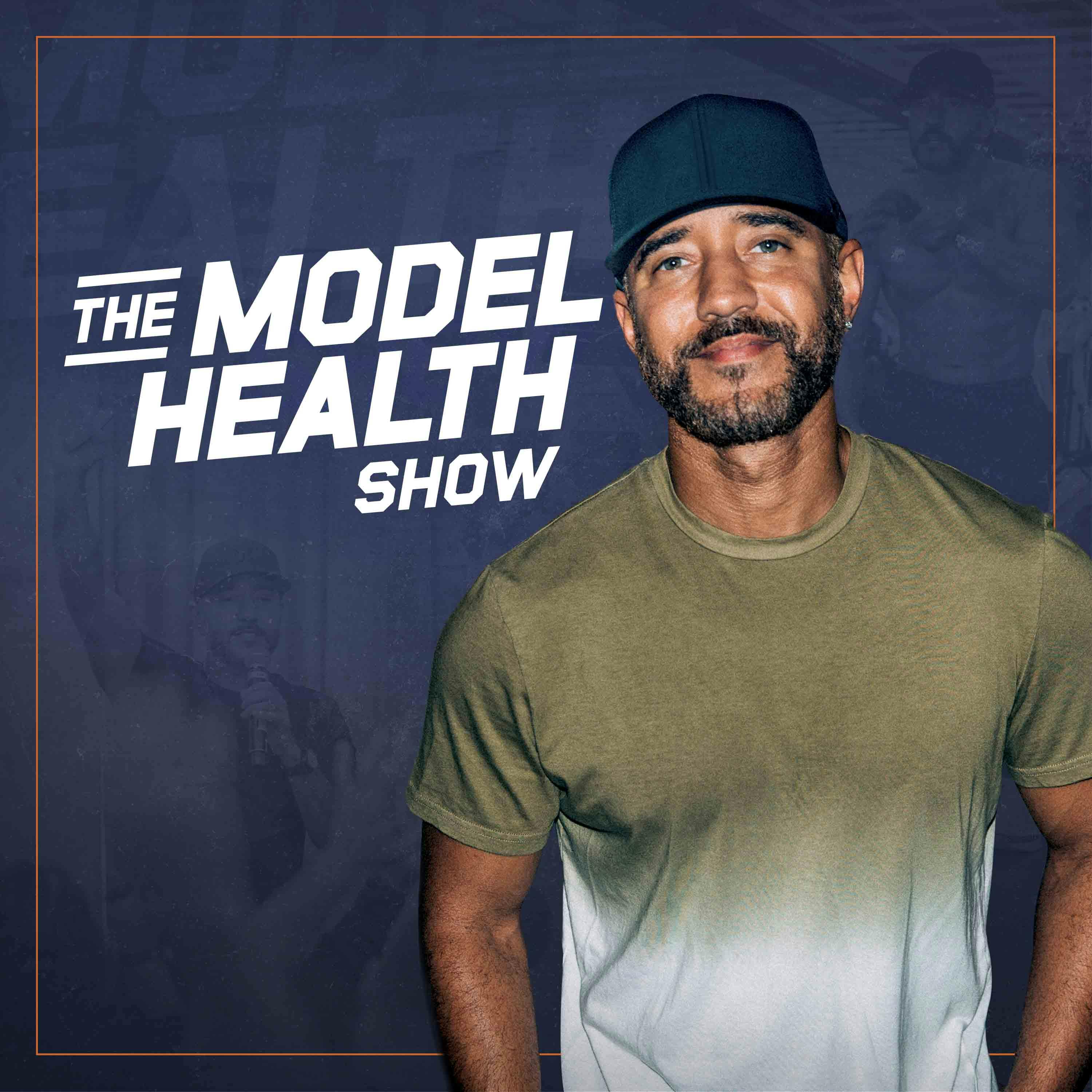
Overview of The Model Health Show — "The Truth About Burning Fat After 40 & Why Evidence‑Based Training Can Be Wrong" (with Jay Ferruggia)
This episode is a practial, experience-driven deep dive into fat loss after 40, recovery, and training programming. Coach Jay Ferruggia (30+ years, 10K+ client transformations) and Shawn Stevenson cover six often‑overlooked drivers of fat loss (the "Six S's"), why evidence-based rules can miss real‑world nuance, exercise sequencing for pain‑free performance, and concrete training guidelines for longevity and aesthetics.
Key takeaways
- Fat loss is not just "eat less, move more" — chronic stress, broken thyroid/metabolism, poor sleep, and inappropriate training intensity often block progress.
- Measure simple physiological markers (morning body temperature, vitamin D, sleep, electrolytes) to guide interventions.
- Sometimes the best strategy is "less is more": increase carbohydrate intake, reduce excessive high‑intensity training, prioritize sleep and recovery to reset metabolism.
- Evidence (studies) matters — but real‑world experience, individual response (N=1), and practitioner wisdom are equally important when training people with varied histories.
- Proper exercise sequencing, selection, and execution let you train heavy and hard while remaining pain‑free and durable.
- Small, consistent changes (stacking favorable conditions) produce the long‑term “fat‑proof” metabolism.
The Six S’s Jay Ferruggia emphasizes for fat loss and metabolic repair
- Stress — reduce chronic cortisol/adrenal load (lifestyle, schedule, workload).
- Saturated fat — short‑term inclusion of natural saturated fats (dairy, animal fats) can help increase metabolic heat and support hormone production; adjust long term per health context.
- Salt (sodium & electrolytes) — adequate salt (including iodized salt) improves hydration, performance, and reduces physiological stress when levels are too low.
- Sex (physical touch/connection) — physical contact reduces stress, improves mood and hormone balance.
- Sun (vitamin D, circadian entrainment) — morning sun exposure acts like a steroid hormone signal, improves sleep, immunity, mood, recovery.
- Sleep — essential for hormone optimization (testosterone, cortisol), recovery, and maintaining training performance.
Practical markers & tests to prioritize first
- Morning oral body temperature (target ~97.6–98.6°F). Low temperature often signals thyroid/downregulated metabolism and should be a first priority to address.
- Serum vitamin D (optimize via sunlight and supplement if needed).
- Basic bloodwork (thyroid panel, ferritin, lipid panel) but interpret with body temperature and clinical context.
- Sleep quantity/quality tracking (priority for anyone over 40).
- Electrolyte status/hydration (urine color: light yellow — good; clear may indicate over‑hydration/low sodium).
Nutrition guidance (practical, not dogmatic)
- If metabolism shows signs of being downregulated (low temp, persistent fatigue, stalled weight loss on low calories), increase calories—especially carbs—and reduce chronic fasting/high‑intensity work to restore thyroid & metabolic function.
- Use whole food saturated fat sources short term (meat, dairy) if you are cold/low‑temp. Transition to a Mediterranean‑style pattern long term if cardiovascular risk/family history indicates.
- Avoid over‑reliance on PUFA oils (processed seed oils) when trying to raise metabolic heat.
- Ensure sufficient iodine (iodized salt) if thyroid issues suspected.
Electrolytes & salt — why they matter
- Sodium and other electrolytes:
- Support nerve signaling & muscle contraction (prevent cramps).
- Maintain fluid balance and cognitive function.
- Improve endurance & exercise output.
- If you train and eat “cleaner,” supplement electrolytes intentionally (oral salt or quality electrolyte products). Consider iodized salt as a simple iodine source (if not contraindicated).
Training principles: pain‑free performance + aesthetics
- Prioritize joint health and recovery—“don’t break the athlete.” Adjust volume/intensity rather than smashing through high volume that wrecks hormones and joints.
- Four sessions/week is common for aesthetic/performance clients; can be five if volume is hacked intelligently.
- Use heavier loads and progressive overload, but with strict execution and controlled reps — form becomes non‑negotiable as we age.
- Prefer dumbbells, cables, machines and safer variations over risky barbell-only movements if joint or durability concerns exist.
- Pumping/meditative execution (mind‑muscle connection) matters: a properly executed pump can enhance muscle growth in stubborn areas like delts.
- Include enjoyable, bonding, and mentally challenging activities — adherence is key; fun matters.
Exercise sequencing rules (practical)
- Do prioritized, safer pre‑exhaust/pump work first for the target muscle (e.g., lateral & rear delt work before pressing).
- Sandwich priority muscle groups: pre‑fatigue them lightly, perform compound lifts safely, then finish with more isolation to maximize stimulus without injury.
- Example: To train shoulders safely — side/rear fly variations → chest work (if required) → overhead press at an incline/safer angle → finish with laterals.
- For legs: activate hamstrings/glutes before squats to improve hip/knee mechanics and reduce joint stress.
Programming guideline: sets vs. sleeps (simple rules to manage recovery)
- Match sets per body part to recovery time (measured in sleeps):
- 2 sleeps (48 hrs): 1–3 sets per body part
- 3 sleeps: ~3–5 sets
- 4 sleeps: ~6–8 sets (max)
- Consider exercise type: single‑joint vs compound, intensity (rep to failure vs shy), and individual recovery capacity.
- Body part frequency: train each body part every 3–4 sleeps (i.e., ~2x/week) is a good default for many people.
- Adjust for age, stress, travel, sleep, and other life factors.
Top‑5 exercise lists (Jay’s choices — practical & durable)
- Upper body:
- Incline dumbbell press
- Neutral‑grip chin‑up
- Chest‑supported row
- Lateral raise (for delts)
- Standing dumbbell curl
- Lower body:
- Glute‑ham raise (or hamstring curl if not strong enough)
- Hip thrust (glute emphasis)
- Safety‑bar squat (safer squat variation)
- Rear‑foot elevated split squat (single‑leg quad/glute)
- 45° back extension (hinge/hams)
- Core (to develop blocky, visible abs via overload):
- Weighted cross‑bench crunch (full stretch + loaded sit‑up)
- Hanging knee raises / incline reverse crunch
- Loaded carries (one‑arm suitcase/farmer’s walk)
- Ab rollout
- Rotational landmine twist / full contact twist
Evidence‑based lifting: where studies miss the mark
- Many controlled studies don’t reflect the real world (travel, inconsistent gyms, injuries, adherence, individual variability).
- N=1 matters: what works in populations can harm or be ineffective for individuals. Use studies as guides but prioritize real‑world results, coach experience, and client response.
- Enjoyment and adherence trump marginal theoretical “optimal” programs. A program you do for years beats a “perfect” program you quit after 2 months.
- There are many useful lessons from practitioners and coaches who’ve worked with pro athletes for decades — value both science and experience.
Actionable 30/90‑day checklist (what to implement first)
30 days:
- Track morning oral temperature daily for 2 weeks (fasted, before getting out of bed). Note trends.
- Add 10–20 minutes morning sun exposure (face/eyes) where possible.
- Prioritize sleep: add 30–60 minutes to nightly sleep or improve sleep hygiene (dark room, wind‑down routine).
- Ensure daily iodized salt intake (moderate amounts), and add a quality electrolyte if you sweat a lot.
- Reduce chronic high‑intensity cardio; reduce fasting if you’re low energy/low temp.
- Fix training form: film 1 workout and review technique.
90 days:
- Recheck morning temps and bloodwork (vitamin D, thyroid markers if indicated).
- Increase carbs modestly if metabolism appears down (with calorie balance)—monitor energy, performance, and temperature.
- Structure training to 4 sessions/week, set reps/loads with the sets/sleeps guideline, prioritize sequencing for target muscles.
- Track progress photos and performance PRs instead of only focusing on scale weight.
Notable quotes from the episode
- “Sometimes your metabolism is broken… you have to do the opposite: less is more.” — Jay Ferruggia
- “If your temperature’s higher, everything’s going to improve — cognition, recovery, sex, anxiety.” — Jay
- “You can still train heavy and hard — you just need to set it up correctly.” — Jay
- “Evidence is great, but N of 1 matters. The one person in a study can be you.” — Shawn/Jay (theme)
Where to find Jay Ferruggia & resources mentioned
- Jay: jay.fit — podcast, coaching links, downloads.
- Sponsors/services mentioned: Element electrolytes (drinklmnt.com/model) and Wild Pastures (wildpastures.com/model) — recommended as practical nutrition/hydration supports in the episode.
End note: This episode blends science, bloodwork/metrics, and decades of coaching experience. If progress is stalled, start with the simplest measurable signals (morning temp, sleep, vitamin D, electrolytes) and adjust training sequencing/volume rather than just doing more work.