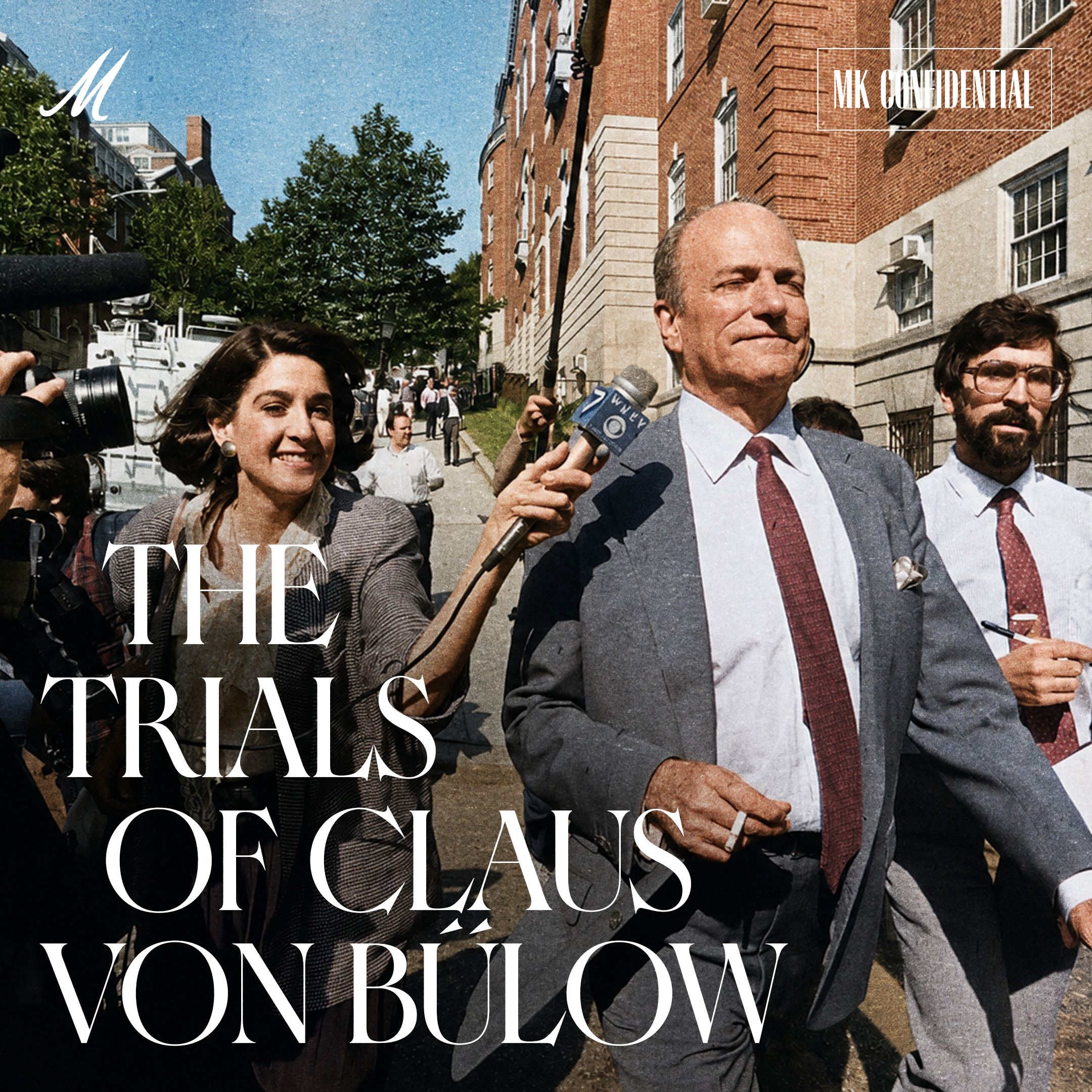
Overview of The Trials of Claus von Bülow: Science on Trial — Ep. 4 | MK Confidential
This episode covers Claus von Bülow’s 1985 retrial for the alleged attempted murder of his wife, Sunny von Bülow, focusing on how the defense reframed the case from a story about motive and scandal into a battle over medical evidence. The retrial ends in acquittal, but the episode emphasizes that “not guilty” is not the same as proving what actually happened to Sunny.
What the Episode Is About
The episode picks up with Sunny von Bülow still in a coma years after the original incident, while Claus faces a second trial in Rhode Island after his first conviction was overturned on appeal. The prosecution’s original theory was that Klaus injected Sunny with insulin to kill her, motivated by money and a mistress. The retrial becomes a showdown over whether the medical evidence truly supports that theory.
Key People and Roles
Claus von Bülow
- Defendant in the retrial.
- Seeks full exoneration, not just release on a legal technicality.
- Does not testify in either trial.
Sunny von Bülow
- The silent center of the case.
- Has been unconscious for years by the time of the retrial.
Thomas Puccio
- New lead defense lawyer for the retrial.
- Former federal prosecutor, aggressive and combative.
- Recasts the defense around medical uncertainty rather than social scandal.
Alan Dershowitz
- Led the appeal that overturned the first conviction.
- Remains deeply involved behind the scenes in the retrial’s strategy and research.
Andrea Reynolds
- Klaus’s girlfriend during the retrial.
- Highly visible, media-savvy, and instrumental in shaping Klaus’s public image.
Dr. Janice Galitis
- Testifies for the defense that Sunny’s first coma may have been caused by airway obstruction and aspiration, not insulin.
Alexandra Isles
- The mistress central to the prosecution’s first-trial motive theory.
- Returns to testify at the retrial.
Main Legal and Scientific Arguments
The prosecution’s original medical theory
The state’s first trial relied heavily on:
- Sunny’s low blood sugar
- A lab result showing very high insulin
- The claim that only externally injected insulin could explain the numbers
The episode highlights the key figure: Harvard endocrinologist Dr. George Cahill, whose confidence helped convince the first jury that the insulin must have been injected.
The defense’s attack on the science
The retrial defense chips away at that theory by arguing:
- The insulin readings were not consistent: the same blood sample reportedly produced wildly different results, including 216, 0, and 350.
- A result that cannot be reliably reproduced should not be treated as settled fact.
- The insulin residue on the needle looked more like something that had dried on the tip than something that had been injected through skin.
- Lab testing itself can produce false positives and human error.
The coma itself
A major defense breakthrough is Dr. Galitis’s testimony that:
- Sunny’s first coma may not have been caused by insulin at all.
- She may have aspirated after her airway closed while unconscious.
- He had reportedly told prosecutors this before the first trial, but they did not present it.
How the Defense Reframed the Case
Puccio strips away much of the first trial’s drama and focuses on one question:
- What actually caused Sunny von Bülow’s coma?
The defense also works to dismantle the prosecution’s motive theory:
- Judge Corinne Grande blocks the $14 million inheritance evidence from being presented to the jury.
- The prosecution also loses some of the emotional force of its mistress narrative because Alexandra Isles was not part of the timeline that mattered at the retrial in the same way the first-trial story had been.
The episode makes clear that the retrial is as much about shaping the story the jury hears as it is about the science itself.
Trial Atmosphere and Public Spectacle
The retrial is portrayed as a media circus:
- International press swarms the courthouse.
- The jury is sequestered for about eight weeks.
- Jurors even tour Clarendon Court, the von Bülow mansion, as part of the proceedings.
- Andrea Reynolds works the press constantly, helping manage the public image of Klaus.
The episode suggests that public perception, class, and image were always part of the case’s shadow.
Verdict and Aftermath
The verdict
On June 10, 1985, after weeks of testimony and days of deliberation, the jury finds Claus von Bülow:
- Not guilty on both counts
Reactions
- Andrea Reynolds is emotional and celebratory.
- Claus says he does not know what happened to Sunny, but remains convinced by the medical defense and insists he did nothing.
- Prosecutors and the judge stress that acquittal is not the same as innocence.
What remains unresolved
The episode ends by underscoring that:
- The jury did not determine the true cause of Sunny’s condition.
- The case remains morally and medically unresolved.
- Sunny remains unconscious, and the broader tragedy is unchanged despite the legal victory.
Key Takeaways
- The retrial was won by attacking the reliability of the medical evidence rather than by relying on a character defense.
- The prosecution’s first-trial narrative depended heavily on motive, money, and mistress evidence, much of which was weakened or excluded in the retrial.
- The episode repeatedly emphasizes the difference between “not guilty” and “innocent.”
- Even after acquittal, the central question—what happened to Sunny von Bülow?—remains unanswered.