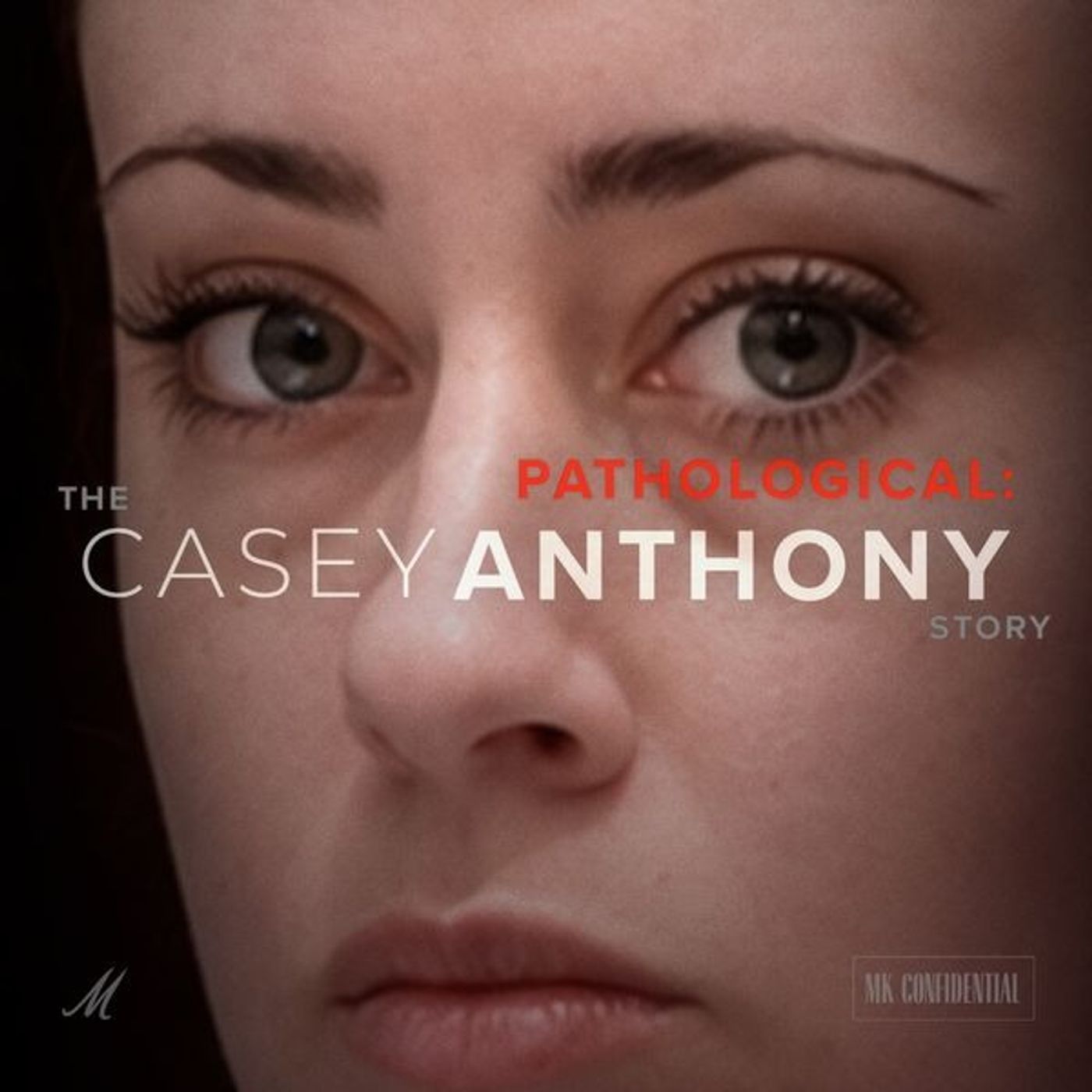
Overview of Pathological: The Casey Anthony Story (MK Confidential Series)
SiriusXM’s MK Confidential series revisits the Casey Anthony case in full, tracing the disappearance and death of two-year-old Caylee Anthony, the lies Casey told family and police, the forensic evidence, and the high-profile 2011 murder trial that ended in Casey’s acquittal on the most serious charges. The series argues that the case turned on a mix of deception, circumstantial evidence, flawed assumptions, and the state’s inability to prove exactly how Caylee died.
What the Series Covers
The disappearance of Caylee Anthony
- Caylee was last seen publicly in mid-June 2008.
- Casey repeatedly lied to family about:
- having a job at Universal Studios
- having a nanny named “Zanny” (Zenaida/Zenaida Fernandez-Gonzalez)
- where Caylee was staying
- Casey delayed reporting Caylee missing for roughly a month.
- The family’s suspicions were first triggered when Cindy Anthony found their car abandoned and later smelled what she believed was decomposition.
The police investigation
- Detectives quickly discovered:
- the nanny story was fabricated
- the apartment Casey gave police had been vacant
- Casey no longer worked at Universal
- Casey was arrested for child neglect and related offenses before murder charges were filed.
- Police later found Caylee’s remains in wooded areas near the Anthony home, along with duct tape and other evidence tied to the family.
The forensic evidence
The series spends a great deal of time on the physical evidence the prosecution used:
- The car trunk
- George and Cindy Anthony said the Pontiac smelled like decomposition.
- Investigators found evidence consistent with human decomposition.
- A hair from the trunk showed signs consistent with being from a decomposing body and matched Caylee’s maternal DNA line.
- Computer searches
- Searches for chloroform and “how to make chloroform” became central.
- The series notes a major controversy: the prosecution’s “84 searches” claim was later shown to be based on a software/reporting error.
- A separate search for “foolproof suffocation” was later discovered, but it was not presented to the jury.
- Duct tape
- The prosecution argued duct tape over Caylee’s face showed murder and premeditation.
- Medical experts disagreed about whether the tape was placed before or after decomposition.
- Cause of death
- The medical examiner ruled the death a homicide, but the cause was “undetermined.”
- That gap became one of the defense’s most powerful arguments.
The Trial
Prosecution theory
- The state argued Casey killed Caylee to free herself from motherhood and the responsibilities of her life.
- Prosecutors emphasized:
- Casey’s lies
- her partying while Caylee was missing
- the smell and forensic evidence from the car
- the duct tape found with the remains
- Their closing message: the evidence pointed to murder even if no single witness saw the act.
Defense theory
- Defense lawyer Jose Baez argued Caylee drowned accidentally in the family pool.
- He claimed George Anthony discovered the body and helped cover it up.
- Baez also made explosive allegations of sexual abuse against George and Lee Anthony, but those claims were never supported in evidence and were denied by the family.
- The defense framed Casey as a damaged, manipulated woman who lied as a coping mechanism.
Jury verdict
- The jury acquitted Casey of:
- first-degree murder
- aggravated manslaughter
- aggravated child abuse
- She was convicted only of four counts of lying to law enforcement.
- Jurors later said they believed something terrible happened, but the state did not prove exactly how Caylee died beyond a reasonable doubt.
- The series emphasizes that jurors were not told the state did not have to prove the exact cause of death for a murder conviction.
Aftermath and Public Reaction
- The public reaction was intense and deeply polarized.
- Casey became one of the most hated figures in America.
- The series notes:
- massive media coverage
- outrage at the verdict
- a lasting debate over whether the state overcharged the case
- Casey served time only on the false-information convictions and was later released.
- Florida passed Kaylee’s Law, making it a felony in certain cases to delay reporting a missing child.
Key Takeaways
- Casey Anthony’s lies were central to the case, but lies alone were not enough for a murder conviction.
- The prosecution had strong circumstantial evidence, but no body-level proof of how Caylee died.
- The defense succeeded in creating reasonable doubt, especially around:
- accidental drowning
- the forensic interpretation of the car and duct tape
- the reliability of computer evidence
- The series portrays the case as a devastating example of how:
- a missing-child case can evolve into a murder trial
- forensic uncertainty can shape a verdict
- public certainty and legal proof are not the same thing
Notable Insight
“Not guilty is not exoneration. Not guilty doesn’t mean innocent.”
That idea sums up the series’ closing message: Casey Anthony walked free because the state did not prove its case to the jury’s legal standard, even though the public never stopped believing something terrible had happened.