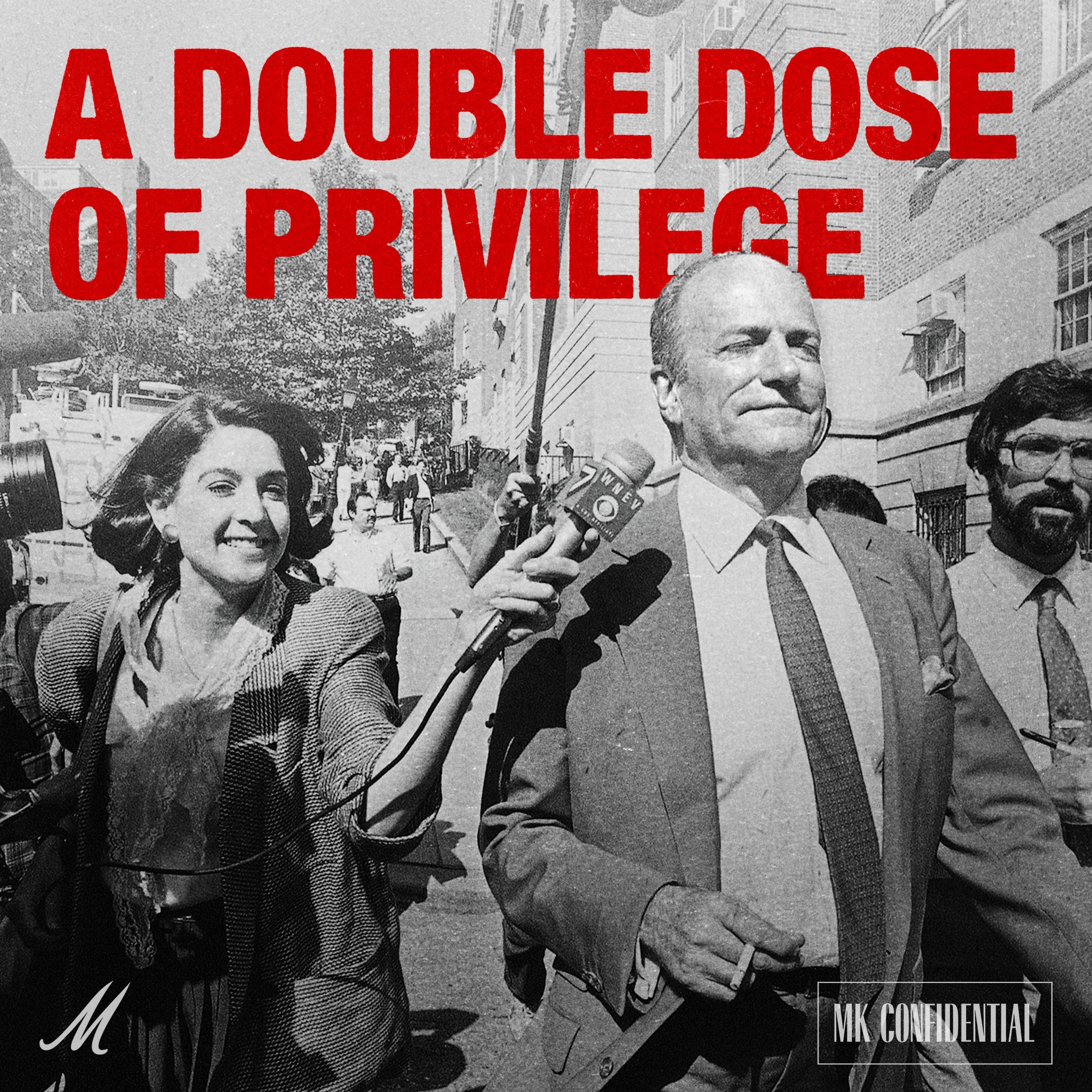
Overview of MK Confidential — “A Double Dose of Privilege: The Black Bag”
This episode of MK Confidential revisits the notorious Klaus von Bülow case, focusing on the discovery of the “black bag,” the evidence that helped convict him of attempting to murder his wife, Sunny von Bülow, and the high-profile trial that became a national media spectacle. The episode builds the case step by step: from the maid’s suspicions, to the police search, to the medical and financial evidence, and finally to the guilty verdict that seemed, at the time, to close the book on the story — until the episode teases a major legal second act.
What Happened in the Case
The “black bag” becomes the key clue
- Detective Jack Reese suspected Klaus von Bülow was hiding something after questioning him about whether Sunny had any reason to use insulin.
- Klaus later returned to the shuttered family mansion in Newport, Rhode Island, and police searched the house with a warrant.
- During the search, officers found:
- A scratch pad with the words “black bag”
- A small black metal box in Klaus’s closet
- The black bag itself had already been removed by Sunny’s son Alexander and a locksmith and was in police custody.
- Reese believed Klaus had gone back to retrieve the bag but failed to find it.
The case moves toward indictment
- In July 1981, a Rhode Island grand jury indicted Klaus von Bülow on two counts of assault with intent to murder, one for each coma Sunny suffered.
- Klaus pleaded not guilty and was released on bail.
The Trial and the State’s Case
A televised courtroom sensation
- The 1982 trial in Newport became a national media event, one of the first cases broadcast almost daily on television.
- The courtroom drew huge press attention, public fascination, and deep local division.
- Klaus remained quiet and never testified.
The prosecution’s theory
The state argued that Klaus had secretly injected Sunny with insulin in an attempt to murder her, twice:
- First coma: December 1979, from which Sunny recovered
- Second coma: December 1980, which left her permanently unresponsive
Main evidence presented
- Maria Schrallhammer, Sunny’s longtime maid, testified that she found:
- The black bag
- Vials
- A small bottle of insulin
- Dr. Richard Stock, Sunny’s physician, testified that she had been given insulin surreptitiously.
- Dr. George Cahill of Harvard testified the second coma had the hallmarks of an insulin injection, not a natural illness.
- A blood test showed an insulin level dramatically above normal, alongside dangerously low blood sugar.
- Morris Gurley, the family’s banker, explained the financial motive:
- If Sunny died, Klaus stood to inherit about $14 million
- If they divorced, the prenuptial agreement left him with very little
The Defense’s Argument
The alternative explanation
Klaus’s lawyers argued that Sunny had essentially done this to herself:
- They blamed her drinking, sedatives, aspirin use, and blood sugar problems.
- They suggested she may have self-administered insulin.
Weak defense support
- The defense called a former exercise instructor, Joy O’Neill, who claimed Sunny had once said she injected insulin to control her weight.
- The prosecution undermined her credibility with appointment cards showing she had barely taught Sunny at all.
Key strategic choice
- Klaus did not testify.
- His defense focused on attacking the way the black bag was discovered and the lack of fingerprints, but those arguments did not outweigh the state’s circumstantial and medical case.
Verdict and Outcome
- After six days of deliberation, the jury found Klaus von Bülow guilty on both counts.
- He was later sentenced to:
- 10 years for the 1979 coma
- 20 years for the 1980 coma
- He remained free on appeal after posting substantial bail.
Why the Case Gripped the Public
- The trial mixed wealth, aristocracy, infidelity, suspicion, and a family feud into a soap-opera-like spectacle.
- The episode emphasizes how the case became a public referendum on privilege, credibility, and motive.
- Despite the strong circumstantial narrative, the story is not over — the episode closes by revealing that a Harvard law professor and his students will soon re-examine the conviction and find questions the original trial missed.
What the Episode Sets Up Next
- The final minutes introduce the next phase of the story:
- Klaus contacts a Harvard law professor shortly after the verdict
- The professor initially thinks the call is a prank
- The next episode will explore the legal challenge to the conviction and the deeper questions surrounding the case
Key Takeaways
- The black bag was the turning point that tied together the maid’s observations and the medical evidence.
- The prosecution’s case rested on a mix of forensic science, motive, and circumstantial proof rather than direct eyewitness testimony.
- The trial became a national sensation because of the wealth, status, and drama surrounding the von Bülow family.
- Even after a guilty verdict, the episode makes clear that the legal and public debate over Klaus von Bülow was far from finished.