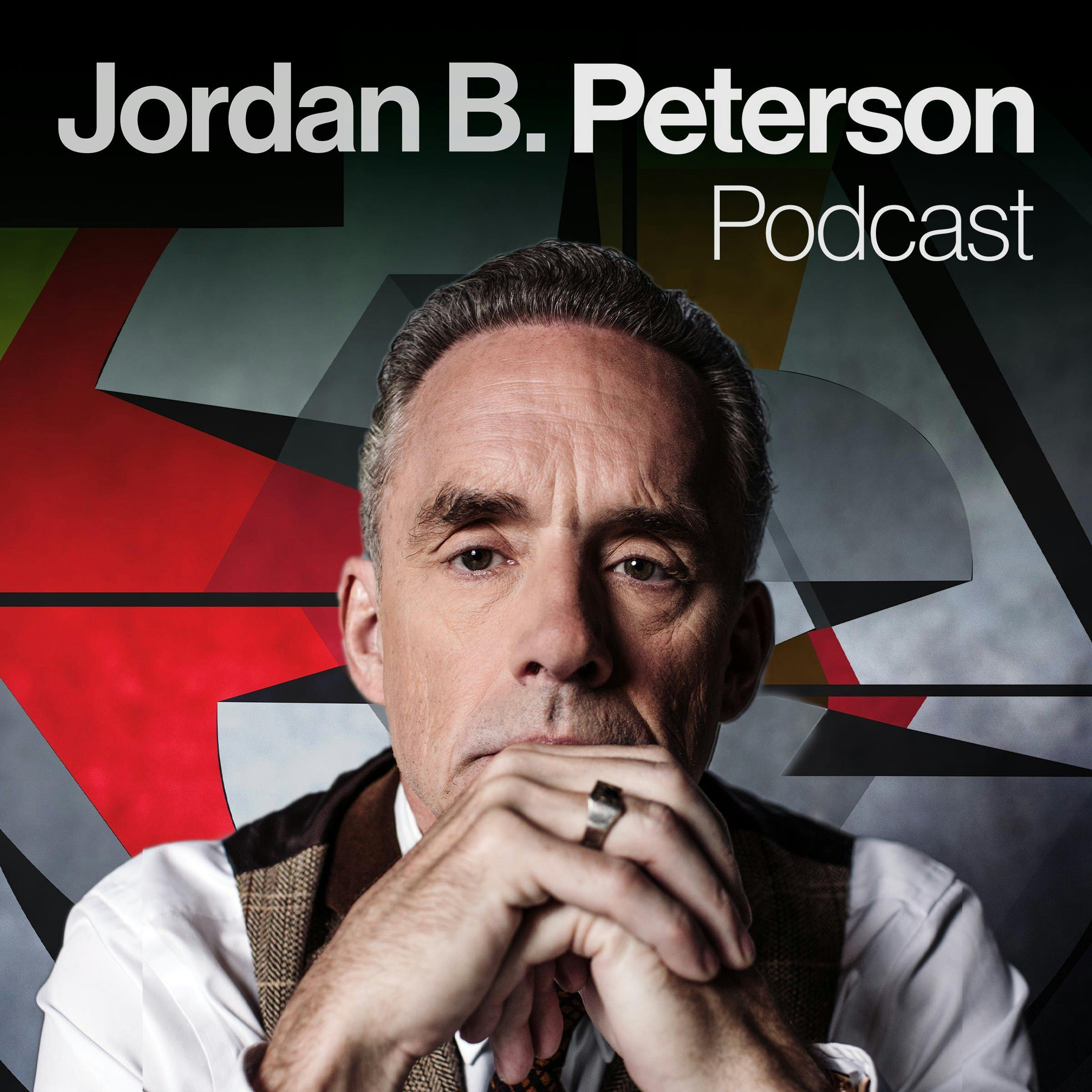
Overview of Why You Read Their Eyes First
In this talk, Jordan Peterson argues that human beings do not primarily experience reality as a collection of neutral facts, but through stories, aims, and value structures. The title’s idea—you read their eyes first—captures his central claim: when we meet someone, we immediately look for their aim, because attention reveals what they value. From there, Peterson builds a broad case that the West’s deepest crisis is not merely political or economic, but narrative and spiritual: the dominant story that orders Western life has been undermined, and in its place have come reductive stories about sex, power, hedonism, and nature.
Peterson’s Core Thesis
We perceive through aim, not through raw facts
Peterson argues that perception is not passive. We do not simply “see the facts” and then reason from them; rather, we selectively organize reality according to what we are trying to do.
- If you are walking to the stairs, the rest of the room becomes background.
- If you are on a first date, you ignore most of the environment and focus on your companion.
- What we attend to is always shaped by what matters to us.
His point: consciousness is structured by purpose.
Why we read people’s eyes first
He uses eye contact as the clearest example of this principle:
- Eyes reveal attention.
- Attention reveals value.
- Value reveals aim.
- Aim reveals character.
That is why, he says, the first thing we want to know about another person is: What are they up to?
The World as Story
Stories are not “mere entertainment”
Peterson rejects the idea that stories are just a side effect of cognition or a form of amusement. In his view, stories are the primary structure through which humans understand reality.
He argues that:
- Children learn through stories because stories organize moral and practical knowledge.
- Movies and novels let us rehearse courage, fear, betrayal, sacrifice, and transformation.
- Fiction is powerful because it shows us how to aim.
Character = aim over time
For Peterson, character is not a list of traits. A character is a trajectory of aims:
- Heroes move toward the good.
- Villains aim downward or toward destruction.
- Growth happens when a person’s aim changes.
So a story is really the unfolding of a person’s aim through time.
The Biblical Story as the West’s Foundational Narrative
The Bible as a multi-dimensional account of human nature
Peterson argues that the biblical corpus is not simplistic morality, but a profound narrative about:
- God
- man
- order
- chaos
- sacrifice
- responsibility
- pride
- redemption
He treats Genesis as a symbolic map of reality.
Genesis 1: order from chaos
He interprets creation as God bringing order out of undifferentiated possibility:
- “The deep” represents chaos, confusion, and unformed potential.
- God’s Word/Logos is the ordering principle.
- Creation proceeds by separation, naming, structure, and hierarchy.
Peterson connects this to human consciousness: each morning we face a field of possibilities and must impose order through action.
Human beings as image-bearers
He emphasizes that humans are made “in the image of God,” meaning:
- We are not just passive matter.
- We are also ordering, meaning-making beings.
- Our task is to cultivate and expand order responsibly.
Adam, Eve, and the fall
Peterson reads the Garden narrative as a study in human failure:
- Adam is called to cultivate and name.
- Eve represents the inclusion of what has been excluded and marginalized.
- The prohibition against the tree of the knowledge of good and evil means humans should not arrogate to themselves the authority to define good and evil independently of God.
The fall happens through:
- Pride: presuming to define reality on one’s own terms.
- Blame: refusing responsibility and shifting it onto others.
- Shame: the self-consciousness that follows failed overreach.
His summary: history begins when humans overreach, hide, and then blame.
Why Sex and Power Are Not Enough as “The Whole Story”
Peterson critiques two major reductionist explanations for human life:
1. Sex/reproduction
He says the Freudian/Darwinian/Dawkins-style view reduces life to reproduction and sexual strategy.
His objection:
- If sex is the whole story, then immediate gratification becomes the highest good.
- But that leads to hedonism and moral collapse.
2. Power/domination
He also critiques Marxist and Nietzschean framings that reduce life to power dynamics.
His objection:
- If power is the whole story, then “might makes right.”
- But that collapses morality into domination and resentment.
His alternative: the biblical story, which places sacrifice, responsibility, and upward aim at the center.
The Enlightenment, Postmodernism, and the Culture War
Why Peterson thinks the Enlightenment is incomplete
Peterson does not reject science or the scientific method. Instead, he argues that the Enlightenment’s deeper assumptions are wrong:
- Human beings do not orient themselves primarily by detached rationality.
- They orient themselves through stories, values, and symbolic structures.
- Science can tell us how things work, but not what is worth aiming at.
AI as an example
He uses large language models as evidence that intelligent systems require:
- Training
- Reward and punishment
- A value structure
- An aim
His point is that even machines do not function as mere rule-followers; they need orientation.
Postmodernism and the weakening of the West’s story
Peterson argues that literary critics and postmodern thinkers attacked the West’s central narrative, leaving a vacuum that has been filled by:
- cynicism
- identity politics
- power theory
- hedonism
- nature worship
- moral confusion
He sees the current culture war as a struggle over which story will organize civilization.
The Conversation with Konstantin Kisin
Kisin pushes Peterson on a few key issues:
- If the Enlightenment is wrong, how do we explain scientific progress?
- Can Christianity be retained as culture even by non-believers?
- What makes Christianity more durable than other narratives?
Peterson responds that:
- Science works, but it depends on deeper cultural and moral assumptions.
- Christianity is not just a belief system; it is the dream-like narrative structure within which Western civilization functions.
- If you remove the sacred, the miraculous, and the transcendent, Christianity collapses into empty morality—or gets replaced by other ideologies.
He also argues that secular culture often inherits Christian moral assumptions without admitting it.
Symbolic Threads Peterson Emphasizes
Pinocchio
He uses Pinocchio as a modern myth of descent into the underworld and recovery of the father, linking it to the courage to confront chaos and unconsciousness.
Mesopotamian mythology
He compares biblical themes with older myths like the Enuma Elish, especially the image of chaos as a dragon/serpent that must be confronted and ordered.
The bronze serpent
He highlights the biblical image of the serpent lifted on a staff as a symbol of confronting danger directly rather than fleeing it.
The cross
For Peterson, the crucifixion condenses the deepest truths of life:
- mortality
- suffering
- sacrifice
- redemption
- the transformation of poison into healing
Q&A: A Practical Answer on High Neuroticism in a Marriage
A listener asks how to navigate a relationship where one partner is extremely high in neuroticism.
Peterson’s advice:
- First, rule out depression or anxiety disorder.
- If it’s temperament rather than illness, the remedy is aim and exposure.
- Help the person identify what they want but fear.
- Break fears into small, manageable steps.
- Use gradual voluntary exposure to build resilience.
He recommends:
- listing feared tasks,
- ordering them by difficulty,
- starting with the least frightening,
- and progressively expanding tolerance.
He also points to his Self-Authoring work as a tool for stabilizing aim and reducing chaos.
Main Takeaways
- We see the world through story and aim, not raw facts alone.
- Eyes reveal value, and value reveals character.
- The biblical narrative, for Peterson, is the West’s deepest organizing story.
- Sex and power are real, but they do not fully explain human life.
- Pride, blame, and refusal of responsibility are central themes in the fall of man.
- Sacrifice and voluntary confrontation of fear are the keys to growth.
- Culture depends on a meaningful moral order, not just technology or material abundance.
Bottom Line
Peterson’s message is that civilization, psychology, and personal life all depend on one thing: the right story, properly aimed. If you can see what someone values by reading their eyes, you can understand why he thinks human life itself is governed by the same principle: attention reveals aim, aim reveals character, and character shapes the world you inhabit.