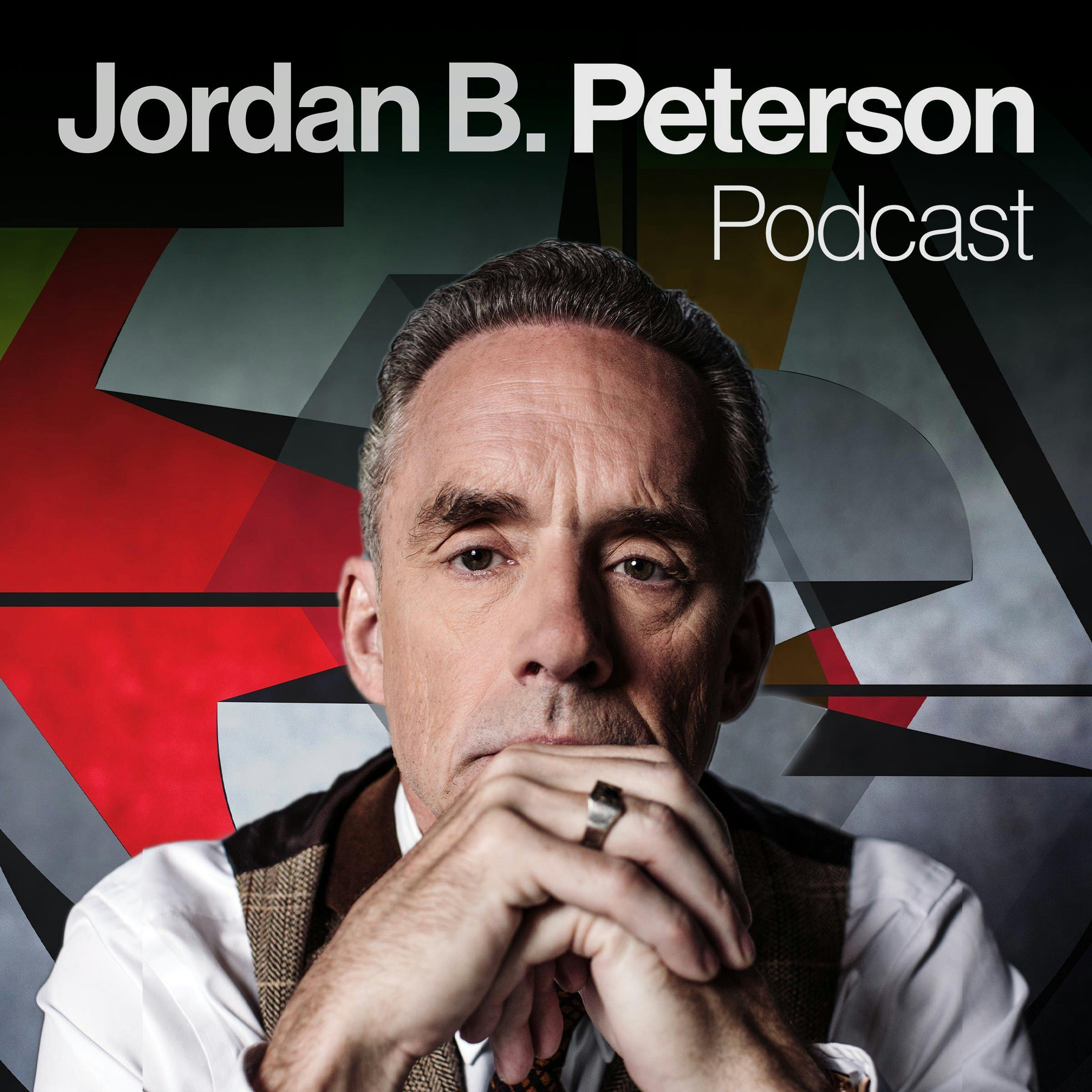
Overview of What To Do When Resentment Is Eating You Alive
In this lecture, Dr. Jordan B. Peterson uses the latter part of the Exodus story—Moses, the Israelites, the desert, the golden calf, the bronze serpent, and the rebellion of Korah—to argue that resentment is what happens when people refuse responsibility, remain psychologically immature, and drift back toward slavery or tyranny. His central claim is that freedom is not the absence of constraint, but the willingness to bear responsibility, organize life through distributed hierarchy, and keep aiming upward toward truth, conscience, and God. The Q&A extends this into a discussion of love, prayer, organized religion, pride, and how to reconnect with the divine through action rather than mere belief.
Core Argument
Resentment, tyranny, and slavery are universal patterns
Peterson frames Exodus as an archetypal story of human life:
- Tyranny can be external (political oppression) or internal (habits, appetites, pride, cowardice).
- Slavery persists when people prefer dependence and comfort over responsibility.
- Resentment grows when people feel trapped, blame others, and refuse the difficult work of self-governance.
He argues that many people would rather stay in a broken system than face the “Red Sea chaos” that comes after leaving it—because freedom first feels like disorder.
The desert represents the difficult transition to maturity
After leaving Egypt, the Israelites wander in the desert for 40 years. Peterson treats this as symbolic of the painful period between leaving an old order and becoming capable of a better one:
- Leaving tyranny often creates confusion, loss, and instability before order is rebuilt.
- People in that state tend to become whiny, dependent, hedonistic, and faithless.
- Instead of taking responsibility, they ask Moses to solve everything for them.
Moses as Leader and Judge
Moses learns the structure of just authority
Peterson emphasizes Moses’ long period of judging disputes among the Israelites. This is important because it teaches him:
- how people actually behave,
- what makes judgment legitimate,
- and how order can be built without arbitrary force.
A valid judgment, in Peterson’s view, is one that both parties can recognize as better than the conflict it replaces.
Jethro’s advice: distributed responsibility
Moses’ father-in-law Jethro tells him he cannot continue personally judging every dispute. Peterson presents this as one of the foundational insights of civilization:
- responsibility must be distributed,
- people must solve problems at the lowest competent level,
- and only the hardest cases should rise to the top.
This becomes Peterson’s model for:
- families,
- workplaces,
- governments,
- and societies.
A healthy polity is not one where people are “given rights” in the abstract, but one where they take responsibility.
The Ten Commandments and Moral Order
Law reflects both divine revelation and human maturity
Peterson says the Ten Commandments are not merely arbitrary rules from above. They also reflect:
- accumulated social wisdom,
- customs that make communities livable,
- and the structure of a mature self.
He links maturity to two forms of sacrifice:
- sacrificing immediate impulse for future flourishing,
- sacrificing selfish demands for reciprocity and social harmony.
This, he says, is the foundation of a productive, generous, and stable society.
The Golden Calf: Materialism and Hedonism
What the golden calf symbolizes
When Moses is absent, the Israelites turn to Aaron and worship the golden calf. Peterson interprets this as:
- the worship of material wealth,
- the worship of immediate gratification,
- and a collapse into orgiastic, drunken, irresponsible behavior.
He sees this as a timeless pattern:
- when people abandon the divine and moral order,
- they replace it with wealth, status, pleasure, and spectacle.
Why this leads to tyranny
Peterson argues that when the population becomes immature and hedonistic:
- rulers are tempted to become more controlling,
- leaders become contemptuous of the people,
- and society enters a vicious spiral of hedonism and tyranny.
The Broken Tablets and the Loss of the Divine
Moses shatters the tablets
When Moses sees the people’s corruption, he breaks the tablets. Peterson reads this as more than anger:
- it symbolizes the demolition of the divine presence,
- the loss of moral clarity,
- and the damage done when people repeatedly choose immaturity.
Once people corrupt themselves, their ability to perceive conscience and truth becomes blurred.
The Bronze Serpent and the Logic of Healing
Facing what poisons you
When the Israelites are bitten by serpents, God instructs Moses to make a bronze serpent and raise it on a staff. Peterson connects this to:
- the medical symbol of healing,
- the idea of pharmakon: poison and cure,
- and the principle that growth comes from voluntarily facing what terrifies you.
His interpretation:
- a little bit of poison can cure,
- but only if it is confronted consciously and voluntarily,
- which is why courage is central to development.
Christian fulfillment
Peterson then connects this to Christ’s statement about being “lifted up” like the serpent in the desert:
- Christ embodies the archetypal tragedy,
- not just suffering, but the deepest possible suffering: innocent suffering, betrayal, public humiliation, torture, and death,
- and then the confrontation with evil itself.
The message is that redemption comes through courageous confrontation with suffering, evil, and chaos—not through avoidance.
Korah’s Rebellion and Modern Ideology
Corrupt revolution against authority
Korah accuses Moses and Aaron of using power arbitrarily. Peterson says this accusation contains a half-truth:
- leaders do always face the temptation to misuse force,
- but resentment often turns that real problem into a total rejection of authority, tradition, and hierarchy.
He applies this to modern institutions that reduce all social structures—family, marriage, business, and government—to mere power plays.
The danger of victimhood ideology
Peterson warns that when people define themselves as victims of arbitrary oppression:
- they become hostile to success,
- they excuse their failures,
- and they create conditions that invite tyrannical control.
Joshua and Caleb: Faithful Leadership
The alternative to cynicism
Joshua and Caleb, the faithful scouts, represent the correct response to an uncertain future:
- not naïve optimism,
- but courageous faith,
- and willingness to move forward despite danger.
Their names matter to Peterson:
- Caleb = loyalty, faithfulness, steadfastness.
- Joshua = a Christ-like leader who leads toward salvation.
They contrast with the faithless scouts who see only giants and collapse into fear.
The Closing Pattern: Courage vs. Resentment
The lesson of the whole Exodus story
Peterson’s final synthesis is that the Exodus narrative is about a recurring choice:
- resentment, complaint, victimhood, and hedonism versus
- responsibility, courage, sacrifice, and upward aim.
The promised land is not reached by demanding comfort or blaming authority. It is reached by becoming the kind of person who can carry freedom without turning it into chaos.
Q&A Highlights
Love expands consciousness through aim
Peterson says love is not just a feeling; it is an orientation:
- love means aiming at the highest good of the other person,
- acting as if others’ flourishing matters,
- and allowing that aim to reshape perception and behavior.
He argues that what you repeatedly practice changes you biologically and psychologically.
Resentment vs. faith in challenges
When facing a challenge, you can respond as:
- a resentful victim,
- or as someone who sees the challenge as the dragon guarding treasure.
He says the second response is what develops strength and transforms the person.
Organized religion and the divine path
To the question of how to find God without organized religion, Peterson argues:
- if you can truly find the divine alone, you should also be able to help repair the church,
- and if not, then your confidence in self-sufficiency may be misplaced.
He presents communal worship and institutional participation as part of the path toward God, not an optional extra.
Pride as the main obstacle
Asked about the biggest hurdle in bridging theology, science, and culture, Peterson answers:
- pride and lies.
He says his own intellectual pride, fraudulence, and performance-driven speech were major barriers to truth. His improvement came when he started saying only what he believed to be true, even at personal cost.
Main Takeaways
- Resentment is spiritually and politically destructive.
- Freedom requires responsibility, not just rights.
- Healthy societies distribute judgment and authority.
- Materialism and hedonism are modern forms of the golden calf.
- Courage means facing what is frightening rather than fleeing into victimhood.
- Love is an active commitment to the flourishing of others.
- Pride is one of the deepest obstacles to truth and transformation.
Practical Implications
For individuals
- Stop externalizing blame.
- Aim upward, even if the path begins in chaos.
- Take responsibility for your habits, speech, and relationships.
- Confront what you fear instead of organizing your life around avoidance.
For families and communities
- Solve problems at the smallest effective level.
- Reward maturity, not dependency.
- Treat resentment as a signal that responsibility has been neglected.
For society
- Resist the temptation to turn every problem into a demand for centralized control.
- Be wary of political and cultural systems that encourage perpetual victimhood.
- Build institutions that cultivate competence, sacrifice, and moral order.