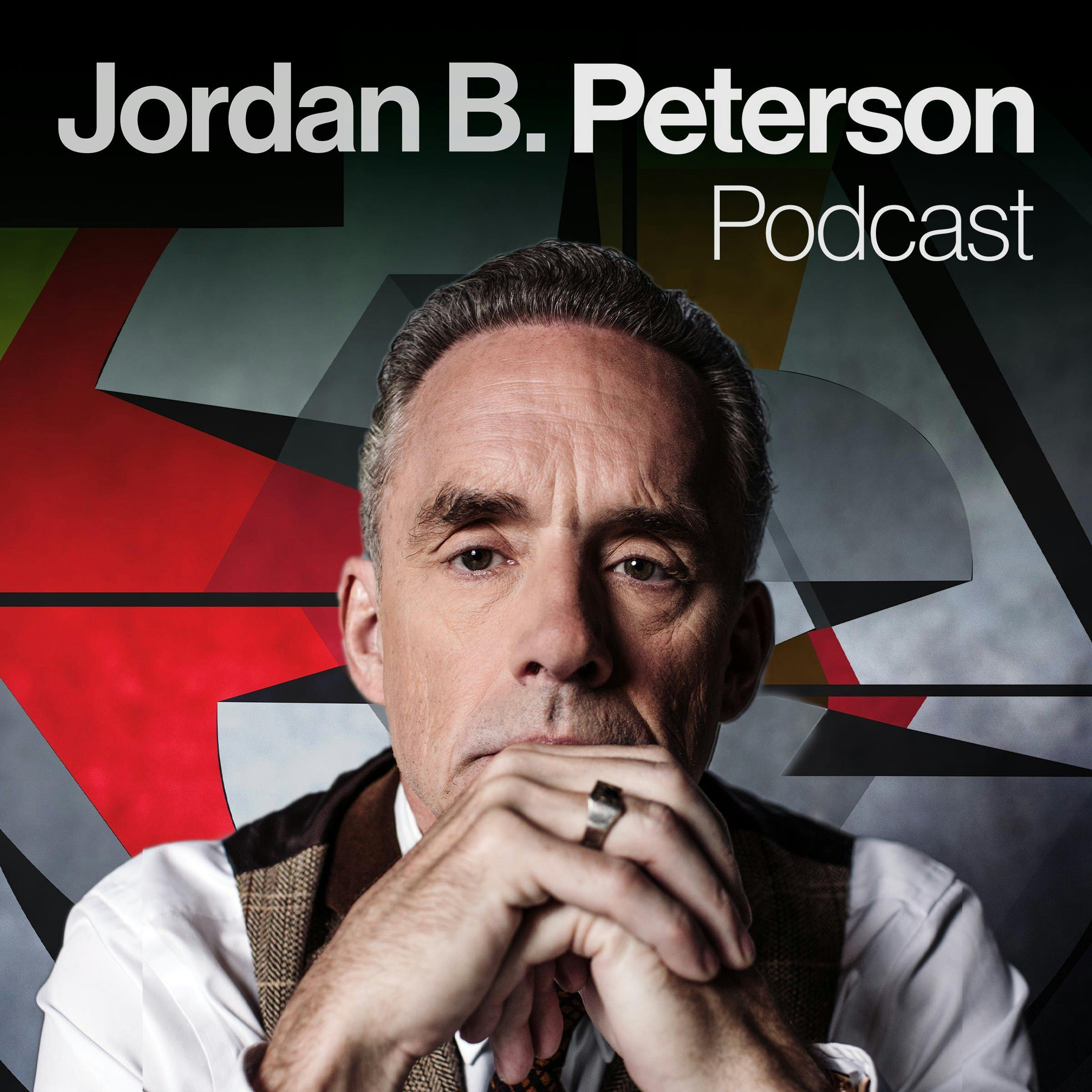
Overview of What Happens When Good Men Say Nothing
In this lecture, Dr. Jordan B. Peterson argues that faith is not primarily belief in a list of facts, but a lived commitment to truth, conscience, and the upward path. He frames thinking as a kind of “secularized prayer”: first admitting ignorance, then genuinely asking, seeking, and receiving insight, and finally testing that insight against reality and conscience. Using biblical stories from Genesis through the Gospels, he develops the idea that silence in the face of moral truth is dangerous—for the individual, the family, and even civilization.
Core Thesis: Faith as Action, Not Mere Belief
Faith begins with humility and responsibility
Peterson says real thinking starts when a person:
- admits they don’t know
- takes ownership of the problem
- genuinely wants the truth
- remains open to revelation or insight
He compares this to Christ’s teaching to ask, seek, and knock, emphasizing that the request must be sincere and oriented toward the highest good.
Faith is “aiming up”
For Peterson, faith means:
- choosing the good before the outcome is known
- trusting conscience
- acting toward peace, order, and truth
- sacrificing short-term comfort for long-term meaning
He repeatedly defines sin as missing the target—an archery image for misdirected aim.
Main Biblical Examples and What They Mean
Elijah: God is not in nature alone
Peterson uses Elijah’s encounter with fire, storm, wind, and earthquake to argue that:
- God is not reducible to the natural world
- the divine is more like the “still small voice” of conscience
- conscience is not merely subjective, because it acts on us rather than being fully under our control
Jonah: refusing to speak truth brings chaos
Jonah is a central example of “good men saying nothing.”
- Jonah is called to warn Nineveh.
- He flees, falls asleep, and the ship falls into storm.
- This symbolizes what happens when people ignore conscience and refuse to speak truth.
- When Jonah finally repents and speaks, the city is spared.
Peterson’s point: truthful speech can save a community; silence can doom it.
Cain and Abel: sacrifice, work, and resentment
He interprets Cain and Abel as models of two approaches to life:
- Abel offers his best, representing proper sacrifice and devotion.
- Cain holds back, becomes resentful, and blames God and the world.
This story becomes a warning that:
- failure plus resentment can turn into violence
- withheld sacrifice and self-justification corrupt the soul
- a society built on such denial can descend into catastrophe
Abraham and Sodom: a few righteous people can preserve a city
Peterson highlights Abraham bargaining with God over Sodom:
- if enough righteous people exist, the city can be spared
- this shows the power of a small number of people who remain truthful and upright
Jacob: transformation is possible even in deep corruption
Jacob begins as a deceitful, grasping figure, yet becomes transformed when he chooses to aim upward. Peterson uses him to argue that:
- people are often flawed when they begin
- faith is the willingness to leave manipulation behind
- the path to integrity begins with a decision to do what is right
Job and Christ: faith under suffering
He closes the biblical arc with:
- Job, who suffers without losing faith
- Christ, whose passion represents the ultimate innocent suffering and voluntary self-sacrifice
For Peterson, the crucifix symbolizes:
- voluntary suffering for the good
- the defeat of evil through truthful sacrifice
- the foundation of Christian community
Peterson’s View of Truth, Conscience, and Society
Truth is inseparable from speech
A major theme is that truth must be spoken. Peterson connects this to:
- logos as speech
- moral responsibility
- resistance to tyranny
He warns that when people refuse to speak what they know, they help create the conditions for:
- corruption
- social decay
- totalitarianism
- worse outcomes than death itself
Aiming up shapes perception
He argues that your aim determines:
- what you notice
- what opportunities appear
- who feels like friend or foe
- the kind of future you can build
In other words, character is a pattern of aims, and your worldview follows from your moral orientation.
Q&A Highlights
How do you know your calling or purpose?
Peterson answers: by what grips your interest, provided you are aiming upward and are in right relation to conscience. He gives Moses and the burning bush as the example:
- Moses is an ordinary shepherd
- something meaningful captures his attention
- he investigates
- that calling becomes the turning point of his life
Should a recovering alcoholic have children if he fears relapse?
Peterson responds with the story of the scouts entering Canaan:
- some scouts see giants and fear the future
- others, like Joshua and Caleb, trust God and move forward
- the lesson is to have faith, keep your covenant, and take responsibility
His advice is essentially: if you’ve been sober seven years, don’t let fear alone rule your life; commit to the upward path and proceed with faith and discipline.
Key Takeaways
- Faith is active trust in the good, not just intellectual assent.
- Conscience matters because it calls people to speak and act truthfully.
- Silence in the face of evil is dangerous and can enable collective catastrophe.
- Biblical stories are psychological and moral maps for understanding human life.
- Transformation is possible even for deeply flawed people if they choose to aim upward.
- A small number of righteous people can stabilize a whole community.
Notable Line of Thought
Faith is the willingness to do the will of the Father—to act on conscience before the outcome is known.
That idea threads through the whole lecture: good men do not simply “believe”; they speak, act, sacrifice, and aim upward even when the cost is high.