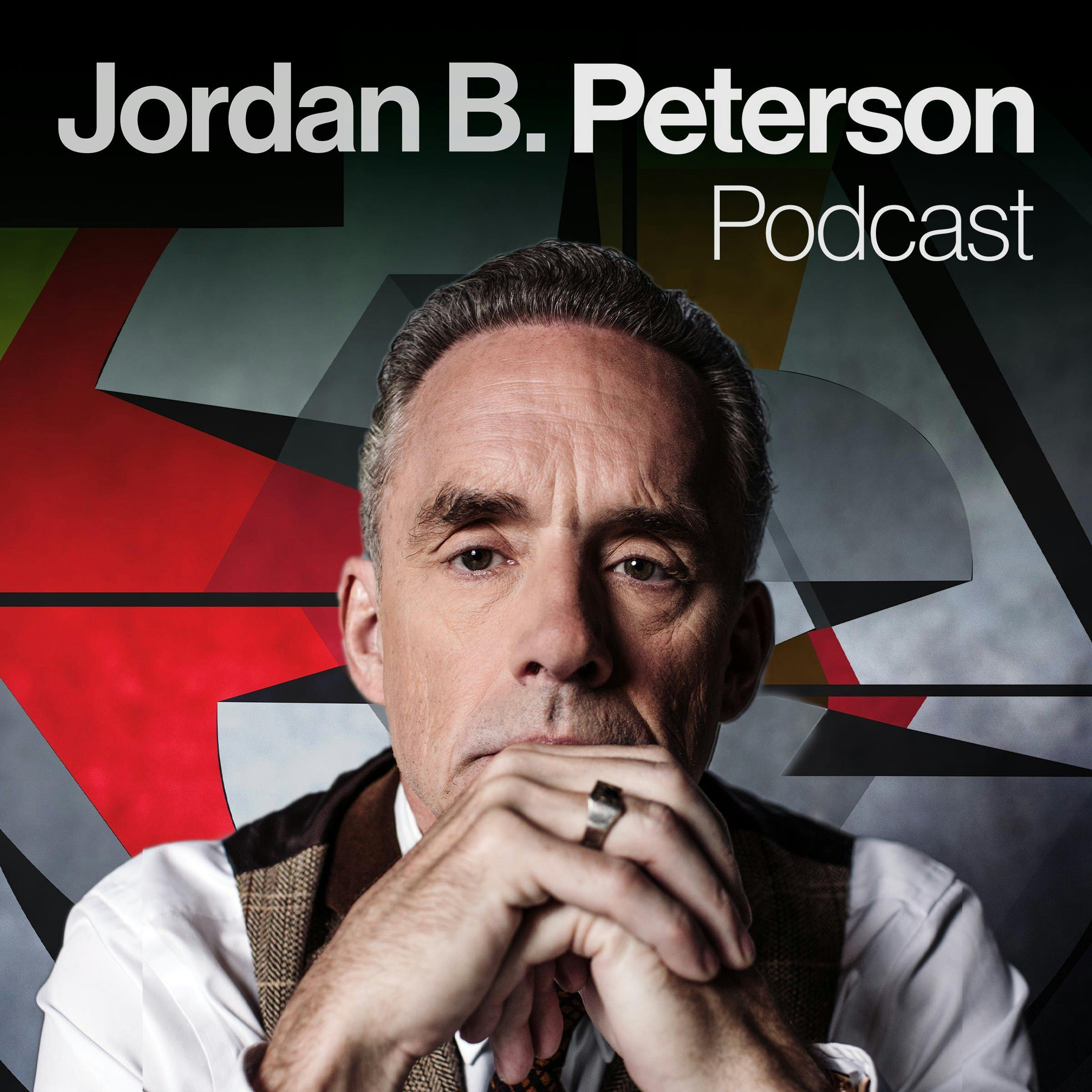
Overview of Lecture 01: Present or Absent We Wrestle with God
In this opening lecture of a new archive series, Dr. Jordan B. Peterson argues that human beings are always in relationship with God—whether consciously or not—and that this “wrestling” is the central drama of life. Drawing on Genesis, the Book of Job, The Brothers Karamazov, mythology, psychology, and science, he frames existence as a struggle to transform chaos into order through truth, sacrifice, responsibility, and love. The lecture is both philosophical and theological, but its practical message is simple: aim upward, confront suffering honestly, and orient your life toward what is highest.
Core Thesis
“Present or absent, we wrestle with God”
Peterson’s central claim is that even atheism is not outside the divine struggle. Moral outrage, resentment, longing for justice, and arguments about suffering all imply a relationship to something transcendent.
Life as a moral adventure
He presents life as a heroic undertaking in which trouble is unavoidable and necessary:
- No meaningful adventure exists without suffering
- Responsibility gives suffering purpose
- The highest form of life comes from taking on your burdens voluntarily and truthfully
Major Themes and Arguments
1. Story, myth, and the structure of reality
Peterson argues that human beings do not simply perceive facts; we perceive the world through hierarchies of value, and a story is a description of that hierarchy.
Key points:
- We must decide what matters in every moment
- Perception itself is value-laden
- Deep stories are not “less real” than facts; they reveal a higher-order truth
- Mythology is the most compressed and universal form of truth
2. Science and prayer are structurally similar
He makes a striking comparison between scientific discovery and prayer:
- Scientists begin with a problem they cannot ignore
- They do not generate hypotheses purely by logic; ideas come through intuition, calling, and questioning
- Prayer is essentially an admission of insufficiency and a request for revelation
- Both science and prayer require humility, asking, seeking, and testing
3. Genesis as a description of consciousness and creation
Peterson interprets Genesis symbolically:
- “Formless and void” represents chaotic potential
- The Spirit of God is the force that confronts chaos and brings forth order
- Human consciousness mirrors this creative process
- The world is made habitable when chaos is transformed into something good
He connects this to ordinary life:
- Waking up each day confronts us with potential
- Depression and anxiety are often experienced as formless chaos
- Hope is the force that makes action possible
4. Sacrifice, work, and the future
He equates work with sacrifice:
- Work is the sacrifice of the present for the future
- Human beings live across time and must negotiate between immediate desire and long-term good
- The biblical story of Adam and Eve introduces labor as part of human destiny
5. Cain and Abel as the foundational moral pattern
Peterson treats Cain and Abel as the archetype of all rivalry and moral divergence:
- Abel represents rightly ordered sacrifice
- Cain represents resentment, bitterness, envy, and violence
- This pattern underlies many modern social conflicts
- The story warns that moral failure often begins with failed orientation, not merely bad behavior
6. Power is not the deepest principle
He critiques the postmodern claim that reality is fundamentally about power:
- Power matters, but it is not the whole truth
- Relationships founded on power degenerate into tyranny and victimhood
- Psychopathy is a poor and self-defeating strategy
- A society built only on power collapses into resentment and destruction
Key Biblical and Literary References
Genesis
Used as the primary lens for understanding:
- Creation from chaos
- Consciousness
- Order and goodness
- Human vocation
Cain and Abel
A template for:
- Sacrifice vs. resentment
- Responsibility vs. blame
- Order vs. chaos
The Brothers Karamazov
Peterson uses Ivan and Alyosha to show:
- Brilliant argument is not the same as moral truth
- The problem of suffering, especially innocent suffering, is central to atheistic protest
- Intellectual victory can coexist with spiritual defeat
Stephen Fry and Richard Dawkins
He uses both as examples of sophisticated atheistic or secular reasoning that still reveals:
- Anger toward God
- Deep moral concern
- Unrecognized participation in the religious question
The Problem of Suffering
Innocent suffering as the strongest argument against God
Peterson takes seriously the moral outrage caused by child suffering, especially in the Ivan Karamazov example. But he argues that this outrage itself shows we still presume:
- moral order exists
- suffering is wrong
- justice should exist beyond mere survival
In his view, the correct response is not nihilism, but deeper moral orientation.
Masculine and Feminine Ideals
Masculine ideal
The masculine heroic task is to:
- confront chaos
- tell the truth
- carry responsibility
- establish order
- protect and improve the world
Feminine ideal
Peterson closes with the Pietà as the highest symbol of feminine sacrifice:
- the mother offers the child to the world
- real love does not overprotect
- motherhood means enabling the child’s adventure, even at great personal cost
Main Takeaways
- Human beings are always in relationship with God, consciously or not
- Stories are not entertainment alone; they are maps of value and meaning
- Science, prayer, and creativity all begin with humility before the unknown
- Suffering can become meaningful when it is faced honestly and sacrificially
- The biblical stories are presented as psychological, moral, and metaphysical truths
- The proper response to chaos is not resentment, but courageous orientation toward the highest good
Notable Closing Idea
Peterson ends with a practical challenge:
Aim upward, tell the truth, and orient yourself toward what is highest at every moment.
He presents this as the path not only to personal transformation, but to participating in the restoration of the world itself.