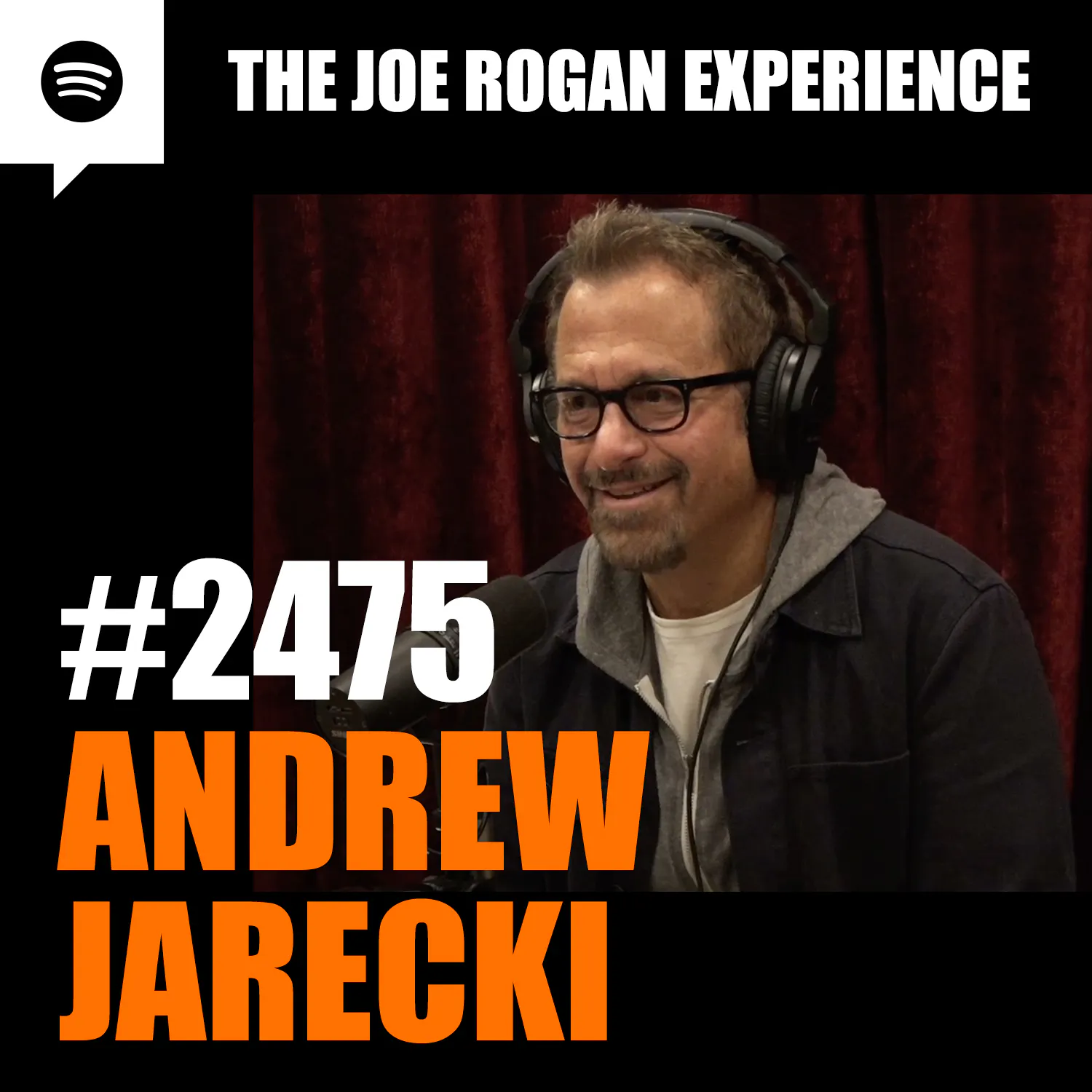
Overview of The Joe Rogan Experience — #2475: Andrew Jarecki
In this episode Joe Rogan interviews filmmaker Andrew Jarecki about his HBO documentary The Alabama Solution (investigative film about Alabama’s prison system) and Jarecki’s past work (notably The Jinx). The conversation centers on systemic abuse in prisons — brutality, drug smuggling by guards, contraband phones that documented crimes, lethal cover-ups, profiteering from prison construction and services, and the broader social and policy failures that enable mass incarceration. Jarecki also explains his filmmaking methods (including use of inmate-recorded footage and a revelatory audio confession in The Jinx), and the pair discuss solutions: transparency, oversight, rehabilitation, community investment, and incentives that would reward successful reentry rather than profit from incarceration.
Key topics covered
- The Alabama Solution documentary — what it reveals about Alabama state prisons
- Widespread violence by guards, numerous deaths with little investigation
- Contraband cell phones and cameras (how inmates got footage; guards selling phones/drugs)
- The targeting and killing of nonviolent or low-level offenders
- Examples: Stephen Davis (beaten to death), Robert Earl Council (Kinetic Justice), Rod Gadsden (guard implicated in excessive force)
- Drugs and smuggling inside prisons
- Fentanyl and “Flakka”-type substances; drugs embedded in paper/letters
- Higher overdose risk inside some prisons than outside
- Prison labor and “convict leasing” parallels
- Inmates used for unpaid/underpaid labor (governor’s mansion, fast food, factories); fees deducted; token pay (e.g., $2/day)
- Privatization and corporate profiteering
- Companies profiting from prison communications (Securus), food, healthcare, construction
- Example: video visits mandated by contract and priced at $12.99/20 minutes
- “Alabama Department of Construction”: massive, opaque prison-building contracts and cost inflation
- Accountability, transparency, and oversight failures
- DOJ investigations, limitations, and changing priorities
- Courts/warden discretion to limit press access; lack of audits for prison funds
- Rehabilitation, mental health, and community
- Solitary confinement, minimal mental-health contact (counsel via food-tray slot), trauma inside prisons
- Importance of education, early intervention (Head Start), programs that teach skills or offer transitional work (example: Maine system, the Doe Fund)
- Filmmaking ethics and methods
- Using contraband phones to document inside conditions
- The discovery of a hidden confession in The Jinx (Robert Durst bathroom audio) as documentary evidence
- Broader cultural topics Joe and Andrew touch on
- Social media addiction, tribalism, radicalization
- How money and incentives distort institutions and policy
Main takeaways
- Lack of transparency enables brutality: prisons operating in secrecy let abuse, cover-ups, and corruption persist.
- Perverse incentives drive outcomes: corporations and local power structures profit from incarceration (construction contracts, phone fees, provisioning, for-profit services), creating pressure to keep prisons full and underfund rehabilitation.
- Guards can be major vectors of corruption: selling cell phones/drugs, violent behavior, and little accountability make prisons more dangerous than the street in some cases.
- Rehabilitation is underprioritized: the system often exacerbates trauma and reduces prospects for successful reentry, increasing recidivism.
- Media and documentary exposure can force change: Jarecki reports tangible impacts after the film — public protests, bipartisan attention, and a proposed prison oversight bill in Congress.
- Nuance is needed in criminal-justice reform: being “tough on crime” is not incompatible with demanding humane, effective systems that reduce harm and reoffending.
- Small community investments (education, early childhood, reentry programs) yield better long-term public safety and social returns than expanding punitive infrastructure.
Notable quotes and insights
- “It’s sort of a question of why people don’t know about things that are happening with our tax dollars in our backyards.”
- “When you give people total control over other people, bad things happen.”
- “The Alabama Department of Corrections is the largest law enforcement agency in the state… and it’s also the biggest drug-dealing operation.”
- “We call it the Alabama Department of Construction” — critique of prison-building as profit-driven policy.
- “This film is about what we do to each other when no one’s watching.” (theme of the documentary)
- “Money is the root of most of it… the rest is jealousy, lust, anger.” — on how incentives warp systems.
- Example of a concrete profit-driven policy: mandated video visits priced at $12.99 per 20 minutes (Securus contract) that replaced free in-person visits.
Examples & concrete details (highlights)
- Contraband phones/cameras: guards sell phones; inmates used those to film beatings, killings, and the conditions inside—key evidence used by Jarecki.
- Drug trends in prisons: fentanyl and synthetic stimulants (“Flakka”); drugs that can be applied to paper/letters.
- Labor exploitation: inmates sent to clean, work at restaurants, factories or the governor’s mansion for pennies; fees for transport, uniform, etc., reducing real pay.
- Cost escalation: Alabama prison construction announced as $900M for three prisons; first project rose to $1.3B+ (claimed “inflation”).
- Systemic numbers referenced: ~2 million incarcerated in U.S.; $116 billion/year spent on prisons/jails/parole; U.S. has ~5% of world population but ~25% of prisoners.
Policy implications & suggested actions (from conversation)
- Increase transparency and press access to correctional facilities; protect whistleblowers and the right to document abuse.
- Reinvigorate federal oversight (DOJ Civil Rights Division) and independent audits of prison spending and contracts.
- Change incentives: tie corrections funding or contracts to rehabilitation outcomes (successful reentry, reduced recidivism) rather than occupancy.
- End or strictly regulate exploitative contracts (phone/video fees, mandated replacement of in-person visits).
- Reinvest in early childhood education, community services, and targeted economic development in high-crime neighborhoods to reduce the pipeline into prison.
- Support organizations and programs that provide transitional jobs, training, and housing (examples in the discussion: Doe Fund, Maine’s rehabilitative programs).
- Advocate for legislative oversight and support bipartisan bills aimed at prison oversight and accountability.
Who this episode is for
- Listeners interested in criminal justice reform, investigative documentary filmmaking, public policy, and systemic corruption.
- Advocates and policymakers seeking concrete examples of how incentives and lack of transparency create harm in corrections.
- Filmmakers and journalists curious about methods for documenting closed systems (embedded reporting, use of clandestine footage, working with affected families).
Final notes / Impact
- Jarecki’s documentary has already produced on-the-ground responses in Alabama: protests, families organizing, and at least one bipartisan oversight bill inspired by the film.
- The episode combines a detailed exposé of the mechanics of prison abuse with broader cultural commentary about incentives, media, and community responsibility — concluding that transparency, accountability, and better incentives for rehabilitation are necessary to fix a deeply broken system.