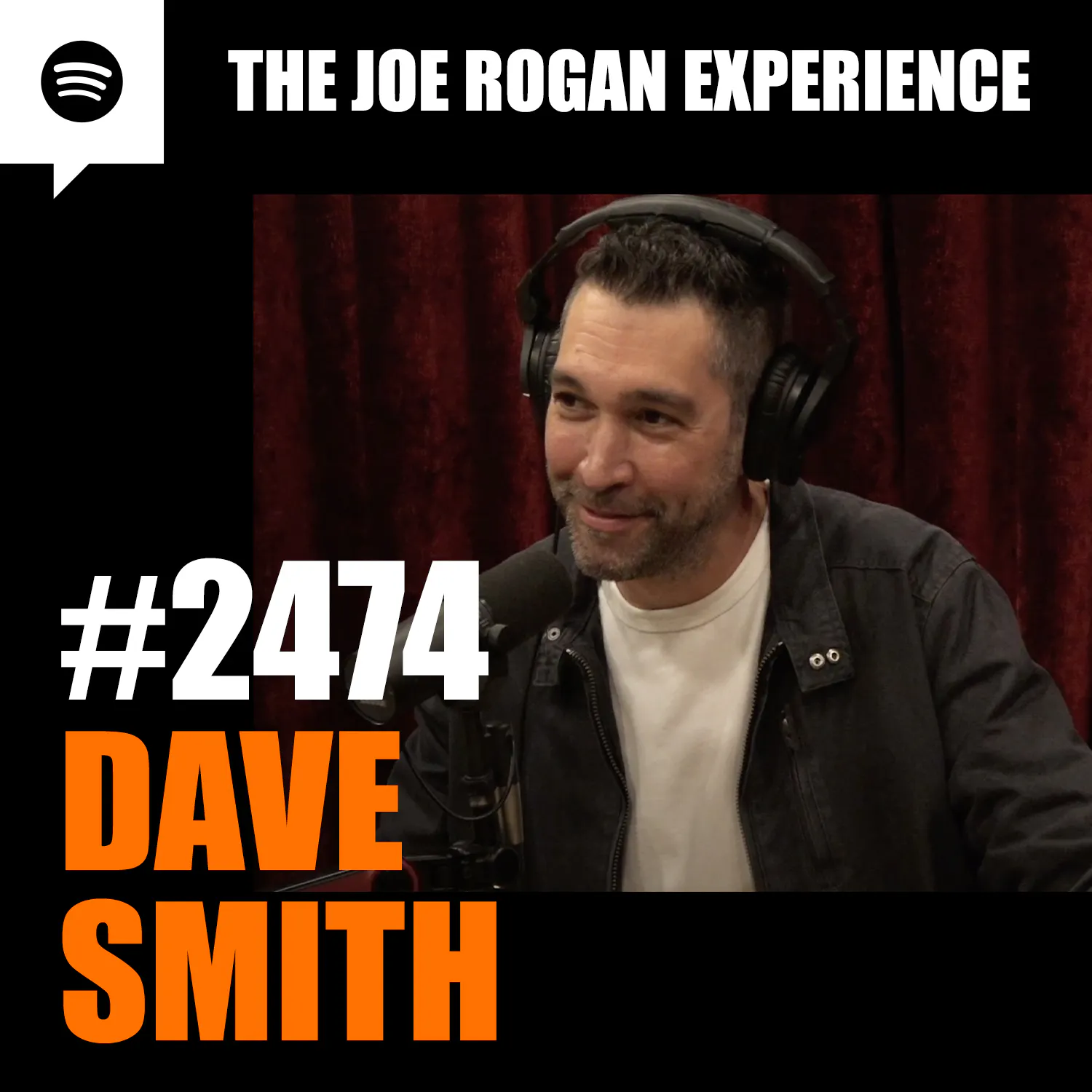
Overview of #2474 - Dave Smith (Joe Rogan Experience)
A wide-ranging conversation between Joe Rogan and comedian/political commentator Dave Smith covering politics, media, MMA/UFC, tech (AI, bots), immigration, and cultural topics. The episode mixes detailed fight analysis and sports anecdotes with deep skepticism about government, media narratives, and foreign-policy decision-making—especially the U.S./Iran situation—while touching on entertainment industry shifts (UFC → Paramount), platform manipulation, and the role of podcasts as authentic media.
Main topics covered
- Howard Lutnick / Cantor Fitzgerald tariffs controversy, alleged tariff-refund trades and conflict-of-interest concerns.
- Epstein ties and how public figures downplay connections.
- Insider trading, lobby influence, and corruption in government (incl. reference to Jared Kushner, Trump administration ties).
- Immigration and ICE: scale of undocumented population, asylum process, concerns about infiltration and “suicidal empathy.”
- U.S./Iran conflict: doubts about pre-war casualty claims, regime-change motives, Israel’s influence, and skepticism about war justifications.
- Media, podcasts, and authenticity: mainstream media decline, podcast influence, and attempts by legacy media to “copy” podcast style.
- Social platforms, bots, and AI: fake streaming view-farms, AI-generated music/songs, and the impact of Elon Musk’s Twitter changes.
- MMA/UFC deep dive: fighters (Conor McGregor, Kamaru Usman, Leon Edwards, Dustin Poirier, Francis Ngannou, Ilya Topuria, Justin Gaethje, Alex Pereira, Cyril Gane, Kayla Harrison, etc.), tactics (calf kicks, stance, leg kicks), knockout psychology, weight cutting, refereeing issues, and safety.
- UFC business move to Paramount+: piracy’s role, subscription economics, and fan implications.
- Miscellaneous cultural riffs: Waymo/local homeless incidents, video games addiction, post office praise, and comedic host shout-outs (Tim Dillon, Theo Vaughn).
Key takeaways
- Lutnick/Cantor story: reporting suggests Cantor explored secondary tariff-refund trades and may have facilitated small transactions, but there’s no public proof of massive profits yet. Congressional investigation ongoing.
- Media authenticity matters: Rogan and Smith argue podcasts filled a trust gap and exposed mainstream media’s loss of credibility; corporate outlets trying to mimic podcast aesthetics aren’t fixing the core problem.
- War skepticism: both are highly skeptical of rushed or opaque war rationales. They urge skepticism about casualty claims used to justify interventions and highlight geopolitical motivations (e.g., Israeli influence).
- Immigration & asylum complexities: political and humanitarian tensions; concerns about how asylum processes can delay removal of dangerous actors and cause governance strain.
- MMA specifics: one strike or mistake can change fights and fighters’ careers (knockout effects on confidence and strategy). Tactical evolution (calf kicks) reshaped divisions; weight-cutting remains a major safety and fairness issue.
- UFC → Paramount+: Good for consumer access (fewer pay-per-views, broader reach) though Rogan worries about losing premium-pay-per-view model for hardcore fans. Paramount invested heavily to scale subscribers by leveraging UFC’s audience.
- Platform manipulation: bot farms and fake streaming are real and increasingly targeted by law enforcement; AI-generated content complicates authenticity debates.
- Authentic personalities (e.g., Tim Dillon, Conor McGregor) draw attention—authenticity explains podcast and alternative media power.
Notable quotes / memorable lines
- “There’s something about a really confident liar.” (on public figures downplaying ties)
- “AI is going to be better. It’s not gonna be greedy. Well, as long as it determines that human life is valuable.” (on AI governance)
- “People are great as individuals. But when they get in a group, they’re the worst.” (on group dynamics / tribalism)
- “The most exciting sport in the world on its worst day.” (on MMA/UFC even when cards are stale)
Sports / MMA highlights (concise)
- Knockouts reshape narratives: Leon Edwards’ head-kick knockout of Kamaru Usman and subsequent rematch illustrates how one strike alters fighter psychology and game plans.
- Calf-kick evolution: becoming a major leg-attack technique (vs. older thigh-focused leg kicks), significantly affecting fight strategy.
- Weight-cutting critique: extreme dehydration for weight makes fights more about who can rehydrate best, not purely fighting skill; suggested remedies include adding weight classes and changing weigh-in practices.
- Specific fights and fighters discussed: Conor McGregor (stadium draws, personality), Ilya Topuria vs. Justin Gaethje concerns for White House event (heat/humidity risks), Francis Ngannou’s evolution, Alex Pereira/Cyril Gane dynamics, Kayla Harrison and U.S. champions noted.
- Logistics concerns: UFC at the White House (outdoor June event) risks heat, humidity, fighter safety, and fan experience.
Politics & foreign policy conclusions
- Strong skepticism regarding rushed or poorly evidenced pretexts for war; push for independent verification before accepting casualty/injustice claims that justify intervention.
- Israeli influence on U.S. foreign policy was discussed repeatedly; Rogan/Smith see this as a natural factor to scrutinize.
- Praise for some political outsider tendencies (Trump’s anti-war rhetoric historically) but frustration at the administration’s actions when it diverges from non-interventionist promises.
- Suggestion that mainstream political coalitions have been disrupted; potential for new coalitions (America-first skepticism of forever wars) to form.
Media, tech & platform recommendations (implied)
- Demand transparency and independent verification for casualty/investigation claims before supporting military action.
- Reevaluate weigh-in rules and weight-class structure in MMA to improve safety (e.g., closer/extra weight classes, same-day weigh policies, stricter medical oversight).
- Encourage platform accountability: detect and punish bot farms and fake-streaming fraud; require better provenance for AI-generated content.
- Value authentic long-form public discourse over short, performative media soundbites.
Action items / practical suggestions from the convo
- Verify major claims (e.g., mass casualty figures, insider trading profits) with multiple sources before accepting them as justification for policy or war.
- Reform MMA safety rules: consider additional weight classes; standardize fouls handling (eye pokes, groin strikes) and reduce referee variability.
- Consumers: consider Paramount+ if you want regular access to UFC events (cost comparison vs. pay-per-view).
- Media consumers: prioritize long-form sources and checks (podcasts, primary documents) over headline narratives; watch for bot-driven metrics.
Sponsors & interstitials mentioned
(ads included in the episode — callers/readers should note these were part of the original transcript)
- Blinds.com
- Intuit TurboTax (in‑person expert locations)
- Visible Wireless
- TaxAct
- Denny’s promotions
- Neuro (NeuroGum / NeuroMint) mentioned via Tim Dillon ad
Bottom line
This episode is a conversational mash-up of political skepticism, media criticism, and deep MMA nerding. Rogan and Smith push for independent verification in foreign-policy narratives, argue for authenticity in media, critique institutional incentives in politics and sports, and deliver detailed, opinionated breakdowns of fighters, fights, and industry decisions. It’s useful both for listeners wanting quick takeaways on the Iran tension and Cantor/Lutnick allegations, and for fans seeking granular MMA analysis and industry perspective on the UFC’s Paramount move.