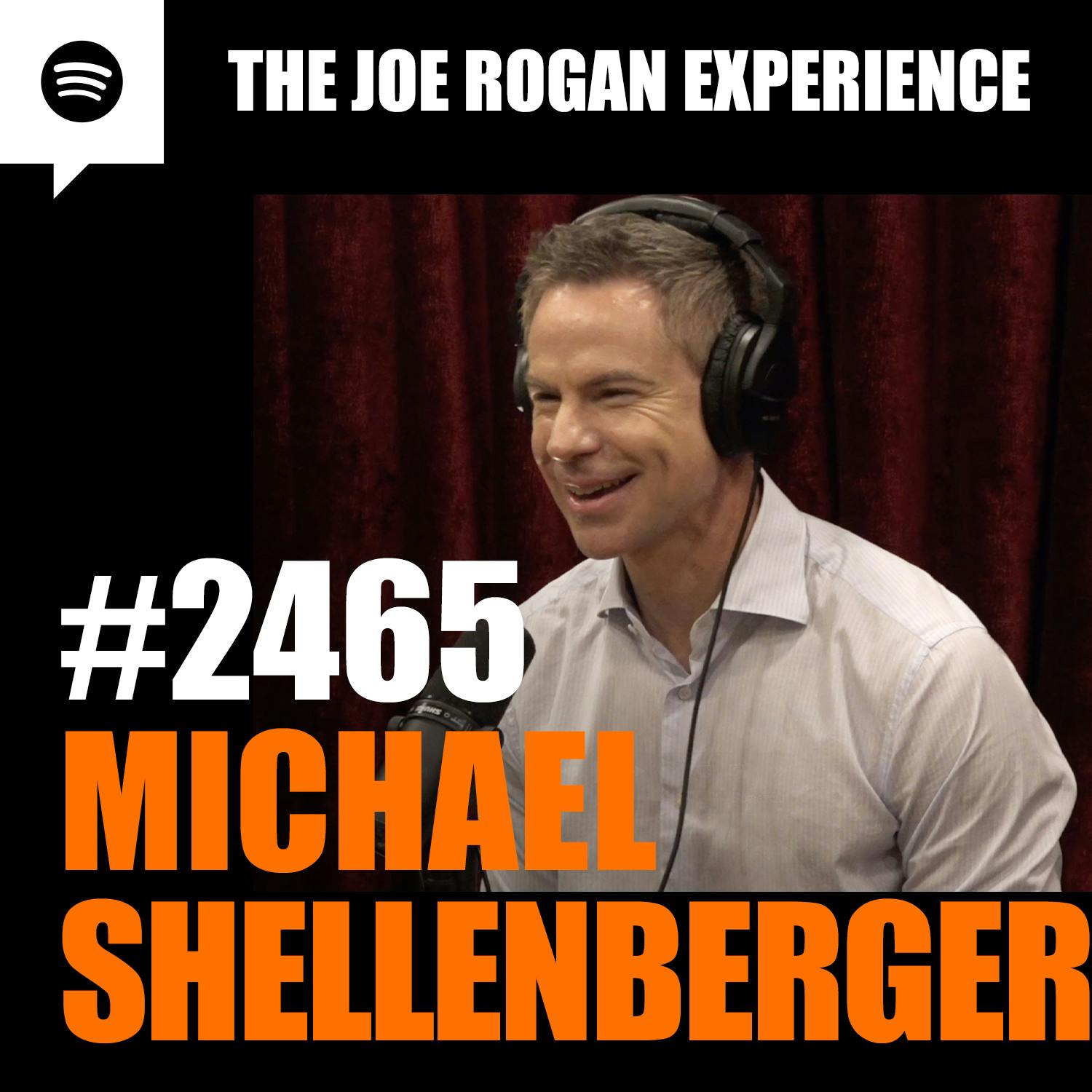
Overview of #2465 - Michael Shellenberger (The Joe Rogan Experience)
Joe Rogan interviews Michael Shellenberger in a wide-ranging conversation touching on geopolitics, US foreign policy under Trump, Iran/Venezuela developments, domestic politics (border policy, protests, policing), California's urban crises (homelessness, San Francisco/Oakland), UFO/UAP disclosure, Jeffrey Epstein files and conspiracy questions, and spirituality/Christianity. The discussion blends reporting, opinion, skepticism, and personal reflections; Shellenberger often frames events in terms of changing institutional paradigms, accountability, and the need for transparency.
Main topics discussed
Trump, foreign policy, and recent strikes
- Shellenberger argues the Trump administration is operating in a new, less multilateral paradigm: decisions driven by the President rather than the pre-2020 “rules-based” order and think-tank/State Department consensus.
- He interprets recent actions against Iran and Venezuela as assertions of American power rather than carefully planned regime-change strategies; impatience and “shake-up” tactics are emphasized.
- Discussion of whether Trump is independently driving policy or being influenced by others (Netanyahu, war hawks) — Shellenberger contends Trump acts largely on his own judgment.
- Concerns raised about escalation risks and the possibility of broader conflict amid simultaneous tensions in Gaza/Israel and Ukraine.
Iran, regional instability, and domestic security concerns
- Shellenberger and Rogan worry about potential Iranian retaliation, including activation of proxy/terror networks and risks at the US border.
- They highlight the porous U.S. southern border and suggest it complicates homeland security in a heightened international threat environment.
AI, autonomous weapons, and national industrial strategy
- Conversation on tech companies (Anthropic, OpenAI) and DoD partnerships; moral and strategic debates about AI-enabled autonomous weapons.
- Shellenberger frames Trump-era policy as integrating industrial, economic, and security strategies (nationalist lens) and prefers investment at home, albeit mixed with support for defending “Western civilization.”
Domestic politics: immigration, ICE raids, and protests
- Deep critique of recent ICE operations (Minneapolis raid example) and the chaotic fallout, including the killing of Alexied Preddie (discussion of the P320 firearm and accidental discharge theories).
- Shellenberger argues protests are often organized/paid, and that some actions appear designed to shift public opinion; he differentiates between historic civil-rights-style nonviolent protest and modern, organized activist campaigns.
- He criticizes aspects of progressive policy (open borders, criminal justice reforms) as producing unintended harms and enabling chaotic outcomes.
Policing, security staffing, and institutional morale
- Discussion of police/ICE recruitment, training shortfalls, signing bonuses, and declines in morale after public criticism and departures post-2020.
- Examples (San Francisco mayor incident, Minneapolis chaos) used to illustrate weak training, poor tactics, and consequences for civic safety.
California, San Francisco, and the “homeless industrial complex”
- Shellenberger offers a sustained critique of urban policy in California: alleged corruption, wasteful spending (cites large sums), poor outcomes (encampments, overdose deaths), and perverse incentives among nonprofits and contractors.
- He suggests accountability, audits, and political change (moderate candidates, involvement of tech philanthropists) as pathways to improvement; sees some modest recent progress but warns many areas (Oakland, Skid Row) remain dire.
UFO / UAP disclosure, government files, and the unknown
- Both discuss recent presidential statements and releases on UAPs; Shellenberger welcomes transparency but is skeptical about whether disclosures will reveal decisive explanations.
- Points raised:
- There are more sensor/videos (e.g., “Gimbal,” “GoFast,” “Tic Tac”) than publicly released.
- Reasons governments might withhold: sensor protection, national-security cover, misappropriation of funds, legal exposure.
- Skeptical voices (e.g., Jacques Vallée, Jesse Marcel/Jessie, Eric Weinstein discussions) see the phenomenon as complex — possibly a “control system” or cultural/psychological phenomenon — not simply extraterrestrial hardware with reverse engineering.
- Calls for targeted FOIA requests/unredactions of “potential explanations” lines in official documents.
Jeffrey Epstein: files, redactions, and lingering mysteries
- Shellenberger describes shifting views: initially leaning toward homicide theory, later uncertain after reviewing more material.
- Key points:
- Large trove of released and unreleased documents; redactions present and sometimes sloppy.
- Evidence raises serious questions (hidden cameras, strange coded language in emails—“shrimp,” “pizza,” grape soda/grape juice references—possible sexualized/trafficking connotations), but many items remain ambiguous or circumstantial.
- Discusses theories (sex-blackmail honeypot, intelligence involvement, contractor/financier roles) but acknowledges lack of conclusive evidence and encourages caution in drawing final judgments.
- Notes problems with politicized, sensationalist narrative and collateral damage (people losing jobs due to association without substantiated wrongdoing).
Religion, spirituality, psychedelics, and existential perspectives
- Shellenberger (who attends church) and Rogan reflect on Christianity’s moral teachings, its historical role (e.g., Girardian scapegoat theory), and spiritual experiences.
- UFO phenomena are described as sometimes having a spiritual/psychological dimension; discussion includes historical religious texts (Book of Enoch, Ezekiel), and how anomalous experiences could be religiously interpreted.
- Psychedelics mentioned as altering attachment to beliefs and potentially fostering humility and spiritual insight.
Miscellaneous topics: crop circles, UFO-seeing “prophets,” and cultural reactions
- Crop circles discussed as puzzling phenomena (precision, exploded nodes, scale) with competing explanations (hoaxers, unknown energies, possible military/disinfo involvement).
- Anecdotes about people claiming to “conjure” or observe lights (e.g., “Prophet Yahweh” segment) and media reactions; these are treated as culturally meaningful even if not conclusive evidence.
Notable quotes / insights
- “The older rules-based order is gone.” — used to summarize the perceived paradigm shift in foreign policy.
- “Trump is doing what he wants to do.” — Shellenberger’s contention about presidential independence in decision-making.
- On UFOs/UAPs: transparency is good, but “I’m skeptical they’ll tell us what it is — they may not even know.”
- On homelessness: “There is an industry in taking care of the homeless situation…you have an incentive to create homelessness.”
Key takeaways
- The US foreign-policy landscape is portrayed as significantly altered: more unilateral, less expert-driven, with higher risks of impulsive escalation.
- Domestic governance failures (border, policing, homelessness) are interlinked with political incentives, organizational capture, and cultural polarization; Shellenberger advocates accountability and pragmatic reform.
- UAP/UFO disclosure momentum is real and potentially helpful for transparency, but public releases may be partial, politically managed, or insufficient to answer core questions.
- Epstein’s files are messy and paradoxical: ambiguous evidence, substantial redactions, and many unresolved questions — avoid premature conspiratorial certainties but pursue transparent investigation.
- Spiritual and existential questions remain central: both the UFO phenomenon and religious traditions evoke awe and call for humility about human knowledge.
Recommendations / implied actions
- For journalists and investigators: push for unredacted release of key documents (UAP files, remaining Epstein records) and careful FOIA strategies.
- For policymakers: increase oversight and audits of large social programs (homelessness budgets), and prioritize effective, accountable interventions.
- For civic leaders: invest in better training, recruitment, and morale for law enforcement and security personnel; address systemic causes rather than purely performative actions.
- For the public: maintain healthy skepticism without paranoia — acknowledge complexity, avoid conspiratorial leaps from partial evidence.
Final note
This episode mixes reportage, opinion, and speculative discussion. Shellenberger repeatedly urges transparency and accountability while acknowledging uncertainty in many of the topics (UAPs, Epstein, intelligence ties). Listeners should treat assertions that lack documentary proof as provisional and distinguish between observed facts, plausible inferences, and speculative narratives.