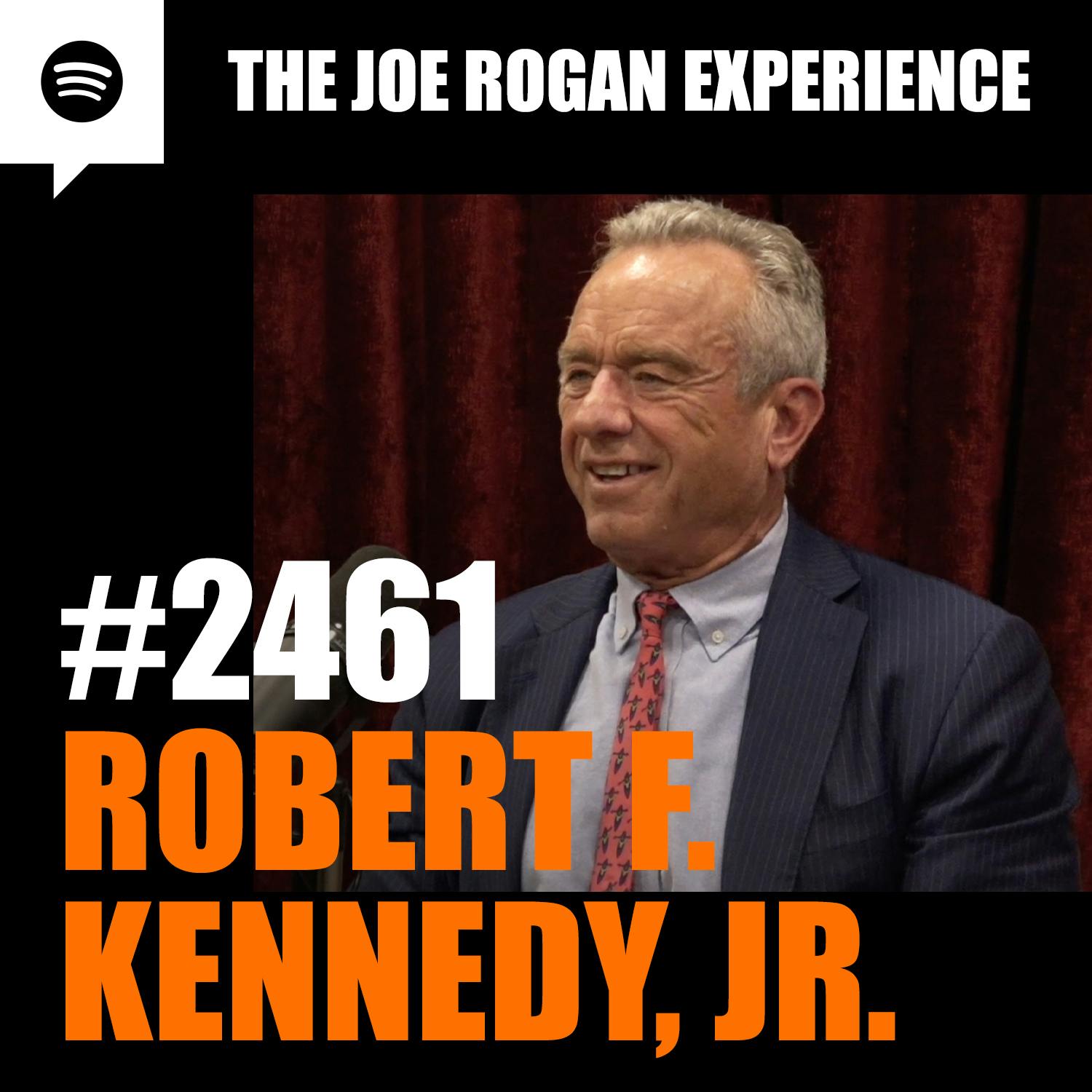
Overview of #2461 - Robert F. Kennedy, Jr. (The Joe Rogan Experience)
This episode is a long-form conversation covering U.S. public health policy, healthcare system reform, food and agricultural policy, drug pricing, social media polarization and free speech, immigration enforcement, psychedelics and addiction treatment, and related regulatory actions. The guest (speaking from experience in a health leadership role) describes systemic problems in Medicare/Medicaid, perverse incentives across health and food systems, and a set of administrative reforms and technology-driven solutions they are pursuing to change outcomes.
Key topics discussed
-
Medicare and Medicaid fraud
- Large-scale abuse in durable medical equipment, hospices, and home-care waivers.
- Fraud networks allegedly tied to foreign actors (claims about Cuban, Russian, Somali operations).
- Program integrity was reportedly de-emphasized previously; current efforts use AI to detect fraud.
- Speaker claims fraud estimates on Medicare/Medicaid may be ~$100 billion per year (presented as an estimate).
-
Health-care system failures and reform
- The U.S. spends more per capita on “sick care” yet has worse chronic-disease outcomes.
- Perverse incentives: fee-for-service drives volume (tests, drugs, visits) rather than prevention.
- Proposals: align incentives to reward keeping people healthy; pay doctors bundled/flat fees; empower consumers (“make the consumer the CEO of their own health”).
- Prior authorization reform: major insurers agreed to eliminate most prior auth delays.
- Interoperability: commitments from tech companies to give patients access to their medical records on phones.
-
Drug pricing and domestic production
- Most Favored Nation (MFN)-style approach to lower drug prices; platform (Trump Rx referenced) to allow consumers to buy lower-priced medicines.
- Push to onshore pharmaceutical manufacturing and build API capacity after COVID shortages.
-
Nutrition and food policy
- Major revision of dietary guidelines/“food pyramid” to emphasize whole foods and reduce ultra-processed foods.
- SNAP and school meal reforms: waivers to restrict taxpayer purchases of soda and candy via SNAP; doubling healthy food availability at retailers accepting SNAP.
- Military and institutional food improvements (example: Chef Robert Irvine improving base food quality and cost).
- Front-of-package labeling and a federal definition of “ultra-processed” food planned; apps (e.g., Yuka) to help shoppers.
- Claims that food system and ultra-processed diet are driving obesity, ADHD, neurodevelopmental disorders, and mental-health problems.
-
Specific food/medicine safety controversies
- Acetaminophen (Tylenol) risk messaging: speaker cites studies linking prenatal acetaminophen exposure to neurodevelopmental disorders; stance was a warning to physicians rather than a ban.
- Phasing out artificial food dyes (moving to vegetable/mineral-based dyes) and fast-tracking alternatives.
-
Agricultural chemicals and glyphosate
- Glyphosate (Roundup) dependence in U.S. monocrop agriculture (corn, soy) and national-security concerns due to foreign supply reliance.
- Executive actions focused on securing domestic supply while accelerating transition off glyphosate via regenerative farming and new technologies (laser weeders, drones).
- Health links discussed: gut microbiome disruption, associations with fatty liver and celiac-like issues; litigation history centered on non-Hodgkin’s lymphoma.
-
Peptides and compounding pharmacies
- Regulatory changes moved many peptides into a “do not compound” category during the previous administration (claimed to be illegal per statute), spawning a black market.
- Plans to restore access for many peptides from ethical suppliers while addressing safety and quality.
-
Psychedelics and addiction treatment
- Interest in clinical, therapeutic access to psychedelics (psilocybin, MDMA) and ibogaine for addiction/OPIODS, especially for veterans and first responders.
- Emphasis on controlled protocols, guidelines, and research rather than unregulated “wild west” usage.
-
Free speech, social media, and polarization
- Strong criticisms of social-media algorithms amplifying outrage and ideologically driven censorship; concern about government/industry collusion to deplatform voices.
- Discussion of UK “pub law” and third-party harassment liability as an example of speech regulation chilling conversation.
- Advocacy for more face-to-face conversations and long-form dialogue to reduce tribalism.
-
Education and youth tech policies
- Support for school policies banning or limiting cell-phone use (bell-to-bell bans) — reported improvements in student focus, behavior, and test scores.
-
Immigration and enforcement
- Support for stronger enforcement at the border; critique of sanctuary policies and the political polarization around immigration enforcement.
- Claims that many arrested in certain actions have criminal records and gang affiliations; argues enforcement should be against criminals while legal immigration must be preserved.
Main takeaways / conclusions
- The healthcare system is broken not because of lack of money but because incentives are misaligned: huge spending goes to chronic disease treatment instead of prevention and health promotion.
- Significant fraud exists in entitlement programs; AI and renewed program-integrity efforts are central to addressing it.
- Food policy change (dietary guidelines, SNAP restrictions, procurement changes for military/schools) is seen as a high-impact lever to reduce chronic disease, mental-health burdens, and public-safety problems (e.g., prison violence).
- Price transparency (posted hospital/provider prices, drug pricing reforms) and onshoring drug manufacture are key tactical wins to lower costs and increase resilience.
- Psychedelic-assisted therapy and ibogaine show promise for addiction and PTSD but require rigorous protocols and controlled clinical access.
- Technology is a double-edged sword: it enables fraud and polarization but also provides tools (AI, telehealth, apps) for detection, transparency, and behavior change.
- Restoring civil public discourse — via long-form conversations, reduced phone distractions, and fewer algorithmically amplified echo chambers — is essential for consensus-building.
Notable statistics & claims made by the guest (attributed to the speaker)
(These were presented in the conversation — treat these as the speaker’s claims.)
- U.S. health spending described as “$5 trillion a year” and “$4.3 trillion a year” in different places; large fraction tied to chronic disease.
- Estimated Medicare/Medicaid fraud: “at least $100 billion a year.”
- 77% of American kids cannot qualify for military service (claimed due to health/chronic-disease burdens).
- Diabetes/pre-diabetes: claimed “38% of teens” are diabetic or pre-diabetic.
- Autism rates: historically 0.8 per 10,000 in 1970 vs. now “1 in 31” overall, “1 in 19” in California, and “1 in 12.5 boys” (speaker’s figures).
- Hospital birth price variation: example given of $1,300 (lowest) to $22,000 (highest) for the same service in Manhattan-area hospitals.
- Drug pricing example: Ozempic list price cited $1,350 in the U.S. vs. ~$88 in London (speaker’s cited numbers).
- SNAP purchases: soda accounted for around 18% of SNAP purchases (presented as a claim).
Notable quotes / insights
- “If you are the person that can focus without distraction, you’re a good person to be in the job you’re at.” — on focus and ADHD.
- “We are not incentivized to make people well.” — on perverse incentives in healthcare.
- “Make the consumer the CEO of his own health.” — policy framing for consumer-directed healthcare funds.
- “When people get a chance to talk to someone they disagree with… you see their humanity.” — on polarization and dialogue.
- “We are taking steps to change the food culture in this country.” — on policy levers (food pyramid, SNAP, school/military meals).
Actionable recommendations & implications for listeners
-
Personal health:
- Be informed about medication risks — e.g., discuss acetaminophen use during pregnancy with your physician.
- Prioritize whole foods and reduce ultra-processed foods; consider tools/apps that evaluate product healthiness (e.g., Yuka-like apps).
- Cooking at home and local sourcing can save money and improve nutrition.
-
Civic engagement & consumer choices:
- Support price transparency and shop around for elective procedures when possible.
- If concerned about social media polarization, reduce algorithm exposure and seek longer-form, civil conversations.
-
Mental-health & addiction options:
- Watch developments in regulated psychedelic- and ibogaine-assisted therapies; consider clinical trials and VA/medical centers as pathways for access.
-
Advocacy:
- Encourage bipartisan approaches where possible — e.g., fraud prevention, better dietary standards for school and SNAP programs, and safe, clinical access to promising therapies.
Items for further investigation / nuance to bear in mind
- Many claims in the conversation are presented as speaker assertions and include large figures and causal links (e.g., glyphosate → celiac/neurological disorders, exact fraud totals); these warrant critical review and checking against peer-reviewed studies, agency reports, and independent audits.
- Public-policy trade-offs: securing domestic chemical/drug supply vs. liability and environmental/regenerative transitions are complex; proposed solutions often have economic and operational constraints (scale, cost, farmer adoption).
- Psychedelics and ibogaine: promising clinical evidence exists for specific conditions (PTSD, treatment-resistant depression, some addiction settings), but standardized protocols, safety screening, and follow-up are essential; generalized, unsupervised use carries risks.
- Litigation and regulatory history (e.g., glyphosate lawsuits, peptide compounding rules) are legally complex — readers should consult court documents and official FDA/HHS notices for specifics.
Final summary
This episode is an extended policy-focused interview arguing that U.S. health outcomes are driven by systemic failures: misaligned financial incentives, industrialized fraud, poor diets, and technology-enabled polarization. The speaker outlines concrete administrative measures — from fraud detection using AI, drug-price mechanisms, food-guideline overhauls, to medical-record interoperability — that they argue can produce rapid, measurable improvements. The conversation blends policy description, program anecdotes, and normative claims about partisanship, free speech, and societal values. Listeners should treat specific statistics and causal claims as starting points for follow-up research, but the episode provides a broad roadmap of current administrative levers being pursued to address chronic disease, health-cost inflation, and institutional dysfunction.