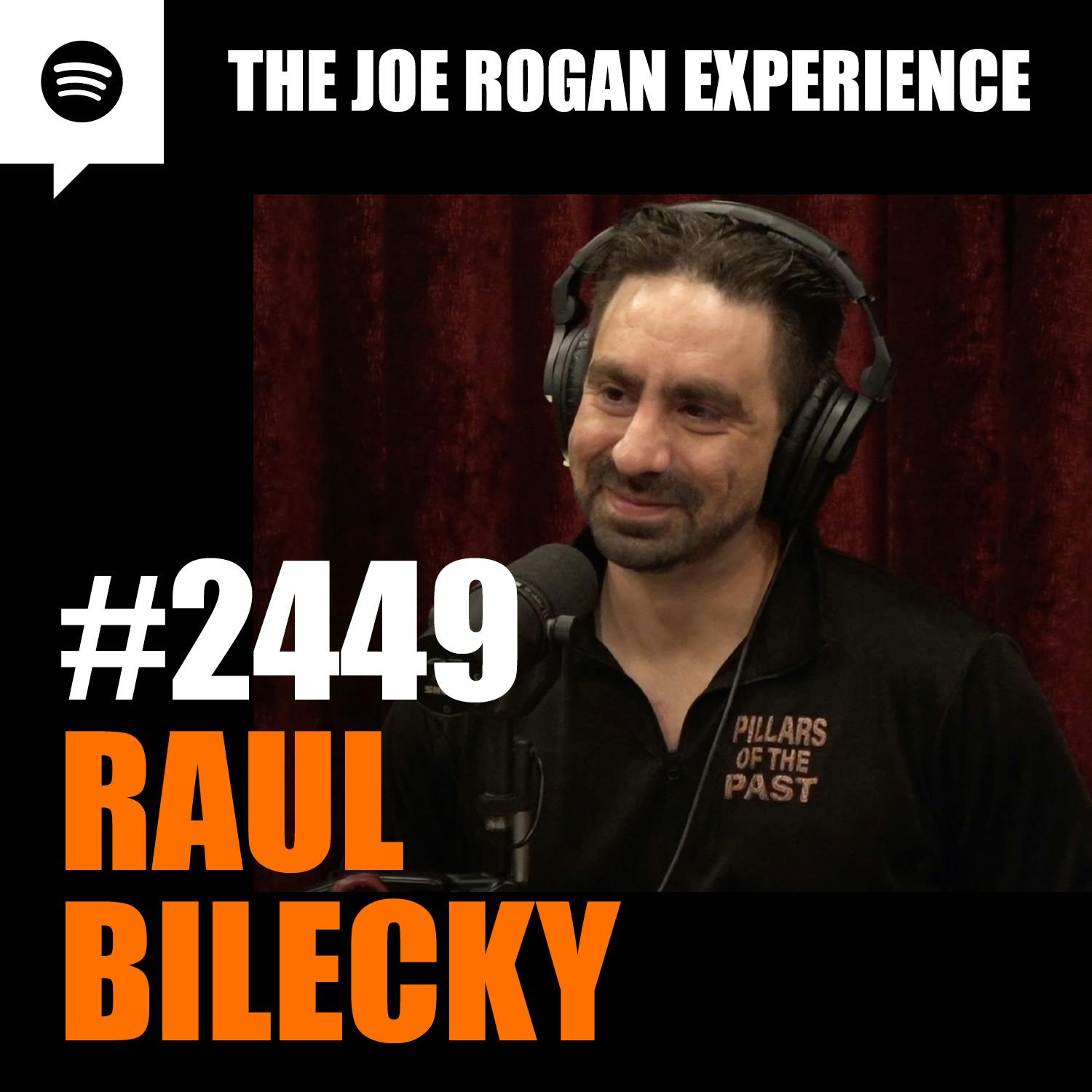
Overview of The Joe Rogan Experience #2449 — Raul Bilecky
Raul Bilecky (Pillars of the Past) joins Joe Rogan to discuss his fieldwork documenting undocumented and heavily looted archaeological sites across Peru. The conversation covers what Raul has filmed with drones and on-the-ground visits (megalithic sites, burial grounds, carved bedrock pyramids), the Nazca/Paracas mummies controversy, looting and the illicit antiquities trade, very-old pre-ceramic cultures (Norte Chico / Caral, Huaca Prieta), underground/ritual spaces (Chavín), elongated skulls, and tensions between independent investigators and mainstream archaeology. The episode blends first‑hand footage discussion, scientific skepticism about sensational claims, and advocacy for more funding, documentation and protection.
Key topics covered
-
Looting in southern Peru (Paracas/Nazca/Ica region)
- Extensive, decades-long grave-robbing: mummies torn apart, textiles/ bone scattered, looting pits visible from drones.
- Looting driven by a black market and private collectors; local “huaqueros” (grave-robbers) and networks moving material out of the country.
- Anecdotes of buyers demanding “provenance” videos of artifacts being dug up.
-
Raul’s field methodology
- Systematic use of Google Earth to locate undocumented sites → on-the-ground visits, drone mapping, 3D models.
- Many sites Raul documents have little or no prior media; some places he filmed are the only modern footage available.
-
Megalithic / pre-ceramic sites and bedrock-cut pyramids
- Sites like Purulín / the “platform pyramids” carved from bedrock (Raul found ~16 platforms) and other coastal complexes that may predate commonly cited timelines.
- Caral / Norte Chico discussion: extremely old coastal civilization with sunken circular plazas; possible antiquity comparable to or predating conventional Old World chronologies.
- Corollary: coastal sites repeatedly buried/eroded by El Niño/tsunamis and agriculture; much evidence lost or obscured.
-
Chavín and subterranean ritual architecture
- Chavín de Huántar (Lanzón Monolith) and deep underground galleries; reports of altered perception inside, historical accounts of ritual practices including use of San Pedro (mescaline-containing cactus).
-
Nazca / Paracas “mummies” controversy
- Discussion of the small humanoid specimens (so-called Nazca mummies) — Raul and Joe express heavy skepticism.
- Points raised: many specimens appear composite or fabricated from human/animal remains; DNA/CT data sometimes presented by the same small circle of promoters; monetary incentives (shows, series, subscriptions) drive sensationalism.
- Cases discussed: “Maria” and “Montserrat” specimens — specialists have highlighted anatomical inconsistencies, mismatched bones, and signs of modern manipulation. Raul believes many specimens are hoaxes or built using genuine ancient bones to get radiocarbon dates.
-
Elongated skulls and cranial deformation
- Numerous Paracas/Peruvian elongated skulls exist; debate whether they are intentional cranial binding, distinct populations, or evidence of different human branches.
- Some skulls show increased cranial volume and unusual anatomy; Raul calls for rigorous DNA and osteological studies but notes bureaucratic and funding obstacles.
-
Institutional/academic friction
- Critique of mainstream archaeology for conservatism, gatekeeping and resistance to new data or unconventional ideas.
- Calls for open-mindedness, peer review, and more funding for comprehensive, transparent studies (DNA, CT, SAR/LIDAR, muon tomography).
-
Preservation threats beyond looting
- Agricultural expansion and land trafficking: bulldozing and planting over unprotected sites; difficulty getting timely government responses.
- Local socioeconomic factors complicate protection (subsistence farmers vs. corporate land traffickers).
-
Social/media environment
- Toxicity around controversial topics (Nazca mummies, YouTube/X debates). Raul advocates careful, evidence-based work and warns about AI-manipulated images and social-media-driven misinformation.
Main takeaways
- Peru contains an enormous—still poorly documented—archaeological record: megalithic structures, sunken plazas, bedrock-cut pyramids, subterranean complexes and massive burial grounds often unprotected.
- Looting and illicit trade are severe problems; many artifacts disappear into private collections or black markets rather than into museums or formal research channels.
- Some sensational claims (Nazca mummies, “alien” narratives) are likely fraudulent or at least heavily compromised; independent peer-reviewed analyses (CT scans, DNA, x‑rays by multidisciplinary specialists) are necessary to validate extraordinary claims.
- There is genuine archaeological value in sites Raul documents (e.g., pre-ceramic coastal complexes, Chavín subterranean architecture), warranting funding, coordinated study, and protection.
- Google Earth + drone mapping is an effective, low-cost method to discover and document undocumented sites; crowd-sourced mapping and community-led databases could support preservation.
- The academic system has blind spots and sometimes resists revising theories in light of new technologies (LIDAR, SAR, muon tomography, ground-penetrating radar), but technology is forcing new discoveries that merit investigation.
Notable insights and quotes (paraphrased)
- “You throw a stone and you’re finding an ancient archaeological site” — on how dense Peru’s archaeological record is.
- “They become landfills of human remains” — on looted burial grounds left full of bones and textiles.
- “If this is real, it changes everything. If it’s nonsense, let’s find out” — on the need for comprehensive, transparent government-supported study.
- Raul’s practical methodology: using Google Earth to locate sites, then drone + local guides to document them; many sites he filmed had no prior modern footage.
Skepticism & scientific points emphasized
- Many Nazca/Paracas “extraordinary” specimens show evidence of modern fabrication (mismatched bones, surgical-like cuts, added parts) or are being promoted via the same small networks repeatedly.
- Radiocarbon dates can be misleading if modern bone is combined with old material (e.g., using ancient bones in fabricated specimens to get old dates).
- Rigorous transparency: publish raw CT/DICOM files, DNA FASTA/metadata, blind peer review with multiple independent labs before accepting extraordinary paleobiological claims.
Actionable recommendations (from discussion)
- For researchers/organizations:
- Fund and coordinate multi‑institutional studies (DNA, CT scans, isotopes, direct excavation/stratigraphy, LIDAR/SAR) on key sites and unusual specimens.
- Prioritize documentation: drone mapping, 3D modeling, and publicly accessible databases for undocumented sites.
- Improve protections and rapid response for threatened sites (agricultural expansion, land traffickers, looters).
- For the public:
- Support independent documentation projects (e.g., Raul’s Pillars of the Past) if you value field documentation and preservation.
- Be skeptical of sensational claims posted on social media; demand peer-reviewed, independently replicated evidence.
- Report suspected local looting or trafficking to cultural heritage authorities and reputable NGOs.
- For content/platform creators:
- Avoid monetizing or amplifying unverified sensational artifacts without independent scientific confirmation.
Resources, people & where to watch
- Raul Bilecky — YouTube channel: Pillars of the Past (primary source of his footage and expedition videos).
- Joe Rogan Experience #2449 (episode) — full video/audio on Spotify/YouTube excerpts.
- Key related topics for further reading/viewing:
- Caral / Norte Chico and Huaca Prieta (pre-ceramic coastal Peru)
- Chavín de Huántar (Lanzón Monolith, subterranean ritual galleries)
- Paracas skulls and Paracas culture (museum collections; caution on provenance)
- Academic critiques and CT/DNA analyses of Nazca/Paracas specimens (seek peer-reviewed reports and independent specialists’ analyses)
- Technologies: LIDAR/SAR, muon tomography, GPR, drone photogrammetry for archaeology
Final note
This episode is a mix of reliable on-the-ground documentation (drones, site footage) and open debate about controversial finds. Raul’s work highlights the urgency of mapping and protecting Peru’s understudied archaeological wealth, while also urging rigorous, transparent science to separate genuine discoveries from hoaxes and profit-driven sensationalism.