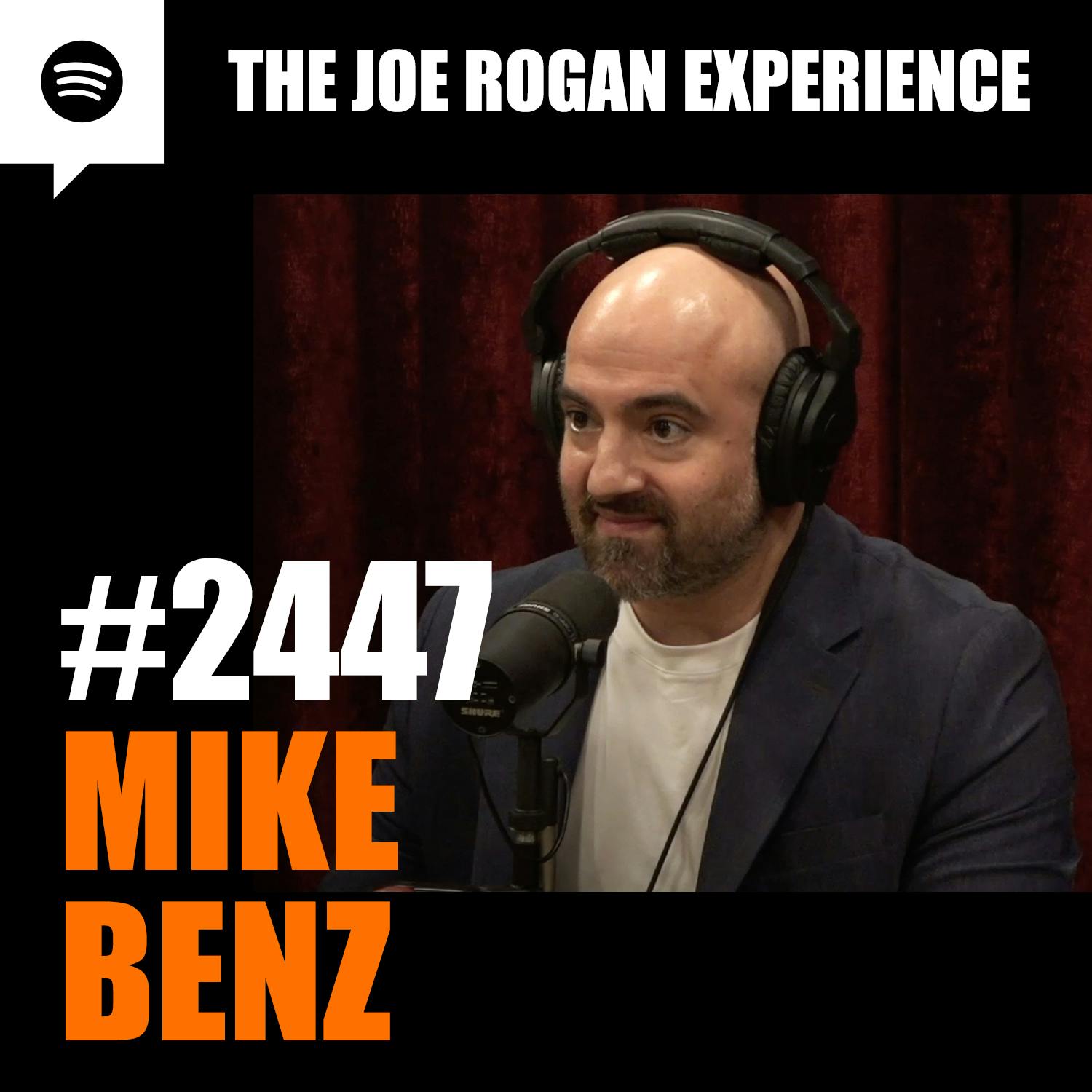
Overview of #2447 - Mike Benz (Joe Rogan Experience)
This episode is a long-form discussion with researcher/journalist Mike Benz about the newly released Justice Department/FBI files connected to Jeffrey Epstein, the broader historical role of U.S. intelligence in covert finance and covert operations, and what those disclosures reveal about the relationships between governments, intelligence agencies, organized crime, finance, and private “fixers.” Benz traces patterns from the 1940s through Iran–Contra, BCCI, and Epstein’s career; explains legal/FOIA mechanics that made the recent DOJ release possible; and argues for compelled declassification of CIA-originated records relating to Epstein.
Main takeaways
- The congressional law that forced the recent DOJ/FBI file release covered Justice Department-originated files only — it did not compel CIA-originated records. That gap likely conceals a large chunk of potentially-relevant intelligence material.
- The JFK file release (driven by a legal mandate in 1992 and an ODNI action in 2025) is an example of how forcing intelligence declassification can reveal the mechanics and structures of covert operations; Benz urges applying the same approach to Epstein-related CIA files.
- There is substantial historical precedent for intelligence agencies using covert finance, offshore banks, organized-crime networks, and private contractors to fund or run operations (examples: Vatican Bank, Castle Bank & Trust, BCCI, Safari Club, Operation Mongoose/Condor, Iran–Contra).
- Jeffrey Epstein fits the profile of a “fixer”/financial facilitator who operated in the sticky layer between private finance and intelligence. Benz presents a case that Epstein’s money/contacts likely intersected Washington and overseas covert finance for decades.
- FOIA/GLOMAR evidence: Epstein FOIA requests to the CIA (notably in 1999 and 2011) received a response that partially Glomar’d classification-sensitive items — Benz interprets that as a sign there may be classified CIA files referencing Epstein.
- Documents and internal FBI files can include unverified allegations from confidential human sources (CHSes); these require cautious interpretation (example: CHS claims about Dershowitz and Mossad, and the likely unreliability of one CHS).
- The public focus on the most lurid allegations (underage sex, trafficking, pizzagate-style claims) can distract from systemic lessons about how intelligence, finance, and private power interoperate. Benz argues the structural issues are the higher-value revelations.
- Benz calls for legal action — modeled on the JFK Records Collection Act — to compel CIA-originated declassification of Epstein-related records.
Topics discussed
- Recent DOJ/FBI document dump on Epstein-related investigations: scope, politics, why release happened now.
- FOIA mechanics, Glomar responses, and the limitations of FOIA for classified files.
- JFK files release (Tulsi Gabbard / ODNI) as a precedent for declassifying intelligence-originated records.
- Historical CIA covert finance and “dirty” operations: Operation Mongoose, Operation Condor, Operation Gladio, MKUltra.
- Intelligence ties to organized crime, Vatican Bank, offshore banking, and money laundering (Paul Hallowell, Castle Bank & Trust).
- BCCI scandal, Bear Stearns’ role, Capcom, and Jeffrey Epstein’s early finance career and alleged links to those networks.
- Iran–Contra, the “enterprise” model (private funding + black markets for covert operations), and the drugs-for-cash-for-guns pattern.
- Epstein as a “fixer”/connector: social parties, access to elites, and the role of sexual parties as social currency (distinguishing facilitation from provable systematic blackmail).
- Problems of interpreting raw FBI files and unverified informant claims (examples of viral claims and their context).
- Cases connecting DOJ/FBI, CIA, and political figures (Rolando Masfer memo in JFK files; Bill Barr / DOJ history).
- Broader concerns about state-private capture: climate finance, surveillance (15-minute cities example), censorship-industrial complex, U.K.–U.S. coordination on online “safety.”
Important documents & examples Benz cites
- DOJ/FBI files released by Congress (the recent 3.5 million files referenced).
- Tulsi Gabbard / ODNI-unredacted JFK file releases (as precedent).
- CIA memo regarding “Estimate of damage which could accrue to CIA Miami through prosecution of the Orlando Massfer Haitian Invasion Group” — used as a template for how prosecutions can be limited to protect covert equities.
- Larry Summers email discussing Vatican Bank politics (seen in the DOJ files).
- Epstein’s FOIA requests to the CIA in 1999 and 2011 and the CIA’s partial Glomar response.
- BCCI (Bank of Credit and Commerce International) investigations; Bear Stearns’ clearing of BCCI transactions; Capcom (the “bank within the bank”).
- Southern Air Transport (CIA proprietary airline) involvement in Iran–Contra logistics.
- Historical sources Benz recommends: Operation Gladio (book by Paul Williams) and various Senate/Justice reports on BCCI and Iran–Contra.
Risks, caveats, and how to interpret these files
- FBI/DOJ files frequently contain unverified tips, anonymous accusations, and confidential human source reports; inclusion in a file is not proof of criminality. Historical parallels: Steele dossier and parts of Russiagate.
- Viral social-media interpretations often conflate allegation, rumor, and verified evidence. Benz urges careful document-based corroboration (check file numbers, originals).
- Conspiracy-adjacent content (e.g., pizzagate, extreme allegations) can accompany real records; such content both muddies public perception and risks dismissing real, provable malfeasance.
- Even when documents exist, national-security claims, classification, and interagency pressure can prevent fully transparent public accounting unless Congress compels release.
Recommendations / Action items Benz suggests
- Pass legislation comparable to the JFK Records Collection Act specifically requiring the CIA (and other intelligence entities) to review and release Epstein-related and other relevant records — i.e., compel CIA-originated file declassification.
- Independent oversight: set up an independent review board to manage declassification, similar to the JFK records process.
- Researchers/journalists should FOIA the CIA for correspondence/records related to Epstein (file references are public and FOIA-able where not classified).
- Approach raw DOJ/FBI files with documented corroboration and skepticism; prioritize documentary evidence over rumor and social amplification.
- Broader civic goal: publicize structural lessons about covert financing mechanisms and state-private capture to drive policy change.
Notable quotes / insights from Mike Benz
- “What we have access to now are internal documents from the Justice Department and the FBI that are normally… part of a criminal investigation. And so they're not normally disclosable to the public.”
- “This bill only compelled the disclosure of Justice Department originated files. It does not compel CIA-originated files.”
- “Jeffrey Epstein is part of a class of what are effectively professional fixers… who sit in the sticky layer between government and private sector.”
- On the value of document dumps: “This is why document drops like this are so vital… they allow you to put down real Jenga pieces about what actually happened.”
- On claims inside files: “Just because it's said in an FBI file does not make it true.”
Closing summary
Mike Benz uses the recent DOJ/FBI file release to tell a chain-story: covert operations require money, and historically the U.S. intelligence world has relied on opaque banking, private intermediaries, organized crime networks, and multinational financiers to run operations. Epstein, Benz argues, operated inside that ecosystem as a fixer and financier whose records likely touch both Justice Department and classified CIA equities. The DOJ release is consequential, but a fuller reckoning requires compelling CIA-originated records and careful, evidence-first investigation rather than social-media-driven conclusions. Benz urges congressional action and methodical research to convert the file smoke into concrete, accountable facts.