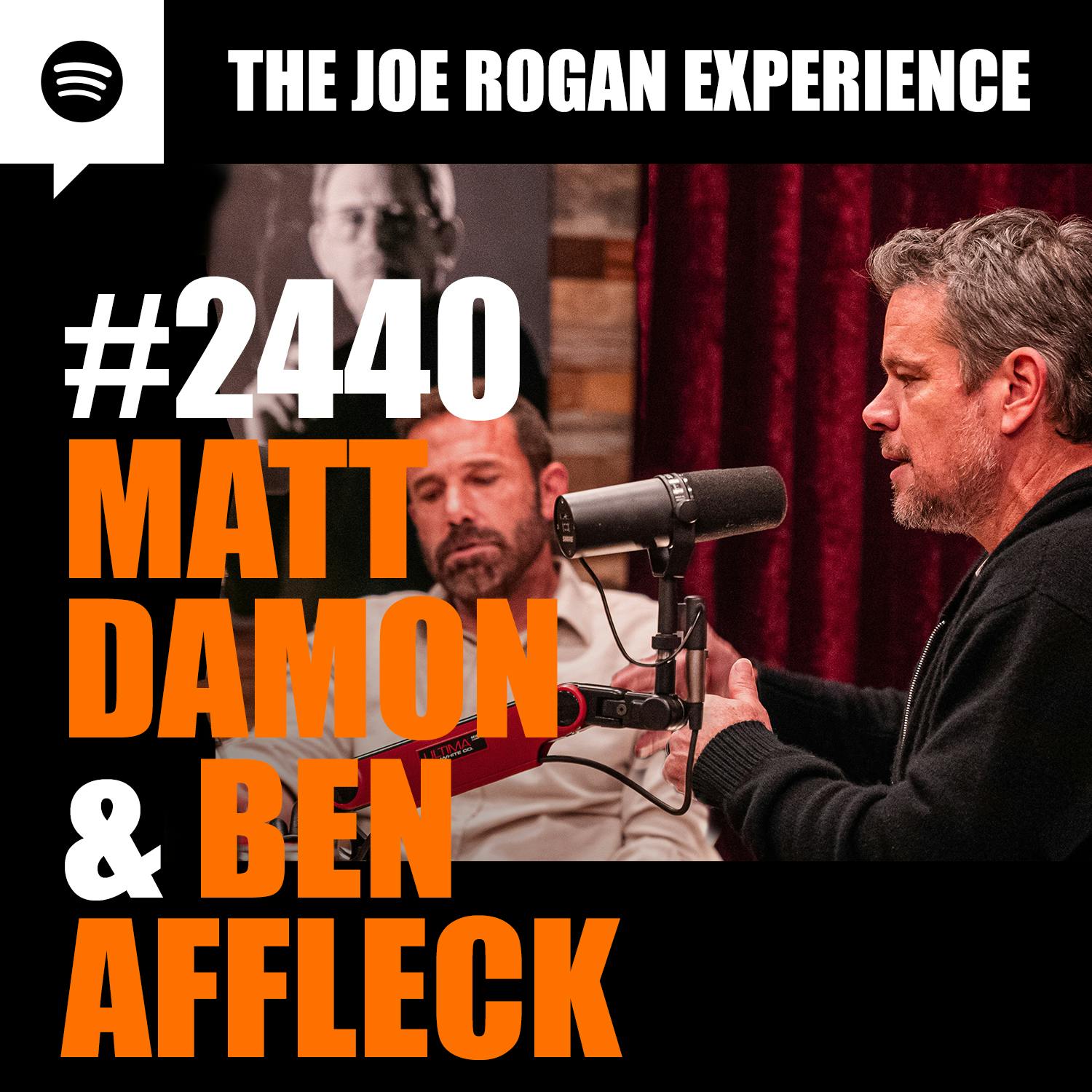
Overview of #2440 — Matt Damon & Ben Affleck (The Joe Rogan Experience)
Long-form conversation between Joe Rogan and guests Matt Damon and Ben Affleck. The discussion ranges widely: anecdotes from Hollywood and pop culture, the shifting business of film (theater vs. streaming), production choices (including a crew-bonus model they implemented), acting and directing craft, authenticity in storytelling, AI and filmmaking, sports/athletics (MMA, steroids, recovery), mental health and psychedelics, and broader cultural topics like cancel culture and forgiveness. The tone alternates between personal stories, practical industry insights, and reflections on art, performance, and human nature.
Topics discussed
-
Changes in the film industry
- Streaming vs theatrical release economics and audience habits
- Why streamers encourage different storytelling formats (big opening hooks, reiterated plot points)
- The marketing/publicity cost model for theatrical films (high spend to get people to show up opening weekend)
- How streaming metrics complicate defining “success” and value
-
Filmmaking & production practices
- The duo’s crew-bonus/participation structure (shared upside for below-the-line crew when the film performs)
- Casting, rehearsal, research, and authenticity (using technical advisors, real-life people, and rehearsals)
- Directing approach: creating safe environments, encouraging improvisation, listening and reacting in scenes
- How detail and research (real extras, practical knowledge) increase audience belief
-
Acting and performance
- Value of lived experience in performance (actors drawing on personal trauma/memory)
- Listening, improvisation, and allowing scenes to “breathe” versus rigidly sticking to scripted lines
- How great actors create a “tractor beam” effect that elevates everyone else
-
Storytelling & cinematic experience
- The unique communal power of watching movies in theaters vs. at home
- Examples of films and directors who changed the craft (references to Fear & Loathing, Hell’s Angels, Taxi Driver, Le Mans, Saving Private Ryan, etc.)
- The idea that truly good films can still attract audiences without pandering to attention-data tricks
-
Technology, metrics, and AI
- Concerns about algorithm-driven editing and attention metrics (streamers using data to tweak content)
- Limits of current AI: useful as a tool but unlikely to replace human-generated meaningful storytelling; AI tends to the mean/average
- Likeness/right-to-use issues and legal protections (watermarking, guild rules, contracts)
-
Sports, fighters, and performance-enhancing drugs
- MMA and fighter preparation, the toll on bodies and brains (CTE, long-term damage)
- Discussion around steroids, TRT-era controversies (e.g., Vitor Belfort), peptides and recovery stacks (BPC-157, TB-500)
- The narrow window of peak athletic performance and the psychological burden of greatness
-
Psychedelics & rehabilitation
- Ibogaine and psilocybin discussed as therapeutic tools for addiction and PTSD
- Examples of veteran and first-responder programs using psychedelics as treatment
-
Culture, morality & forgiveness
- Cancel culture, public shaming, and the need for nuance and forgiveness
- Complexity of people (anti-binary view of “good vs. bad”); the slippery slope of temptation in real-life dramas
Key takeaways / main insights
- Streaming has permanently changed distribution and creative incentives — but theatrical cinema retains unique value (shared attention, spectacle) and will co-exist with streaming.
- Financial structure matters: sharing upside with below-the-line crew creates buy-in, improves morale and the final product; it’s economically and ethically sensible when success occurs.
- AI is a tool, not a replacement for human sensitivity and lived experience. Creative decisions, emotional truth, and performance remain fundamentally human domains.
- Authenticity wins: careful research, using real people as advisors/extras, and attention to small details make fictional worlds believable.
- Great acting depends heavily on listening, presence, and collaboration; improvisation and allowed freedom often produce the most truthful moments.
- Athletes and fighters pay a significant long-term price; enhancements (legal or otherwise) and recovery tech (peptides, psychedelics, specialty therapies) complicate both ethics and health outcomes.
- Cultural conversations benefit from nuance and the possibility of redemption; public cancellation without proportional resolution is harmful.
Notable anecdotes & examples
- Hunter S. Thompson dentist waiting-room story — Thompson drinking clear liquid from a jug mid-morning, swearing in the chair; visit to Woody Creek Tavern and praise for Thompson’s books (Fear and Loathing, Rum Diary, Hell’s Angels).
- Crew-bonus model: Damon/Affleck negotiated performance/streaming milestones with Netflix so below-the-line crew get bonuses if viewership targets are hit — a template they hope others adopt.
- Production research: The Town example — real-life anecdotes (e.g., a cop who looks away during an armed robbery) used to create authentic movie moments.
- Dwayne Johnson’s hospital overdose scene (in The Smashing Machine / his dramatic work) — Johnson used personal memories (father, mother) to fuel the scene’s authenticity.
- Saving Private Ryan: Spielberg’s choice to cut opening dialogue and create intense, visceral framing (open shutter cinematography) as an example of cinematic craft.
- Vitor Belfort’s TRT-era fights highlighted ethical and performance issues related to testosterone therapy.
- Discussion of Ibogaine’s dramatic impact on addiction: claimed high single-treatment success rates for quitting certain addictive substances.
Notable quotes & concise insights (paraphrased)
- “Make shit the best you can. Make it really good — people will still come if it’s masterful.” (on resisting cheap algorithmic tricks)
- “If this film performs well, the entire crew gets bonuses.” (describing their profit-sharing structure)
- “A great actor is a tractor beam — they pull you into the scene.” (on acting craft)
- “AI tends toward the mean — it’s not going to write something deeply original on its own.” (on AI’s creative limits)
- “Watching a film in a theater is like going to church — everyone shows up at an appointed time and gives the same attention.” (on theatrical experience)
Recommendations / action items (for filmmakers, producers, and viewers)
- For producers: consider profit-sharing/bonus structures that include below-the-line crew to increase investment in quality and fairness.
- For filmmakers: prioritize authenticity — research, technical advisers, and real-world extras pay off on screen.
- For directors: create a safe environment that encourages listening and improvisation from actors; allow scenes to breathe rather than force attention-based tricks.
- For studios/streamers: be cautious about letting short-term data distort storytelling conventions; preserve space for films that require patience and attention.
- For audiences: choose theatrical viewing for spectacle-driven films (IMAX, battle sequences, big visuals) and save intimate/dramatic films for home if that better fits your lifestyle — but support the formats you value to send market signals.
Bottom line
This wide-ranging episode offers both practical, boots-on-the-ground insights into modern moviemaking (business models, production culture, and on-set craft) and larger reflections on art, performance, and the social dynamics that shape how we consume and judge culture. Damon and Affleck argue for fairness to crews, human-centered creativity, and humility in the face of new technologies and cultural pressures — all while sharing memorable Hollywood and sports anecdotes. If you want a single takeaway: protect the human elements that make stories meaningful even as the industry and tools evolve.