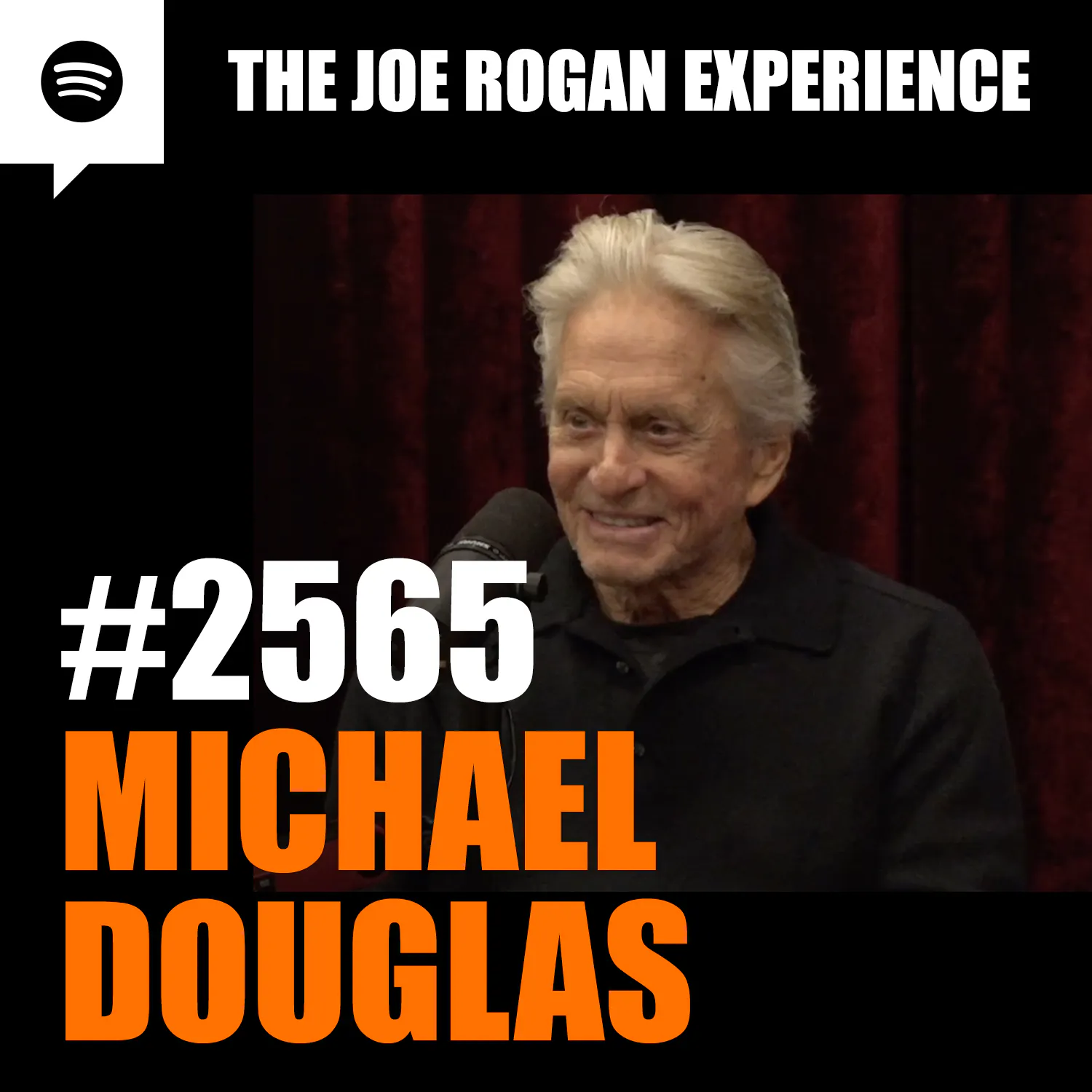
Overview of #2565 - Michael Douglas
Michael Douglas joins Joe Rogan for a wide-ranging conversation centered on his memoir, his film career, and his views on politics, war, wealth inequality, and modern technology. The discussion moves from Falling Down and Wall Street to his family legacy, cancer recovery, psychedelics, gun control, AI, and the state of American democracy. Douglas comes across as reflective, socially engaged, and still deeply concerned with the same social fractures he explored in his most famous films.
Main Topics Covered
His memoir and why he finally wrote it
- Douglas explains that he resisted writing a memoir for years.
- The decision came after his stage-four cancer diagnosis, which forced him to reassess his priorities.
- He originally wanted the book to be a kind of handbook about filmmaking, centered on a selection of his movies and how they were made.
- Over time, it became both a career book and a personal life story.
- He also framed it as part of a larger family legacy, given his father Kirk Douglas’s own memoirs and long career.
Family background and early life
- Douglas talks about being born in New Brunswick, New Jersey, while his parents were living in a castle tied to the Johnson family.
- He describes growing up with a split identity: East Coast private-school upbringing, with his father in Hollywood and his mother in theater.
- He shares an interesting family history involving his grandfather’s immigration from Belarus and a family connection to the Chernobyl region.
- He also recounts his shift from preppy college kid to hippie in the early 1960s at UC Santa Barbara.
Film career highlights and behind-the-scenes stories
- Falling Down: Douglas says the movie still resonates because the frustrations it dramatized are still very real.
- He recalls controversy over the film’s Korean grocery store scene and meeting with representatives who objected to it.
- Wall Street: He says he was shocked that Gordon Gekko was embraced as a hero by some viewers rather than seen as a villain.
- One Flew Over the Cuckoo’s Nest: He describes how he helped shepherd the project after his father initially tried to produce it, eventually becoming a producer on the film.
- The China Syndrome: He notes the eerie accuracy of the film’s nuclear meltdown scenario, which seemed to parallel Three Mile Island.
- Fatal Attraction: He reflects on how wrong the production team was about Glenn Close at first, and how her performance became iconic.
- Basic Instinct and other films: He discusses how his career often featured strong, complex female roles.
Hollywood, fame, and “nepo baby” criticism
- Douglas addresses the idea of being a “nepo baby,” saying family businesses are common in almost every industry.
- He acknowledges that having a famous father and good looks brought privilege, but also pressure and resentment from others.
- He notes that second-generation careers in Hollywood are often treated more harshly than in other fields.
- Rogan pushes back, arguing that jealousy is a major part of the criticism.
Social and Political Themes
Wealth inequality and the failure of the system
- Douglas and Rogan spend a large part of the conversation discussing the widening gap between rich and poor.
- Douglas argues that too many people are stuck in poverty, especially in neglected urban neighborhoods.
- He criticizes the way money is distributed through bureaucracy, NGOs, and political systems that often fail the people they are supposed to help.
- Both men say the system often rewards corruption while ordinary people struggle with housing, food, and stagnant wages.
Politics, corruption, and tribalism
- Douglas is highly critical of both parties and says politics has become too much of a profit center.
- He argues that money has corrupted democracy and turned politics into a career path for insiders, lobbyists, and donors.
- He expresses concern about tribalism and the two-party system’s tendency to force people into camps.
- Rogan and Douglas agree that many people vote based on identity or family tradition rather than informed policy.
Immigration, policing, and public trust
- Douglas says the border situation has been mismanaged and appears politically manipulated.
- He criticizes defund-the-police rhetoric, cashless bail, and the release of violent offenders.
- He also raises concerns about masked, militarized federal agents operating without clear identification.
- Rogan and Douglas agree that public trust in institutions has eroded badly.
War, Ukraine, Russia, and nuclear weapons
- Douglas strongly opposes the Iran conflict and warns about the broader dangers of endless war.
- He argues that the Russia-Ukraine war is a major quagmire and says he wants peace, not more escalation.
- He suggests that a truly historic achievement would be major nuclear disarmament, ideally involving the U.S. and Russia.
- He repeatedly returns to the idea that nuclear weapons make the world fundamentally unstable and obsolete.
Psychedelics, Mental Health, and Ibogaine
A major point of agreement
- Douglas and Rogan spend significant time discussing psychedelics as a tool for healing and self-understanding.
- Rogan credits psychedelics with changing his life, and Douglas is open and supportive of that view.
- They discuss how psychedelics can help people confront trauma, addiction, and destructive patterns.
Douglas’s view on psychedelic reform
- Douglas supports legal, supervised psychedelic therapy.
- He notes that he was helped by the counterculture’s openness to altered states and communal thinking.
- Rogan mentions Trump’s support for psychedelic therapies like ibogaine, especially for PTSD and addiction treatment.
- Both argue that these compounds should be studied and regulated rather than banned.
Guns, Violence, and Personal Safety
Douglas’s position on firearms
- Douglas says he is not a gun person and is uneasy about easy access to firearms.
- He points to domestic violence, accidents, and emotional impulse as major reasons gun access can be dangerous.
- Rogan argues that responsible gun ownership can protect families during civil unrest or violent crime.
- They respectfully disagree, but both acknowledge the complexity of the issue.
Views on AI and the Future
Anxiety about artificial intelligence
- Douglas is disturbed by the idea that AI could be used for conflict, manipulation, or control.
- Rogan argues that AI development is becoming a kind of arms race and may eventually exceed human control.
- They discuss the possibility that AI could make decisions about war and resource allocation in ways that ignore human values.
- Douglas expresses hope that humanity can still get ahead of these problems by working together.
Notable Takeaways
- Douglas believes Falling Down remains relevant because the social pressures it portrayed never really went away.
- He sees corruption, inequality, and division as the core problems driving much of modern instability.
- He believes memoir-writing forced him to confront his life honestly, including success, privilege, addiction culture, and family legacy.
- He remains skeptical of power structures, but still hopeful that better systems are possible.
- His strongest recurring theme is that society needs more cooperation, less tribalism, and a more humane use of resources.
Final Impression
This episode is less a celebrity interview and more a long conversation about the state of the world, filtered through Michael Douglas’s extraordinary life and career. He mixes Hollywood history with political frustration, personal reflection, and a continued desire for real systemic change.