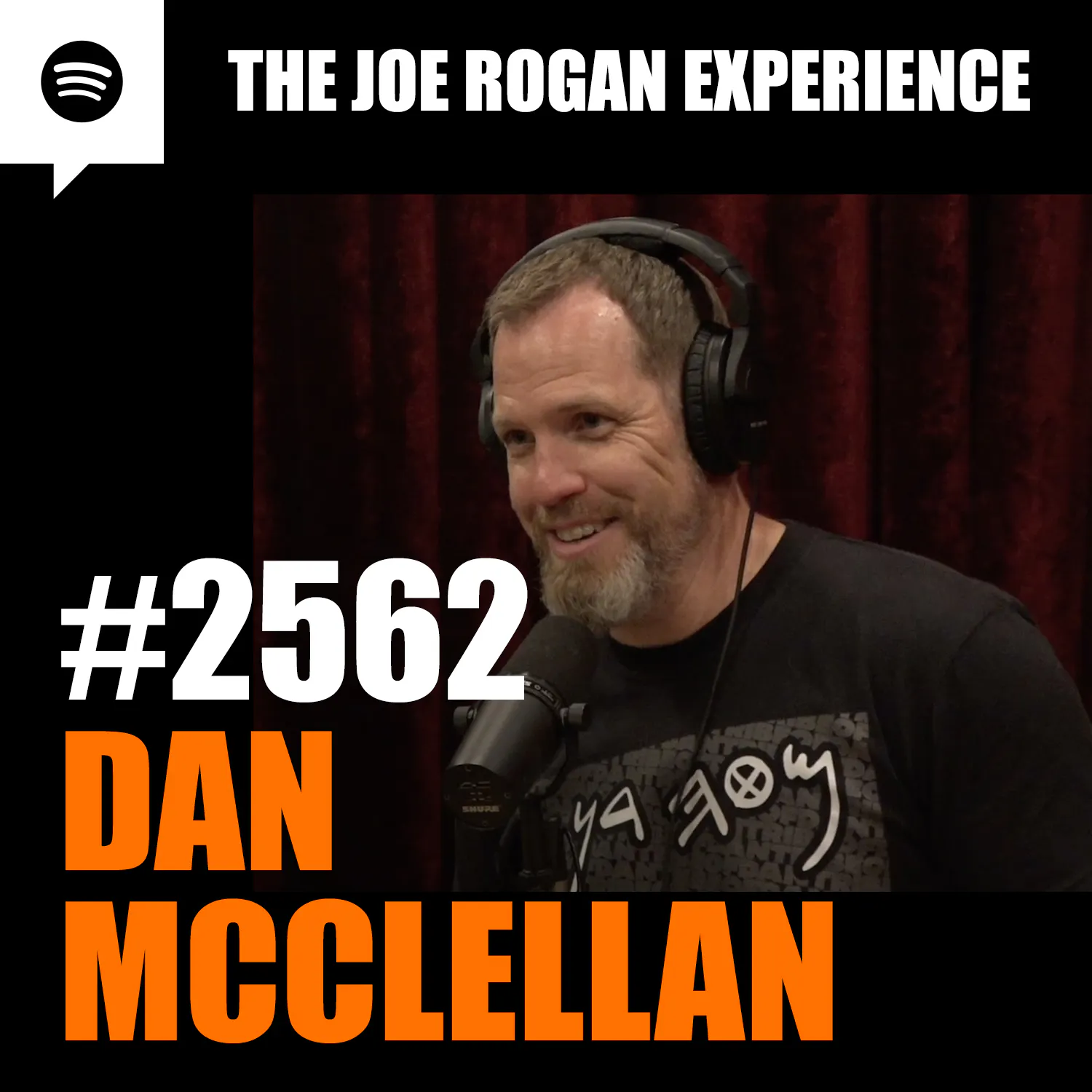
Overview of #2562 - Dan McClellan
Joe Rogan speaks with biblical scholar and content creator Dan McClellan about how the Bible was formed, how ancient texts should be read in historical context, and why many popular religious claims rely more on later interpretation than on the original wording. The conversation moves from ancient languages and textual criticism to religion’s role in social order, cognition, morality, and political polarization.
Key Topics Discussed
Bible scholarship and textual criticism
- McClellan explains that many biblical texts were written long after the events they describe and often reflect the politics, fears, and needs of later communities.
- He distinguishes between:
- genuine Pauline letters
- disputed Pauline letters
- letters later attributed to Paul but likely written by others
- He notes that modern Bible translations omit or footnote passages absent from the earliest manuscripts, including the long ending of Mark and several added verses in the New Testament.
Origins of biblical stories
- The discussion compares biblical narratives with older Near Eastern traditions:
- Moses and Sargon of Akkad as similar baby-in-a-basket stories
- Genesis flood traditions and earlier Mesopotamian flood accounts
- Adam and Eve as an etiological story explaining human conditions like labor, childbirth, shame, and snake hostility
- McClellan argues that many stories in Genesis are adapted from older regional traditions and reworked for Judean purposes.
Ancient languages and translation issues
- McClellan describes his work with:
- Hebrew
- Greek
- Aramaic
- Ugaritic
- He emphasizes that translation is never simple word-for-word substitution; meaning depends on genre, historical context, and linguistic development.
- He warns against relying too heavily on interlinear translations or surface-level word studies.
Religion, social order, and human cognition
- A major theme is that religion often functions as a social technology:
- it establishes group identity
- enforces norms
- reduces chaos in growing societies
- provides a sense of being watched by a moral authority
- He discusses cognitive science of religion and the human tendency to detect agency, which makes ideas like “an eye in the sky” psychologically powerful.
- He also discusses costly signaling and how rituals, clothing, and social behaviors communicate in-group membership.
Hell, salvation, and interpretation
- McClellan argues that the Bible does not present a single consistent doctrine of hell.
- He says later Christian tradition systematized and intensified ideas about eternal punishment, while biblical texts contain multiple, sometimes conflicting models:
- annihilation
- temporary punishment
- eternal conscious torment
- He suggests that the “everyone goes to hell unless they believe” version is more a later theological development than a direct biblical teaching.
Ethics, politics, and “parochial empathy”
- The conversation broadens into modern politics and social division.
- McClellan argues that humans naturally show strong empathy for their in-group but often dehumanize outsiders.
- He connects this to:
- tribalism
- political violence
- propaganda
- religious and ideological polarization
- He emphasizes that religion, politics, and identity can all be used to reinforce exclusion rather than compassion.
Personal faith and public scholarship
- McClellan says he keeps his personal faith private so his scholarship remains focused on data rather than personal testimony.
- He presents his work as an effort to let the evidence lead, rather than forcing scripture to fit a preferred ideology.
- Rogan praises that approach as unusually careful and intellectually honest.
Main Takeaways
- Biblical texts are historical products, not timeless documents dropped into history fully formed.
- Many familiar Bible stories are adaptations of older regional traditions.
- Translation and interpretation matter enormously; English Bibles often hide complexity.
- Religious ideas develop over time in response to social and political conditions.
- The Bible does not teach one simple, unified system on topics like hell, sin, or salvation.
- Human beings are naturally prone to tribal thinking, and religion can either mitigate or intensify that tendency.
- McClellan’s approach is to follow the evidence, not to defend a predetermined doctrine.
Notable Concepts Mentioned
Textual and historical terms
- Parousia: the expected second coming of Jesus
- Etiology: an origin story explaining why something is the way it is
- Costly signaling: rituals or behaviors that signal group membership
- Parochial empathy: empathy limited to one’s own group
- Mortuary bias: archaeological overreliance on burial remains because they preserve better
Examples used in the discussion
- The Kuntillet Ajrud inscription and possible references to Yahweh and Asherah
- The Tower of Babel as a likely reflection of Babylonian monumental architecture
- The Book of Enoch as a key source for early ideas about evil, divine rebellion, and punishment
- The Qumran/Dead Sea Scrolls as a major archive for textual reconstruction
- The Cornsweet illusion and phantom limb experiments to show how the brain actively constructs perception
Closing
The episode is less a debate about belief than a deep, wide-ranging tour of how ancient scripture, language, and religion actually work. McClellan’s core message is that understanding the Bible requires historical context, linguistic precision, and humility about how much of our certainty comes from later interpretation rather than the texts themselves.