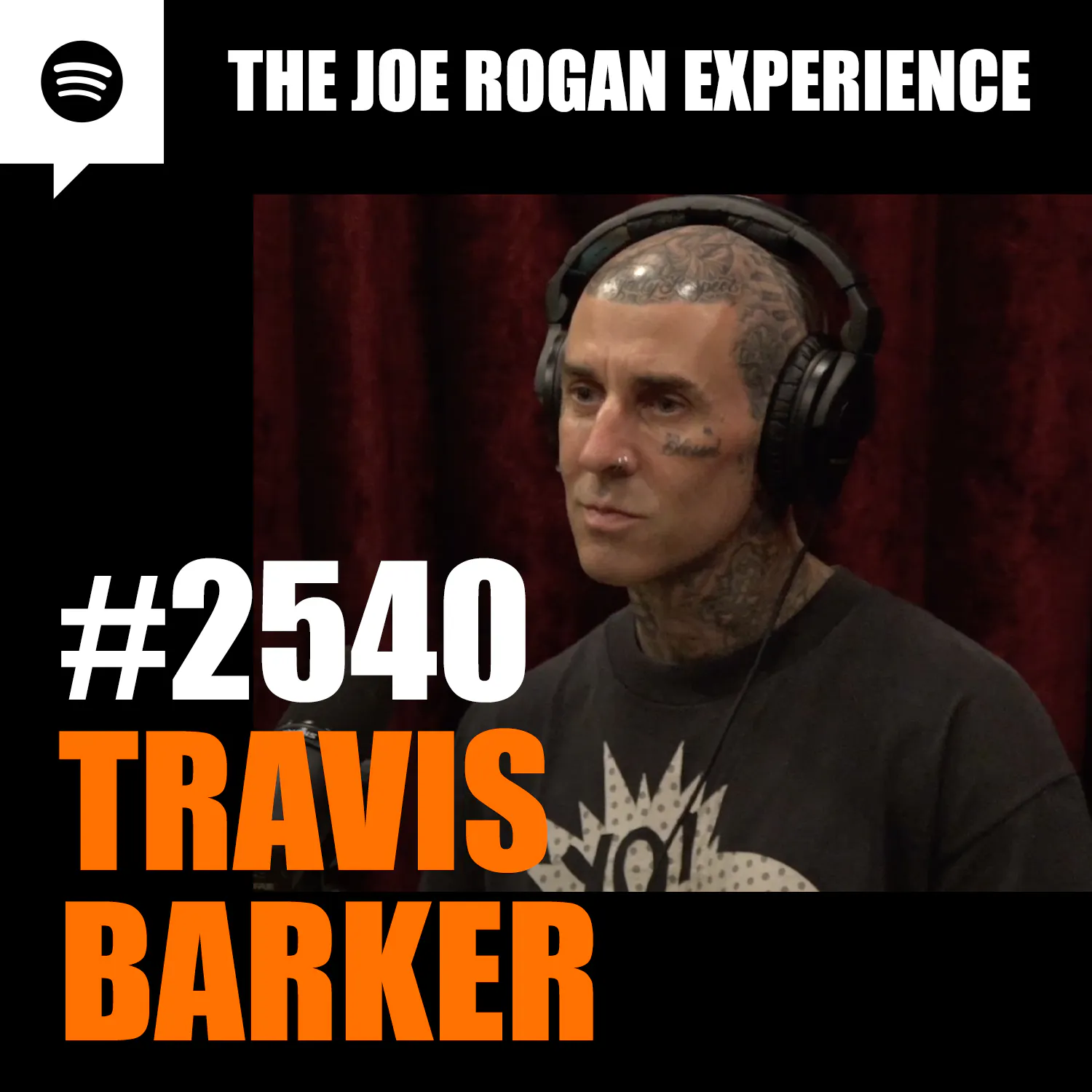
Overview of #2540 - Travis Barker
Joe Rogan and Travis Barker spend most of this conversation on Barker’s new documentary, his recovery from the 2008 plane crash, and the long shadow that trauma cast over his life. Travis talks candidly about surviving severe burns, multiple surgeries, survivor’s guilt, and a 20-year fear of flying that controlled touring, family travel, and his sense of freedom. The episode also digs into fatherhood, discipline, health, training, veganism, combat sports, and the value of obsession as a path to excellence.
Travis Barker’s Plane Crash, Recovery, and Fear of Flying
The crash and aftermath
- Barker recounts how the crash left him with:
- Severe burns over much of his body
- Around 30 surgeries in six months
- Broken back vertebrae
- Clotting issues and a permanent IVC filter
- He describes the hospital period as a brutal “trial by fire,” made harder by:
- Survivor’s guilt
- Pain medication struggles
- The emotional weight of losing close friends and crew members
Avoiding planes for 20 years
- Travis explains that his fear of flying became so intense that it dictated:
- Tour logistics
- Family travel
- Whether he would fly at all
- He and his family relied on buses, boats, and extremely long travel routes to avoid planes.
- He eventually chose to confront the trauma, fly again, and use that as a way to model resilience for his kids.
What changed
- The first flight back was far easier than he expected.
- He says a positive experience helped overwrite the mental image of disaster he had built over the years.
- He also emphasizes that surviving the crash and healing became a source of strength, not just trauma.
Documentary, Family, and Personal Growth
Why the documentary matters
- Travis says the documentary finally had an ending once he began flying again.
- He sees it as a chance to show:
- How he overcame extreme adversity
- How discipline and obsession helped him rebuild his life
- How someone can keep moving forward after tragedy
Fatherhood and family
- A major theme is how deeply he loves being with his kids.
- He and Joe talk about how people without children often don’t understand that kind of love.
- Travis says the crash and recovery made him appreciate life and family more than ever.
Relationship with his dad
- He says his relationship with his father was once difficult, but it eventually became something beautiful and close.
- He frames that transformation as part of the documentary’s emotional arc.
Obsession, Discipline, and What Makes People Great
“Be obsessed”
- Travis and Joe agree that the formula for success is obsession, repetition, and relentless work.
- He says he’s happiest when he’s:
- Practicing drums
- Training
- Working in the studio
- Staying in motion
The value of process
- Barker stresses that kids need to understand that progress takes time.
- He believes confidence comes from getting good at something, whether it’s:
- Music
- Sports
- Writing
- Carpentry
- Any craft that creates mastery
Living like a documentary subject
- Joe tells him to live as if a documentary crew is following him around.
- The idea: be the kind of person you’d admire in a film about somebody extraordinary.
Health, Training, and Recovery
Workout style
- Travis says he needs workouts that match drumming:
- Fast-twitch work
- High reps
- Sprints
- Jump rope
- Tempo-based training
- He avoids getting too bulky because it would hurt his performance.
Jiu-jitsu and combat sports
- The conversation goes deep into jiu-jitsu, controlled sparring, and the importance of smart training partners.
- Travis talks about training with Jean-Jacques Machado and how martial arts humbled him.
- Joe and Travis also discuss how combat sports give you a realistic sense of how hard fighting really is.
Recovery tools and medical issues
- Travis talks about:
- Hyperbaric chambers
- Clotting concerns from Factor V
- Taking blood thinners only when necessary
- Natural supports like beet juice and ginseng
- Joe brings up regenerative treatments like PRP and stem cells, especially for joints and disc issues.
Food, Veganism, and Performance
Travis’s diet
- Travis explains that he has been vegetarian since childhood and vegan for about 20 years.
- He says it was never about morality at first; he simply didn’t like meat.
- After the crash, he was pushed into eating high-protein recovery foods, including beef jerky, but eventually returned to a plant-based diet.
Veganism vs. meat
- Joe and Travis have a respectful back-and-forth about diet.
- Travis says he feels best on his current plant-based routine.
- Joe shares his own perspective on meat, hunting, and the importance of knowing where food comes from.
- Both agree that people need to find what works for them without being dogmatic.
Cars, Southern California, and Lifestyle
Old-school cars
- Travis is a serious car guy and talks about his collection of classic vehicles.
- He loves:
- Old Impalas
- Cadillacs
- Broncos
- K5 Blazers
- Raptor-style trucks
- He enjoys the mechanical feel and style of older cars more than modern ones.
Where he lives and works
- He likes keeping his life centered around:
- Home
- The studio
- Family
- Short, manageable driving distances
- He mentions Southern California spots like Santa Barbara, the desert, and Calabasas.
- He enjoys the freedom of moving between different environments without getting swallowed by city chaos.
UFC, Fighters, and the Mindset of Champions
Big fight talk
- A large chunk of the episode is Travis and Joe geeking out over UFC:
- Dominick Cruz’s footwork
- TJ Dillashaw’s style
- Dustin Poirier’s longevity
- Justin Gaethje’s violence and toughness
- Sean O’Malley’s creativity
- Merab Dvalishvili’s endurance
- Islam Makhachev’s complete dominance
- Khabib’s discipline and coaching
Why fighting is different
- They discuss how fighters:
- Live in a narrow window of peak performance
- Often struggle with identity when their body declines
- Need a delusional level of self-belief to succeed
- Travis relates this to music, saying he feels similarly about staying ready and performing at a high level.
Notable Takeaways
- Trauma can reshape an entire life — but it doesn’t have to define it forever.
- Discipline and obsession are recurring themes in both music and fighting.
- Training smart matters more than training hard if the goal is long-term performance.
- Identity can be built through craft — drums, jiu-jitsu, fitness, or any focused pursuit.
- The documentary is framed as a message of resilience for people dealing with their own setbacks.
Memorable Ideas from the Episode
- Travis on his return to flying: he needed one good flight to break the spell of fear.
- Joe on success: become the person you pretend to be when you’re trying to impress someone.
- Travis on life: he wants to be the kind of person his kids can look at and be proud of.
- Joe and Travis both agree that being around driven people changes your whole mindset.