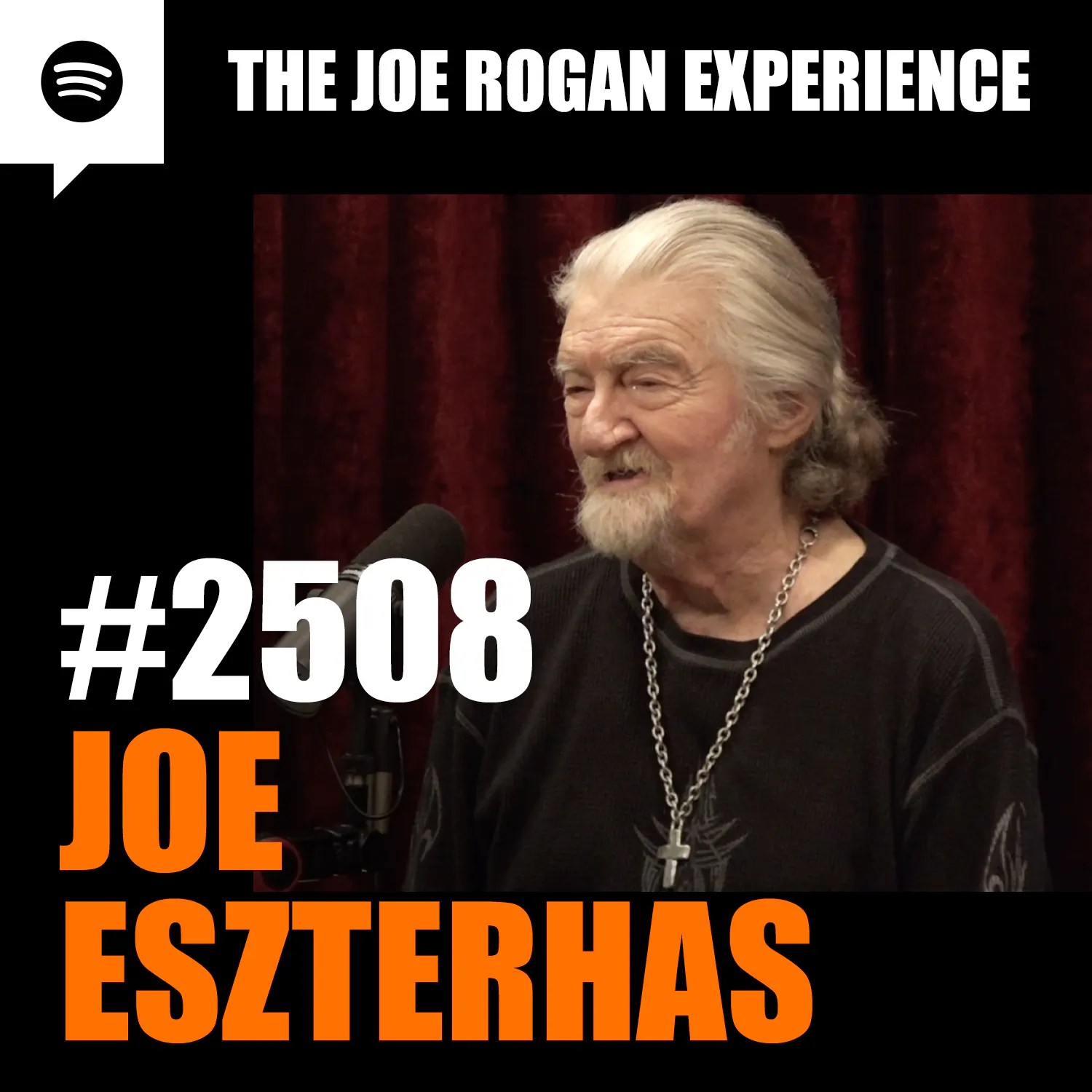
Overview of The Joe Rogan Experience #2508 with Joe Eszterhas
Joe Rogan sits down with legendary screenwriter Joe Eszterhas for a wide-ranging conversation about creativity, crime reporting, religion, politics, and the wild life experiences that shaped his career. Eszterhas reflects on writing Basic Instinct in 13 days, the “twisted little man” he says lives inside him, how his journalism background fed his screenwriting, and why real-life darkness has always fueled his work. The discussion also goes deep on his conversion to Christianity after stage 4 throat cancer, his views on Jesus, the Shroud of Turin, Hunter S. Thompson, Jimi Hendrix, Otis Redding, Mark Twain, and modern immigration politics.
Eszterhas’s Creative Process and Career
The origins of Basic Instinct
- Eszterhas says Basic Instinct came from two real-world inspirations:
- An affair he had at 18 with a sophisticated older faculty member’s wife.
- A police officer friend he knew later as a reporter, whose attitude made him wonder whether he enjoyed violence.
- He describes the script as something that “poured out” of him in 13 days while he was in Hawaii.
- He originally almost titled it Love Hurts, but changed it to Basic Instinct at the last minute.
- He says the movie was auctioned for a then-record $3 million and later became a major hit.
Writing from lived experience
- Eszterhas emphasizes that almost all of his scripts grew out of personal experience, not imagination alone.
- He says his police-beat reporting in Dayton and Cleveland exposed him to:
- Shootings and murders
- Civil unrest
- The Kent State aftermath
- The Glenville uprising
- He describes several traumatic scenes he witnessed, including a murder as a child and a shooting scene where he panicked so badly he “pissed [his] pants.”
Other projects and recurring themes
- He says his work often involves:
- Sexual tension
- Violence
- Political unrest
- Moral ambiguity
- He notes he has written 18 produced films and dozens of unproduced scripts.
- He also says his later Christian-themed scripts failed to get made because they were “too gritty” for Christian funders and “too religious” for secular ones.
Faith, Jesus, and the Catholic Church
His conversion to Christianity
- Eszterhas explains that he grew up Catholic, became lapsed, and later returned to faith after surviving stage 4 throat cancer.
- He credits:
- Prayer
- Recovery
- His wife Naomi’s strong faith
- Reading about the historical Jesus
- He says his survival felt tied to his prayer life.
His view of Jesus
- He describes Jesus as:
- A real historical man
- A Jewish zealot and freedom fighter against Rome
- Someone who lived among fishermen, tax collectors, and sex workers
- He argues that Hollywood often sanitizes Jesus into a harmless figure, which he rejects.
Catholicism, Mary Magdalene, and the Gospels
- Eszterhas says he still attends Mass but has issues with:
- Church anti-Semitism
- Sexism
- Papal infallibility
- He discusses:
- The Gnostic Gospels
- The historical timeline of the canonical Gospels
- The common misunderstanding of Mary Magdalene as a prostitute
- He says his faith remains centered on Jesus, not institutional Catholicism.
The Shroud of Turin
- Rogan and Eszterhas spend a long stretch discussing the Shroud of Turin.
- Eszterhas says he finds it deeply moving and prays before it, even if he isn’t certain it’s authentic.
- He acknowledges the debate over carbon dating and historical evidence, but says the image remains mysterious and compelling to him.
- He ultimately takes a spiritually agnostic but emotionally reverent stance: it matters to him whether or not it’s provably authentic.
Political and Cultural Commentary
Immigration and ICE
- The conversation turns to immigration enforcement and the risks of militarized policing.
- Rogan argues that masked, militarized ICE-style tactics create a dangerous precedent.
- Eszterhas largely agrees, warning that people may support such powers now and regret them later when the same methods are used against them.
- He also stresses empathy for immigrants who were encouraged to come to the U.S. and then later targeted.
Trump and modern politics
- Eszterhas says Trump is unusual because he speaks directly to working-class people rather than talking down to them.
- He also expresses concern over:
- Militarized law enforcement
- The normalization of aggressive state power
- The use of fear and propaganda in politics
Major Personal Influences and Anecdotes
Hunter S. Thompson
- Eszterhas says Hunter Thompson was a huge influence and helped launch his career.
- Thompson read one of Eszterhas’s pieces about a Hell’s Angels shootout and reportedly praised him.
- He credits Hunter with helping him get:
- An agent
- A publisher
- Attention from film people
- He portrays Hunter as:
- Brilliant
- Wild
- Deeply sensitive underneath the chaos
- He also says he thinks Hunter might have liked Trump for the same reason he liked outrageous, larger-than-life figures.
Music legends: Jimi Hendrix and Otis Redding
- Eszterhas tells memorable firsthand stories about interviewing:
- Jimi Hendrix in Cleveland
- Otis Redding the night before Redding died in a plane crash
- He describes Hendrix as gracious and funny, including a Hungarian restaurant outing where Hendrix loved chicken paprikash and autographed napkins.
- The Otis Redding story is especially poignant because Eszterhas believes he may have been one of the last people to speak with him at length.
Sam Kinison and Mark Twain
- He expresses deep admiration for Sam Kinison, calling him one of the most revolutionary comics ever.
- He also makes a strong case that Mark Twain was essentially an early stand-up comic:
- provocative
- profane
- socially observant
- hilarious in public performance
- He’s interested in writing about Twain’s deeper, less-famous work.
Key Takeaways
- Eszterhas’s writing is inseparable from his real-life experiences in journalism, crime reporting, immigrant hardship, and personal relationships.
- He sees creativity as a kind of channeling—through what he calls the “twisted little man.”
- His faith is sincere but highly individual: deeply Christian, skeptical of institutions, and intensely focused on Jesus himself.
- He believes art becomes powerful when it’s rooted in reality rather than “incense” or piety.
- The episode repeatedly returns to a core idea: the most compelling stories come from lived experience, moral contradiction, and emotional truth.
Notable Lines and Insights
- “I write flesh and blood.”
- “The Twisted Little Man” is how he describes the darker, more erotic, more reckless part of his imagination.
- He says Basic Instinct came from a mix of love, violence, journalism, and subconscious obsession.
- On the Shroud of Turin: even if it isn’t provable, “that face really moves me.”
- On Jesus: he rejects the sanitized version and insists on Jesus as a real, radical historical figure.
- On writing and art: entertainment matters because it shapes how people see the world.