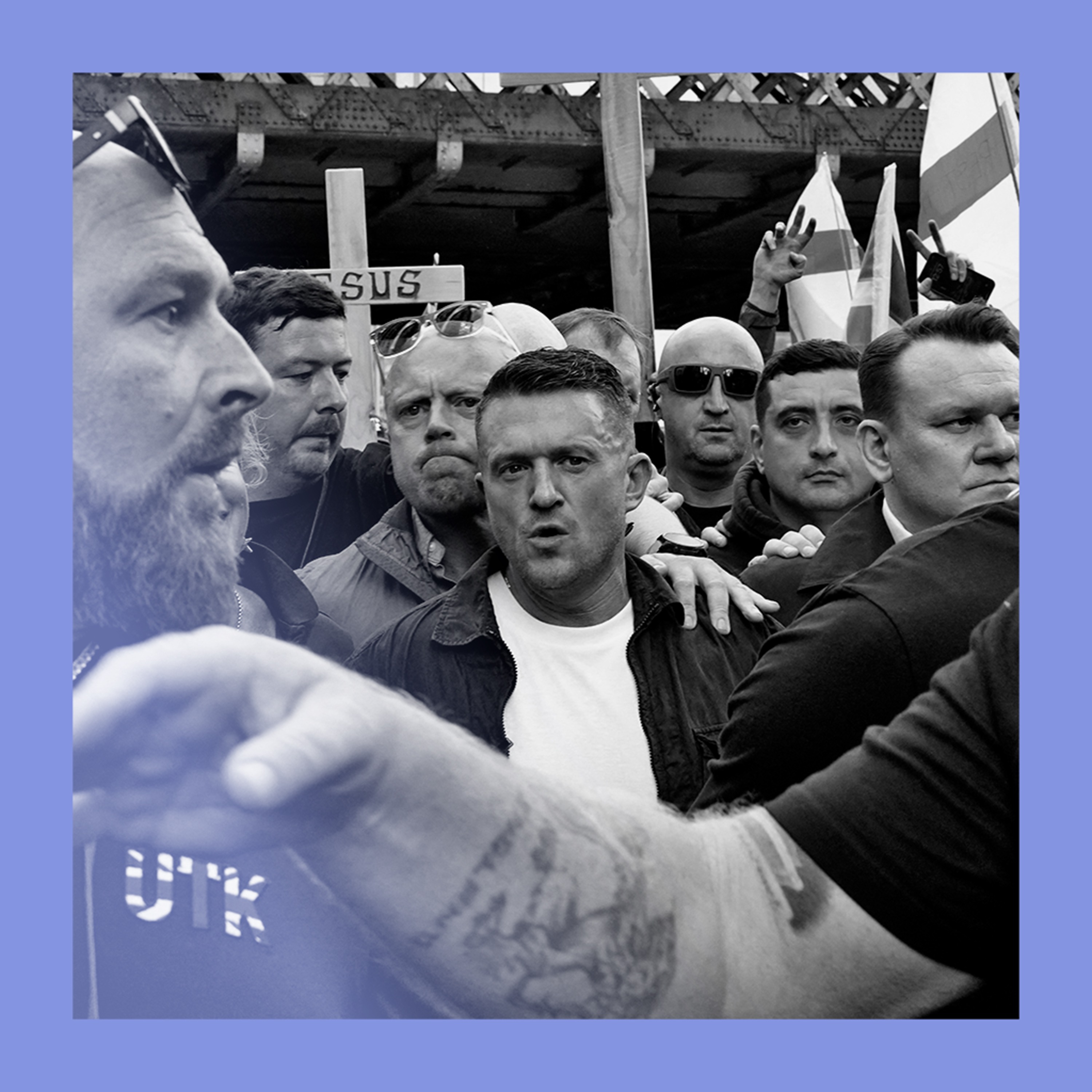
Overview of The Intelligence — “Top dog-whistler: Tommy Robinson and Britain’s far right”
This episode of The Economist’s Intelligence centers on the rise and influence of Tommy Robinson (Stephen Yaxley-Lennon), examining how a once-marginal far-right activist has gained traction through social media, transatlantic alliances, and a carefully packaged image of victimhood and free-speech martyrdom. The episode also includes a business segment on the global elevator industry’s major merger and a tribute to legendary Indian photojournalist Rahu Rai.
Tommy Robinson and Britain’s far right
Who Tommy Robinson is
- Tommy Robinson is the public name of Stephen Yaxley-Lennon, a far-right activist with a long record of controversy and legal trouble.
- He previously founded the English Defence League, which began as a street movement tied to football hooliganism and anti-Islam sentiment.
- He has spent time in prison for contempt of court after repeatedly libeling a Syrian schoolboy.
His current influence
- Despite being widely seen in Britain as toxic or extremist, Robinson has a large online following, especially on X.
- Polling cited in the episode suggests:
- Only a small minority of Britons support him overall.
- He is significantly more popular among men than women.
- Support among British men has risen since 2021.
- He has influence that does not necessarily translate into electoral success; he remains more of a street-level and online agitator than a conventional politician.
Why he matters now
- Robinson has built ties with influential figures in the U.S., including:
- Elon Musk, who has amplified him and reportedly paid legal fees.
- Steve Bannon, who has praised him.
- He frames himself as defending free speech and warning about immigration and Islam, which resonates with parts of the MAGA/right-wing media ecosystem.
- The episode argues that Robinson is a case study in how political influence now works through:
- viral video,
- cross-border networks,
- grievance politics,
- and the blurring line between activism and influencer culture.
The coming London rally
- Robinson is preparing a major rally in London, billed as a patriotic gathering.
- The event is presented as highly sanitized:
- no masks,
- no violence,
- no heavy drinking.
- The episode notes that while the language is toned down, the underlying message still frames immigration as an invasion and risks normalizing hate.
Main takeaway
- Robinson is not just a fringe figure; he represents a broader shift in far-right politics:
- more media-savvy,
- more international,
- and more effective at turning outrage into attention.
- The episode warns that figures like him deserve closer scrutiny, even when mainstream politics tries to dismiss them as marginal.
Global elevator industry merger
What happened
- The episode discusses a major merger between Kone and TK Elevator.
- This creates a new market leader in the lift/elevator sector.
Why it matters
- The elevator industry is highly concentrated, with only a few major global players.
- Most profits come not from selling new elevators, but from:
- servicing existing systems,
- and modernizing older ones.
- That makes the industry “sticky,” since customers often stay with the original installer.
Broader significance
- The merger reflects the growing importance of urban density, high-rise construction, and the huge modernization market, especially in China.
- Competitors fear the deal will intensify consolidation and reduce competition.
Tribute to Rahu Rai
Who he was
- Rahu Rai, who died at 83, was one of India’s most celebrated photojournalists.
- He was known for his instinctive eye and his habit of stopping constantly to capture small, revealing moments.
What made his work distinctive
- Rai sought out vivid, human, and emotionally charged images rather than stiff or formal photography.
- His career included powerful work on major tragedies, especially:
- the 1971 Bangladesh independence war,
- and the 1984 Bhopal disaster.
His most famous image
- In Bhopal, after the pesticide plant disaster, he captured a devastating image of a dead child’s face being brushed by a father’s hand.
- The photo became one of the defining visual records of the tragedy.
Personal and artistic legacy
- Rai also loved photographing everyday India, especially Varanasi, where life, death, ritual, and faith are constantly intertwined.
- The segment portrays him as a photographer who could reveal meaning in ordinary scenes and tragedy alike.
Key themes across the episode
- The power of narrative: Robinson’s rise shows how ideology can be repackaged through media savvy and emotional branding.
- The fragility of institutions: The episode notes widespread distrust in government and media, which helps figures like Robinson gain traction.
- Consolidation and modernization: The elevator merger shows how mature industries are being reshaped by scale and service economics.
- Photography as witness: Rahu Rai’s legacy underscores the role of images in shaping public memory of catastrophe.
Notable takeaway
- The episode’s central warning is that extremism can become more effective when it becomes more polished, more shareable, and more culturally legible — even if its core message remains deeply divisive.