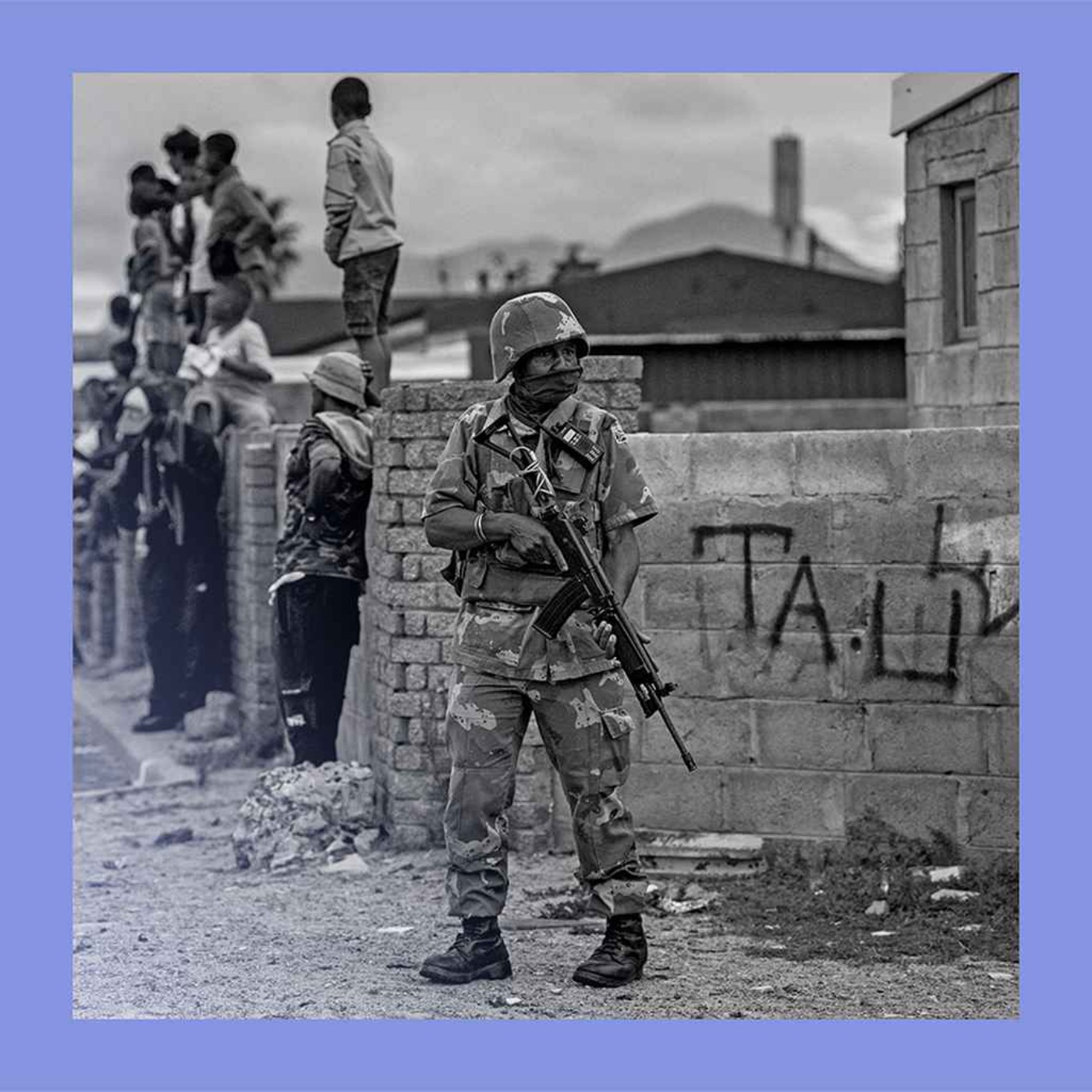
Overview of The mob rule: criminality consumes South Africa
This episode of The Intelligence centers on South Africa’s worsening organized crime crisis, where criminal networks are no longer confined to the streets but are increasingly shaping business, public infrastructure, and even the state itself. The show then shifts to two lighter segments: the rise of Oura’s smart rings as a profitable health-tech category, and a review of George Lucas’s sprawling new Lucas Museum of Narrative Art in Los Angeles.
South Africa: organized crime moving from the underworld into the state
John McDermott explains that South Africa’s crime problem has become far more systemic than ordinary lawlessness.
What’s driving the crisis
- South Africa ranks unusually high for susceptibility to organized crime, alongside countries more commonly associated with cartel activity.
- The World Bank estimates organized crime costs the country around 10% of GDP.
- The problem is now seen in three especially worrying trends:
- Growth of the illicit economy
- Rise of extortion mafias
- Capture of the state and criminal justice system
The illicit economy
- Black markets now extend beyond drugs and trafficking to include:
- illicit cigarettes and alcohol
- dodgy fuel
- stolen copper and plastics
- The tax losses are so large that a former tax chief said they are comparable to the cost of funding the national health budget.
Extortion mafias
- So-called “construction mafia” groups emerged in KwaZulu-Natal and now spread nationally.
- These groups threaten infrastructure projects unless they are paid off or given a cut.
- In Cape Town alone, the city reportedly has to coordinate security for around 50 infrastructure sites.
State capture and police corruption
- A senior KwaZulu-Natal police officer, Nhlanhla Mkhwanazi, publicly accused police, politicians, and gangsters of collusion.
- A major inquiry followed, led by retired judge Mbuyiseli Madlanga.
- The investigation has already contributed to the suspension or departure of several top officials, including:
- the police minister
- the police commissioner and deputy commissioner
- the head of the police organized-crime unit
- a senior prosecutor linked to anti-corruption work
The bigger picture
- South Africa’s problem is not just corruption in isolation, but the blurring of lines between politics, public institutions, and organized crime.
- The country still has real strengths: independent judges, an active media, NGOs, and honest civil servants.
- The big question is whether the current inquiry can translate outrage into reform.
- Real change, McDermott suggests, would require strong political leadership from the top — and that is uncertain given the ANC’s long involvement in the system and the approaching end of Cyril Ramaphosa’s leadership term.
Oura: the smart-ring company turning health data into a business
The episode then turns to Oura, the Finnish maker of smart rings, which has become one of the hottest wearables companies in the market.
Why Oura stands out
- Founded in 2013 in Finland.
- The ring form factor is:
- less intrusive than a watch
- better suited to certain biometric measurements from the finger
- more aesthetically acceptable than many fitness trackers
- Oura initially appealed to biohackers and highly data-driven users, then broadened out to mainstream health-conscious consumers.
What the ring tracks
- Sleep quality
- Stress levels
- Recovery and general health trends
- Fertility-related metrics, which helped build a strong female user base
Business model and momentum
- Oura combines hardware sales with a subscription software model, which gives it recurring revenue and high margins.
- In the nine months to June, it reportedly generated $1.2 billion in sales, up nearly 75% year over year.
- It is already profitable, which is notable for a fast-growing hardware startup.
Competition and risks
- Oura has strong patents and says it will defend them aggressively.
- Still, smart rings remain a small niche within the wider wearables market.
- The biggest long-term threat may come from bigger players like Apple, which could eventually enter the category.
- The core question is whether more health data actually improves well-being or simply creates more anxiety.
George Lucas’s museum: ambitious, lavish, and a little confusing
The final segment reviews the new Lucas Museum of Narrative Art in Los Angeles, a huge and expensive project from George Lucas and Melinda Hobson.
What the museum is
- Roughly 300,000 square feet
- Reported cost of $1 billion
- Designed to showcase “narrative art” — works that tell stories
What’s inside
- A striking spaceship-like exterior and cinematic interior
- A mix of:
- original works
- digital reproductions of famous masterpieces
- film screenings and Lucas-related material
- comic art, manga, children’s-book illustrations, posters, and other unconventional art forms
- About 1,300 works are currently on view
The critique
- The museum’s concept is ambitious, but the execution is described as jumbled and under-explained.
- There is very little wall text or curatorial guidance, which may leave visitors confused rather than enlightened.
- The project reflects Lucas’s desire to elevate illustration and popular visual storytelling as serious art.
Bigger implication
- The museum is both personal and civic: a billionaire’s legacy project, but also a public institution.
- Its long-term success may depend less on the founder’s vision and more on what happens after his direct control fades.
Key takeaways
- South Africa’s organized crime problem is no longer just a policing issue; it is becoming a state capacity and governance crisis.
- Oura’s success shows how health tech can win by making data feel useful, elegant, and non-intrusive.
- The Lucas Museum is a reminder that big cultural projects can be both philanthropic and self-defining, but they still need strong curation to work for the public.