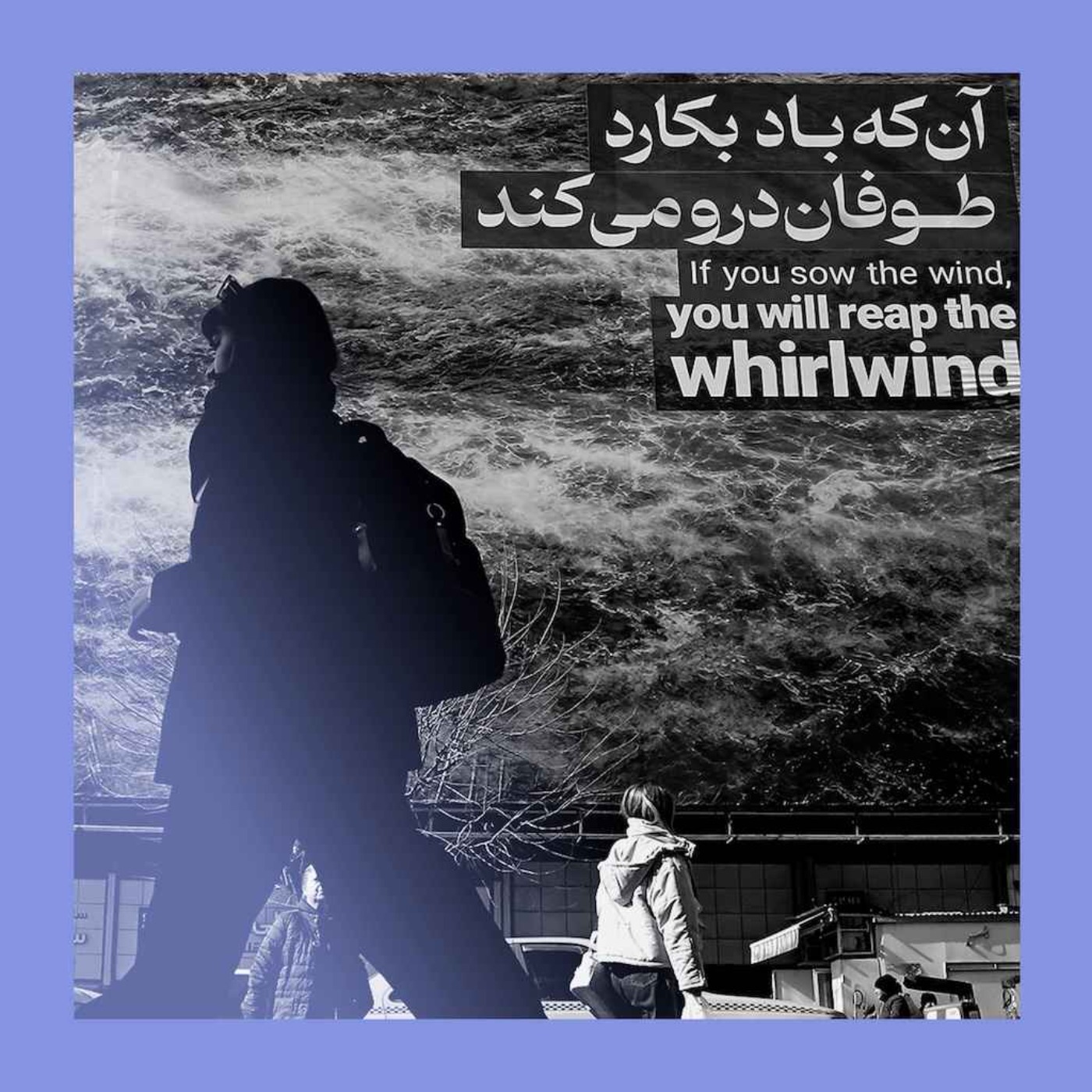
Overview of No middle ground: Iran’s dangerous division
This episode of The Intelligence from The Economist (hosts Jason Palmer and Rosie Bloor) mixes a deep report on the escalating unrest in Iran with two shorter pieces: a retrospective on the United States’ founding and a look at a viral playground song of mysterious origin. The centerpiece is an interview with Nick Pelham, The Economist’s Middle East correspondent, about how recent protests have hardened Iranian society into two increasingly militant camps and pushed the country closer to civil war.
Iran: “No middle ground” — what’s happening and why it matters
- Core observation: Iran is increasingly polarized into two camps — the regime (regimists) and royalists (supporters of the exiled Shah’s son, Reza Pahlavi) — and both appear prepared for violent confrontation.
- Nature of the conflict:
- Widespread brutality during protests: torched shopping centers, destroyed university museum, reports of up to 30 mainly young people killed (opposition sources).
- The state’s treatment of the dead (piled-up bodies, families charged to recover corpses, restricted funerals) has deepened public outrage and radicalized many.
- Violence has been bidirectional: protesters have attacked regime forces (reports of knives and beheadings), and the regime has allegedly used Shia militiamen from the region.
- Political dynamics:
- Leadership is fragmented. Supreme Leader Ayatollah Ali Khamenei is reportedly hiding and delegating operational control; Reza Pahlavi is a symbolic figure whose commands are often executed by independent royalist organizers.
- Former reformist/democratic voices are marginalized; the movement’s tenor has shifted toward royalist-led demands and an increased acceptance of force as the path to change.
- Social and regional factors:
- Economic crisis (crippled digital economy after internet blackouts, inflation, plummeting rial) fuels desperation.
- Tribal and provincial revenge movements (e.g., in Lorestan, Ilam) and talk of exile-led arms flows echo trajectories seen in Syria and Libya.
- Outside intervention and the “wild card”:
- US military action (noted as a possibility given forces deployed) could dramatically alter dynamics but risks empowering external actors and provoking protracted civil conflict.
- Even removal of Khamenei may not produce stability; outcomes could include Revolutionary Guard consolidation or continued insurgency.
- Main takeaway: The situation has moved beyond protest politics toward a low‑intensity, possibly escalating civil conflict with high risk of prolonged bloodshed and fragmentation.
Notable quote
- “People that I've managed now to speak to in Iran are describing a state of things as a quiet civil war.” — Nick Pelham
America at 250: founding contradictions in short
- The episode includes an archival overview marking America’s 250th anniversary:
- Declaration of Independence proclaimed universal rights (“all men are created equal”), but in practice excluded white women, Black people, many poor white men; many signatories were slave owners.
- The Constitution created a tripartite republic with checks and balances; the Bill of Rights (1791) added core liberties whose vague wording has produced two-and-a-half centuries of legal debate.
- Political faultlines emerged early: Hamilton favored a strong central government; Jefferson championed states’ rights — an enduring divide.
- Early expansion: the Louisiana Purchase (1803) nearly doubled US territory; a failed attempt to annex Canada is noted.
- The Missouri Compromise (1820) postponed the nation’s reckoning with slavery by geographically partitioning where slavery was allowed.
- Main takeaway: The founding era established liberal institutions and ideals, but also entrenched exclusions and contradictions that shaped subsequent American history.
Notable quote
- Excerpt from the Declaration: “We hold these truths to be self-evident, that all men are created equal…”
Playground phenomenon: the “Sigma Boy” song and cultural virality
- What it is: A repetitive Russian pop tune (“Sigma Boy”) sung by tweens (main artist: Betsy, real name Svetlana Chertysheva), uploaded late 2024 and quickly going viral in children’s playgrounds across Europe.
- Spread and mechanics:
- Viral through social platforms and children-centered content ecosystems (TikTok stunts, AI-generated kids’ cartoon channels).
- Local influencers (e.g., a German creator who plays loud music in public) and Italian children’s “brain rock” channels helped amplify it.
- Concerns and theories:
- Some Ukrainian officials suggested it may be a Russian disinformation push (bot farms, cultural rehabilitation, promoting patriarchal vibes).
- Experts are skeptical or cautious: the kids’ content ecosystem is opaque, “vibes-based” promotion is plausible, and distinguishing organic virality from covert promotion is difficult without data.
- Main takeaway: A seemingly trivial viral song illustrates how fast, borderless cultural memes can spread in children’s networks — and how such phenomena can attract geopolitical and disinformation anxieties despite limited evidence.
Key themes across the episode
- Polarization and radicalization: Iran’s protests show how state brutality and economic collapse push societies toward binary camps and violent resolution.
- Fragility of political transitions: Leadership decapitation or external intervention seldom produces neat outcomes; local power brokers and militarized institutions often shape the aftermath.
- Cultural contagion in the digital age: From playground songs to political narratives, online ecosystems can quickly amplify content across borders with opaque origins and motives.
- Enduring contradictions of founding ideals: Historical political settlements (like America’s) can embed both aspiration and exclusion, with effects lasting centuries.
Suggested follow-ups (for readers)
- For Iran: monitor independent reporting from journalists on the ground (e.g., The Economist, BBC, Reuters), think‑tank analyses on the Revolutionary Guard’s post-Khamenei role, and credible human-rights organizations for casualty and abuse documentation.
- For disinformation/cultural virality: look for platform transparency reports or forensic studies that trace promotion patterns; academic work on children’s media ecosystems is especially relevant.
- For US history context: consult primary documents (Declaration, Constitution, Federalist Papers) and modern syntheses that address the founders’ contradictions.
Credits
- Hosts: Jason Palmer and Rosie Bloor
- Interview: Nick Pelham, Middle East correspondent, The Economist
- Contributors: Annie Crable, Abigail (Abby) Fielding‑Smith (on the playground song)