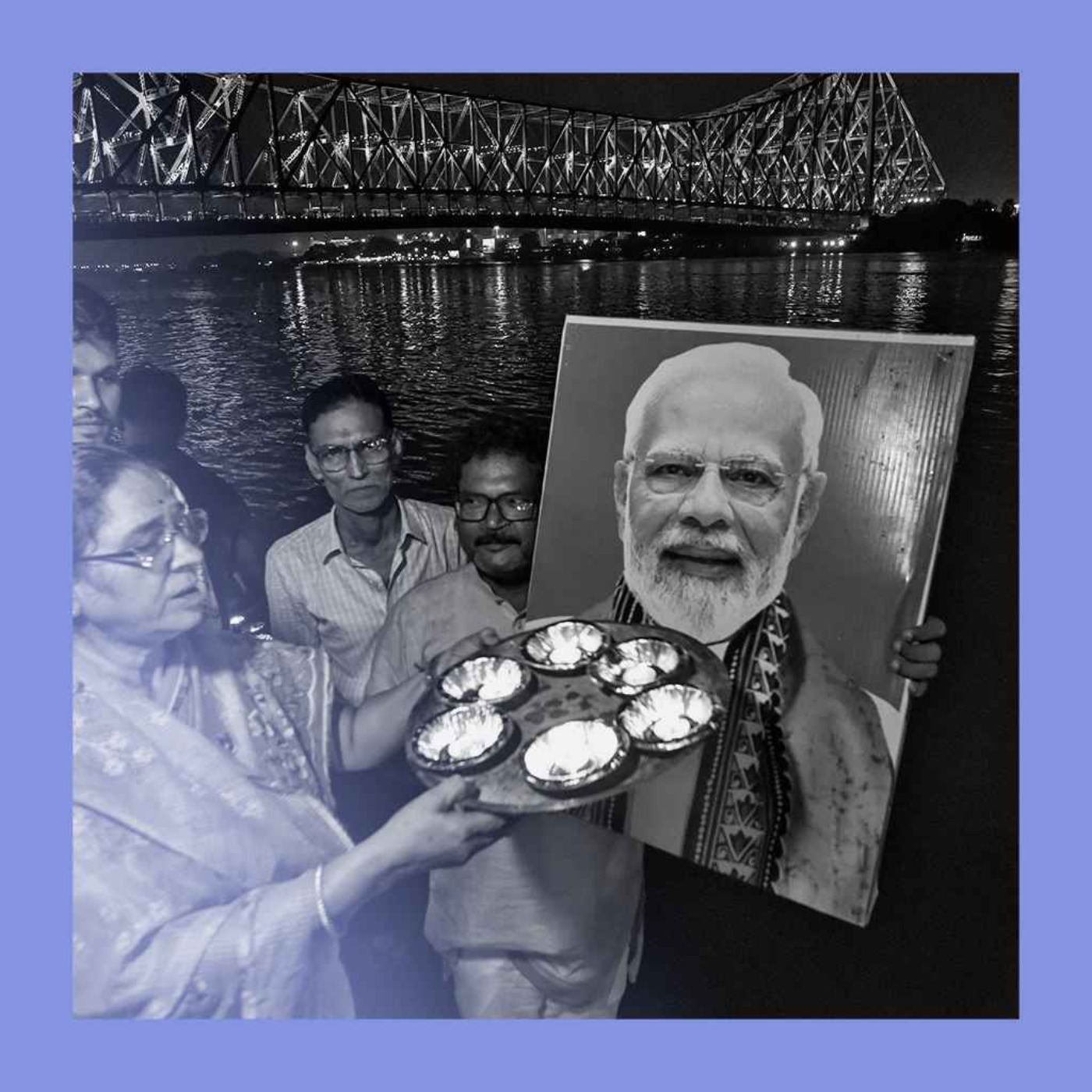
Overview of Silver-year strongman: 25 years of Narendra Modi
This episode of The Intelligence from The Economist is a multi-segment news discussion that begins with a deep dive into Narendra Modi’s 25 years as a dominant political figure in India, then shifts to a tour of less-noticed U.S. election races and ballot measures, and ends with an obituary feature on Churchill’s former personal secretary, Cicely Gemmell. The central theme across the episode is how power is exercised — and contested — by strong personalities, institutions, and voters.
Narendra Modi’s 25-Year Rise and Current Crisis
The main segment examines Narendra Modi’s political trajectory from Gujarat’s chief minister in 2001 to India’s prime minister and now one of the country’s most enduring leaders.
How Modi built his power
- He rose after the Gujarat earthquake by projecting himself as a decisive administrator.
- In Gujarat, he consolidated control over:
- the police
- the judiciary
- the BJP party machinery
- He built close ties with major industrialists, especially Gautam Adani.
- His political identity combined:
- Hindu nationalism
- a “development man” image focused on growth and modernization
How his leadership differs from earlier Indian leaders
- The comparison points are:
- Jawaharlal Nehru: secular, democratic, socialist vision
- Indira Gandhi: populist, more authoritarian, highly centralized
- Modi resembles Indira Gandhi in his personality cult and institutional control, but he has pushed India in a more explicitly majoritarian Hindu direction.
Social and religious impact
- Modi has fused religion and politics in a way that has reshaped public life.
- The episode argues that this has made India a worse place for Muslims.
- Key examples include:
- the Ram Temple consecration
- increased tolerance for anti-Muslim rhetoric
- vigilante violence often going unpunished
- Despite this, Hindu nationalism remains politically potent.
Economic record: modernization without enough jobs
- Modi’s strongest economic achievements include:
- rapid digitization, especially digital payments
- tax reforms that created a more unified national market
- relatively stable macroeconomic management
- average growth of around 6% over his tenure
- But major weaknesses remain:
- too little manufacturing expansion
- too few high-skilled formal jobs
- stagnant agricultural employment
- weak wage growth
- frustration among graduates
The democratic challenge
- The current flashpoint is the Special Intensive Revision (SIR) of voter rolls.
- While voter-roll cleanup is normal, the process has been criticized as:
- opaque
- centralized
- unfairly restrictive
- Critics say it has removed voters without adequate appeals.
- The episode frames this as part of a broader authoritarian streak affecting:
- media
- judiciary
- electoral institutions
- Modi’s popularity has so far helped him bend institutions, but if public support weakens, those institutions may begin to push back.
What happens next
- In the short term, Modi is expected to keep using top-down tactics and try to weaken the opposition.
- The next major test will be state elections in Uttar Pradesh next spring.
- The longer-term showdown could build toward India’s national election in 2029.
U.S. Midterm Races to Watch
The second major segment shifts to lesser-known but revealing U.S. races and ballot measures.
New Hampshire Senate race
- Democrat Chris Pappas is polling ahead of Republican John Sununu, but by less than Democrats might expect in a favorable national environment.
- The race remains competitive despite Democratic advantages.
- The presence of big-name surrogates like Kamala Harris and Gavin Newsom shows how seriously Democrats are taking it.
Minnesota Senate race
- Democrat Peggy Flanagan is also facing a surprisingly close contest.
- Republicans are using a major fraud scandal involving pandemic-era child-feeding funds to criticize the Democratic state government.
- Even though Flanagan is not personally accused, the scandal has become politically damaging.
Virginia’s 2nd Congressional District
- A rematch between Republican incumbent Jen Kiggans and Democrat Elaine Luria.
- The district is seen as a useful test of how voters in a military-heavy, federal-worker-heavy area are responding to:
- DOGE-related federal workforce cuts
- broader Trump-era disruptions
- foreign-policy tensions tied to the war in Iran
Idaho abortion ballot measure
- Proposition 1 would create a right to reproductive freedom, including abortion access up to fetal viability and in certain medical emergencies.
- The question is whether abortion still mobilizes voters as strongly as it did in earlier cycles.
- Idaho is notable because it has one of the nation’s strictest abortion bans.
California insurance commissioner race
- This under-the-radar race matters because California’s homeowners insurance market is under severe strain from wildfire risk.
- One candidate, Jane Kim, favors a state-run disaster insurance model.
- The other, Ben Allen, wants to encourage private insurers to return while improving prevention and claims handling.
- The episode stresses that there is no easy solution: fire-prone insurance will likely remain expensive.
Other oddball ballot items
- The conversation highlights how U.S. elections can include highly local and unusual questions:
- school boards
- coroners
- even a state gun designation in Idaho
Obituary Feature: Churchill’s Secretarial “Miss Chips”
The final segment is a portrait of Cicely Gemmell, known as “Chips,” who served as Winston Churchill’s personal secretary.
Who she was
- Born in Bangalore and educated in India and London
- Worked in Churchill’s household at Chartwell from 1947 to 1951
- Later became secretary to Clementine Churchill
- Eventually moved to New York, where she built a new life in publishing-adjacent work and nightlife
What the story reveals about Churchill
- Churchill was portrayed as:
- demanding
- theatrical
- forgetful
- highly idiosyncratic
- He would sometimes dictate thoughts from the bath.
- His secretaries handled everything from:
- archival work
- paintbrush cleaning
- dog-walking
- socks
- The piece highlights both the oddity and warmth of working in his orbit.
Memorable detail
- On a later reunion, Churchill looked at her and asked, “Do I know you?”
- After she replied that she had worked for him for four years, he said: “What a long time.”
Key Takeaways
- Modi’s legacy is presented as a blend of modernization, nationalism, and institutional centralization.
- His biggest political strength has been his ability to fuse economic development rhetoric with Hindu majoritarian identity.
- The biggest threat to his dominance may now be youth frustration, joblessness, and distrust in electoral institutions.
- In the U.S., some of the most revealing election contests are not the headline races, but the lower-profile ones that expose deeper voter anxieties.
- The Churchill obituary underscores how even large historical figures are shaped by the often invisible labor of close aides.