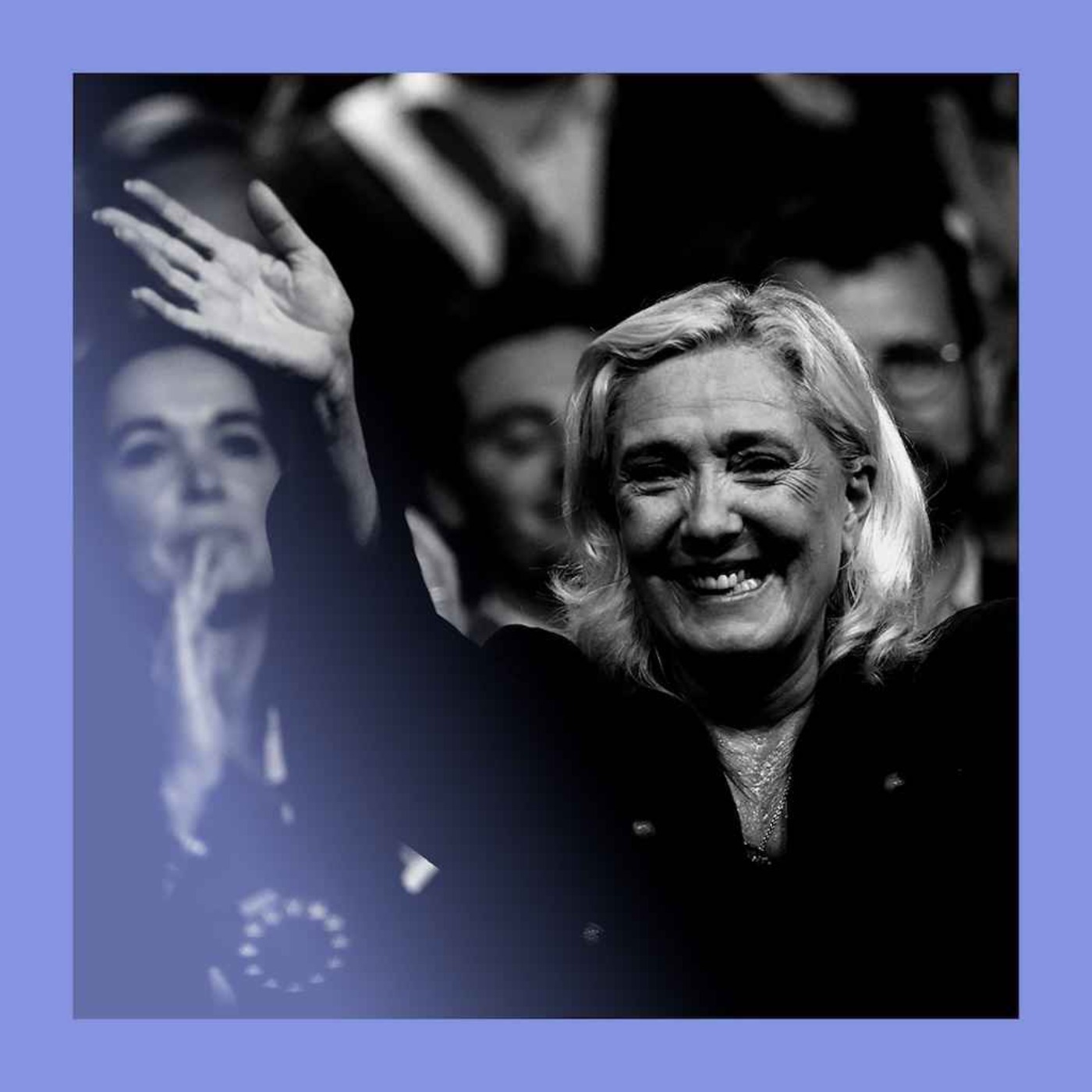
Overview of The Intelligence — National front-runner: who can beat Le Pen?
This episode’s lead segment examines France’s 2027 presidential race, where Marine Le Pen is polling well ahead of the fragmented center and center-right field. The show argues that the French mainstream still has no obvious unifying candidate capable of stopping her, even though polling remains early and volatile. Two shorter features follow: one on India’s increasingly punitive border policy in West Bengal’s Bangladesh-facing buffer zone, and another on why Argentina has become the global powerhouse of polo.
France’s 2027 race: the center’s problem
Marine Le Pen, leader of the far-right National Rally, is the clear frontrunner in the polls, with a commanding first-round lead and projected victories in multiple runoff matchups.
Why Le Pen looks so strong
- Polls have been unusually stable, with Le Pen consistently in the low-to-mid 30s.
- The center is split across many contenders, making it hard for any one figure to emerge as the anti-Le Pen standard-bearer.
- Emmanuel Macron cannot run again, removing the incumbent advantage from the field.
The fragmented opposition
- The centrist and center-right space includes around 15 potential or declared candidates.
- Leading names mentioned include:
- Édouard Philippe
- Gabriel Attal
- Bruno Retailleau
- Raphaël Glucksmann on the center-left
- The risk is that fragmentation could leave voters choosing between the two extremes:
- Marine Le Pen on the far right
- Jean-Luc Mélenchon on the far left
What it takes to beat populists
The discussion highlights three qualities common to politicians who have successfully defeated populist right-wing challengers elsewhere in Europe:
- Energy and visible campaigning
- An outsider/rebel persona, even if the candidate is actually part of the system
- Clear, simple messaging on issues voters care about, often using modern media techniques and slogans
Main takeaway
France’s center does not just need a candidate; it needs a compelling political identity. Right now, Le Pen’s opponents look more like establishment insiders than insurgents, which weakens their ability to frame themselves as the real alternative.
India’s Bangladesh border: security crackdown and civilian fallout
A second segment reports from a border buffer zone in West Bengal, where Indian authorities are tightening control over movement along the Bangladesh border.
What’s happening
- The border area is a narrow strip inside Indian territory but heavily policed.
- Residents face checkpoints, searches, and movement restrictions.
- Authorities frame the policy as a response to “infiltrators” from Bangladesh, especially Bengali-speaking Muslims.
The human cost
- Around 25,000 people live in the buffer zone’s villages.
- Locals say the restrictions disrupt daily life, livelihoods, food access, and travel.
- Some residents spend hours each day dealing with checks.
- There are allegations of wrongful detention and “pushbacks” into Bangladesh without proper legal process.
Political and communal tension
- The transcript describes a double standard:
- Muslims are often suspected of being foreign just because they speak Bengali or have Muslim names.
- Non-Muslim minorities from neighboring countries are more likely to be welcomed or fast-tracked for citizenship.
- The segment suggests this is deepening already strained India-Bangladesh relations.
Main takeaway
The border policy is presented as a mix of nationalism, security theater, and discrimination — one that punishes ordinary residents while failing to resolve the underlying cross-border migration problem.
Argentina’s polo boom
The final feature explains why Argentina dominates the world of polo, a sport often described as hockey on horseback.
Why Argentina became dominant
- The Pampas provided an ideal horse-breeding environment.
- Local gauchos were a natural cultural fit for the sport.
- Argentine players became elite early and remain dominant today.
- 27 of the top 30 professional players are from Argentina.
How the industry evolved
- Polo families built sophisticated breeding operations.
- Argentine breeders became leaders in producing and exporting top polo ponies.
- Cloning has become part of the industry, with breeders sometimes selling the offspring of clones to protect intellectual property.
- Around Pilar, outside Buenos Aires, farmland has been converted into polo clubs, stables, and estates.
Why the business remains strong
- The sport benefits from relatively light regulation.
- Foreign money continues to flow into Argentina’s polo ecosystem.
- Despite Argentina’s broader economic instability, polo remains a robust niche industry.
Main takeaway
Argentina’s success in polo is a classic case of geography, culture, and entrepreneurial specialization aligning to create a global competitive advantage.
Notable themes across the episode
- Political fragmentation vs. organized strength: France’s centrists are divided while Le Pen remains disciplined and dominant.
- Security vs. rights: India’s border policy shows how migration fears can erode due process and punish civilians.
- Specialization creates global dominance: Argentina’s polo industry shows how local conditions and know-how can produce world-leading outcomes.
Bottom line
The episode’s central question is whether anyone in France can realistically stop Marine Le Pen. The answer, for now, is uncertain — and that uncertainty is itself the story. The other segments reinforce a broader theme: when institutions are fragmented or overwhelmed, the most organized or forceful actors tend to gain the advantage.