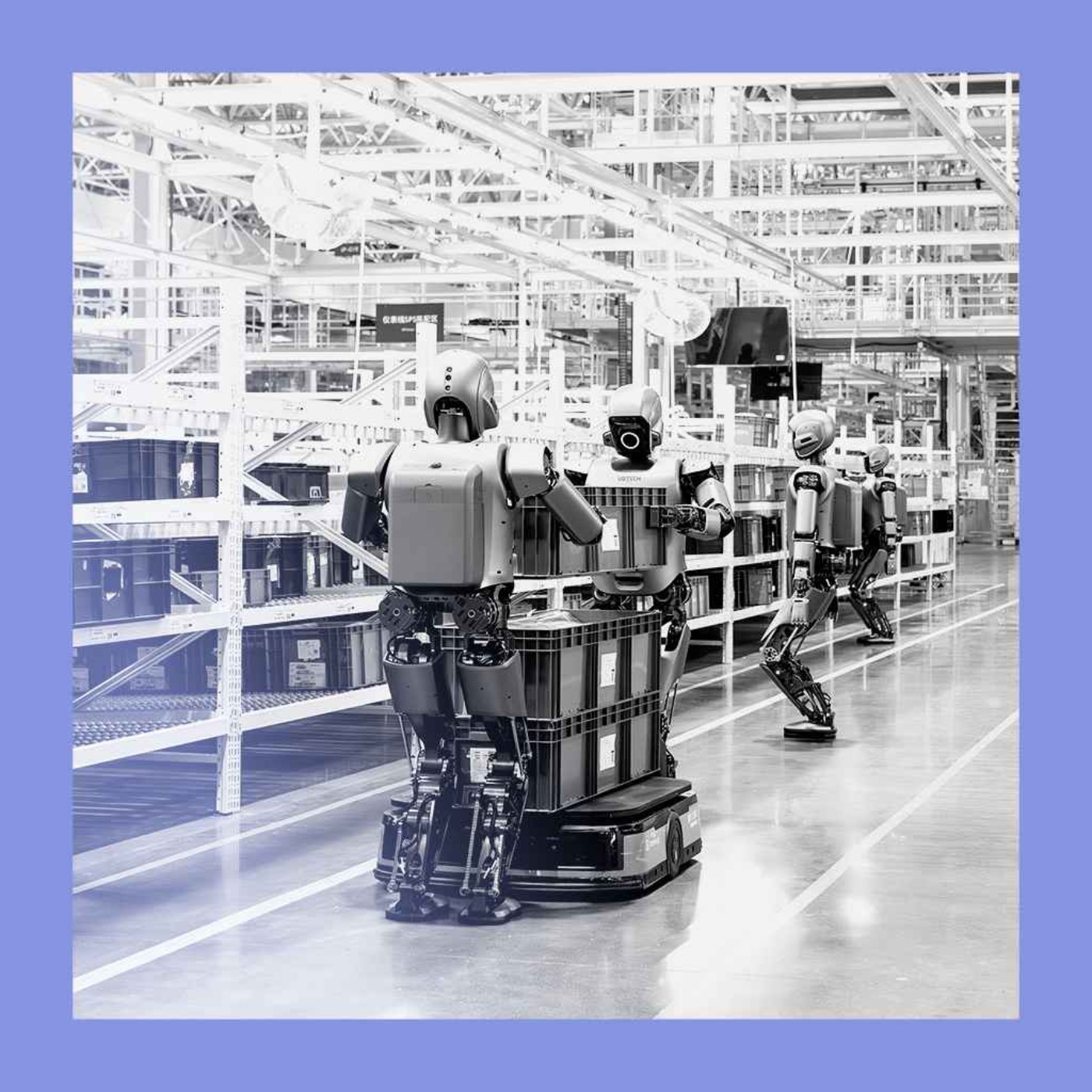
Overview of Fired alarm: AI hype versus labour-market history — The Economist
This episode argues that today’s anxiety about AI and mass unemployment is understandable, but history suggests technological disruption usually unfolds far more slowly and unevenly than doomsayers claim. The main segment compares AI hype with labor-market history, while the episode also touches on a scramble for African critical minerals and profiles Japan’s World Cup hopes.
AI Hype vs. Labour-Market History
The core discussion challenges the idea that AI will quickly cause unprecedented, economy-wide job losses.
What people fear
- Polls suggest many Americans think there’s roughly a 1-in-5 chance they’ll lose their job within five years.
- AI leaders have helped fuel those fears:
- Dario Amodei of Anthropic has warned unemployment could rise to around that level.
- Bill Gates has suggested humans may not be needed for “most things.”
What history suggests
- The guest, Callum Williams, argues that if AI does cause widespread unemployment, it would be historically unusual.
- Major technologies have generally not spread fast enough to keep large numbers of people out of work for long.
- The Industrial Revolution is often cited as proof that technology can devastate workers, but newer scholarship complicates that view:
- Job destruction was not the dominant outcome.
- Over the century after 1760, the number of people working in Britain nearly tripled.
- Real wages during the early Industrial Revolution were not clearly worse than before it.
- Productivity growth was initially weak because steam technology took time to diffuse.
A better historical comparison
- The mid-20th century in the US and UK saw relatively rapid disruption:
- First computers
- Plastics
- Shipping containers
- New manufacturing methods
- Yet that era is often remembered as a golden age for workers, showing how disruptive periods can look better in hindsight.
Why grads are worried now
- New graduates are facing a weak job market, and for the first time, new-grad unemployment is higher than overall unemployment.
- But the weakness began before ChatGPT, so AI is not clearly the cause.
Signs AI would need to produce to be truly unprecedented
To prove AI is breaking historical patterns, you’d expect:
- Very rapid productivity growth
- A simultaneous jump in corporate profitability
- Large-scale job losses across the economy, not just in specific sectors
At present, the episode says:
- Productivity growth is decent, but not unprecedented
- Corporate profits are strong
- The labor market remains solid
Why AI leaders may sound so extreme
The episode suggests two main reasons:
- Branding/investor appeal: dramatic warnings generate attention and help companies stand out.
- Silicon Valley blind spots:
- Weak interest in history
- Overestimating how much ordinary people want to use technology the way builders do
Africa’s Critical Minerals: A New Scramble
The second segment reports from Tanzania on the global race for critical minerals, especially nickel.
Why Tanzania matters
- The Kabanga nickel deposit in western Tanzania is described as one of the world’s most valuable untapped sources.
- It has been known for decades but never mined at scale.
Geopolitics and investment
- The West wants alternatives to supply chains dominated by China, especially Chinese-linked operations in Indonesia.
- The US is taking a more assertive role in African mining and is using diplomatic and commercial leverage to push projects forward.
- Tanzania’s government, under President Samia Suluhu Hassan, wants to show it can deliver major projects and attract development.
What is changing for Africa?
- China is still ahead, but Western competition may be pushing it to be more open to processing minerals locally in Africa.
- That could mean more value stays on the continent — but only if governments improve:
- infrastructure
- policy certainty
- investment conditions
Main warning
- Export bans and rushed resource nationalism may feel satisfying, but they can also discourage the investment needed to make mining beneficial.
Japan’s World Cup Profile
The final segment previews Japan as a potential World Cup dark horse.
Reasons for optimism
- Japan has qualified for every World Cup since 1998
- Their best result is reaching the round of 16
- Under coach Hajime Moriyasu, they’ve pulled off major upsets, including wins over Germany and Spain in 2022
Challenges
- Key players have been injured:
- Captain Wataru Endo
- Star winger Kaoru Mitoma
- Their group stage includes tough opponents, and expectations are high
Broader context
- Football’s popularity in Japan has grown significantly since the creation of the J-League in the 1990s.
- Supporters have developed a distinctive matchday culture, with organized chanting and fan sections.
Main Takeaways
- AI may be disruptive, but history suggests technological change usually takes time to reshape labor markets.
- Alarmist predictions from tech leaders should be treated cautiously; they may reflect branding, optimism bias, or poor historical perspective.
- Africa’s mineral wealth is becoming more strategically important, but benefits depend on policy and infrastructure, not just geology.
- Japan enters the World Cup with genuine ambition, though injuries could shape its chances.