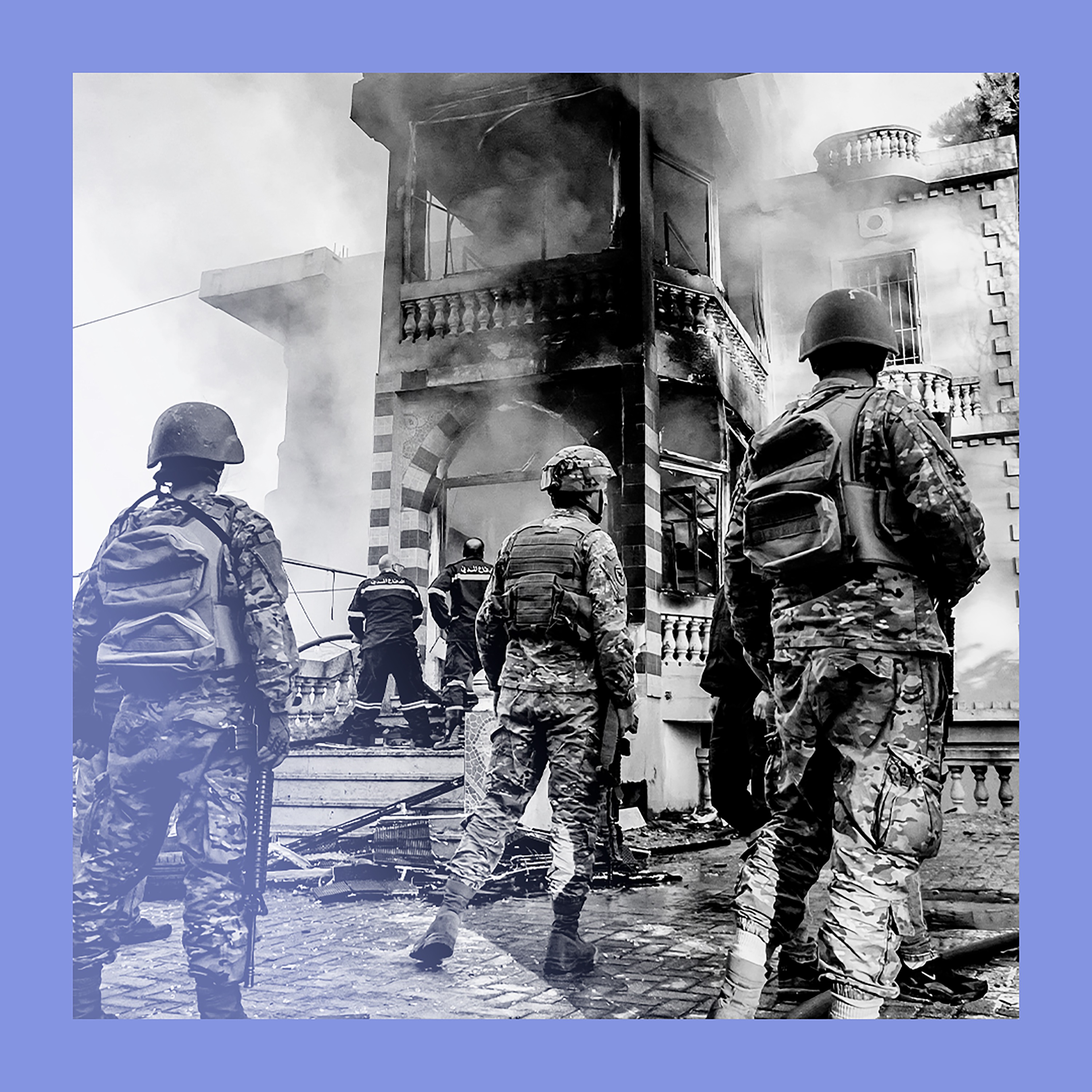
Overview of Who will deal the final blow? Israel, Lebanon and Hizbullah
This episode of The Economist’s The Intelligence focuses primarily on the escalating confrontation between Israel and Hezbollah in Lebanon, assessing who might ultimately defeat Hezbollah and at what cost to Lebanon. The show features a detailed interview with Gareth Browne, The Economist’s Beirut-based Middle East correspondent, and also includes shorter reports on the rise of Islam in Southeast Asia (Su Lin Wong) and an obituary profile of philosopher Jürgen Habermas. The main themes are military dynamics, Lebanese domestic politics, humanitarian consequences, and regional implications—especially Iran’s role.
Israel, Lebanon and Hezbollah — main segment
-
Context
- Israel has intensified strikes across Lebanon after cross-border exchanges with Hezbollah; the conflict sits alongside Israel’s confrontation with Iran.
- Reported human cost: more than 900 Lebanese killed and about a million displaced from southern Lebanon (as described in the episode).
- Israel’s rhetoric and actions (e.g., strikes destroying buildings in Beirut, targeting infrastructure) suggest aims beyond limited retaliation.
-
Hezbollah’s condition and role
- Hezbollah has been weakened: senior ranks thinned, financing from Iran constrained, and its social-service “state within a state” contract has deteriorated.
- Hezbollah remains a powerful armed actor in Lebanon: tens of thousands of fighters and advanced rockets; often stronger than state institutions in parts of the country.
- Internal Lebanese sentiment is mixed—initial anger at Hezbollah for dragging Lebanon into war, followed by some rally-around-the-flag dynamics as Israeli bombardment affects wide swathes of the country.
-
Israeli posture and risks
- Israel has massed about 100,000 troops on the southern border and made limited incursions; it has struck bridges and infrastructure—raising fears of a deeper ground offensive or occupation.
- Historical precedent: Israel’s 1982–2000 occupation of parts of Lebanon had disastrous consequences and helped catalyze Hezbollah’s emergence.
-
Lebanese government and army: shifting politics
- The Lebanese government has publicly discussed disarming Hezbollah—an idea that was previously taboo and dangerous to raise.
- Political willingness to confront Hezbollah appears to have increased, but capacity is doubtful: the Lebanese army is one of the few cross-sectarian institutions but has been weakened by Lebanon’s economic crisis (low pay, limited readiness, equipment/training shortfalls).
- International backers (notably the U.S. and France) support the Lebanese army, but that support is not guaranteed and diplomatic efforts are ongoing to broker pauses.
-
Humanitarian and sectarian dangers
- Massive displacement from the predominantly Shia south into non-Shia areas risks exacerbating sectarian tensions that once led to civil war.
- If the state does not act, analysts fear Israeli invasion or prolonged occupation, and possibly the collapse of fragile Lebanese institutions.
Key quotes and perspectives
- “No one will allow Hezbollah to get out of this alive.” — Bezalel Smotrich (quoted as Israel’s finance minister; expresses hardline Israeli intent).
- “People should understand that Hezbollah is not an ally of Iran. Hezbollah is not a friend of Iran. The question is, who should deal a final blow to the group?” — Sami Jamail (Lebanese Christian leader; frames the dilemma over who disarms Hezbollah).
- Gareth Browne: the war “feels like one which is going to completely change the makeup of Lebanon… the sense is that Israel's intentions are expanding.”
Possible scenarios and likely outcomes (as discussed)
- Lebanese-led disarmament: The Lebanese army or government squeezes Hezbollah’s military power—politically plausible given shifting rhetoric, but operationally difficult because of capacity gaps and the risk of civil strife.
- Israeli ground offensive and occupation: Israel attempts a large-scale operation to eliminate Hezbollah’s military capabilities—high humanitarian cost, high risk of sectarian spillover and long-term occupation problems similar to 1982–2000.
- Protracted conflict / regionalization: Continued clashes without a decisive outcome, potentially drawing in regional actors (Iran) and prolonging Lebanese suffering.
- Diplomatic pause backed by international players: The U.S., France and others broker breathing room that could give Lebanon a chance to reassert sovereignty—contingent on external willingness to intervene and support the Lebanese army.
Humanitarian and political implications
- Short-term: large-scale displacement, civilian casualties, infrastructure destruction, and a humanitarian crisis.
- Medium-term: pressure on Lebanon’s fragile political settlement and institutions, potential weakening or collapse of the government, and deepened sectarian tensions.
- Regional: consequences for Iran’s influence and for Israeli strategic aims; the outcome could reshape Lebanese politics for decades.
Other segments (brief)
-
Rise of Islam in Southeast Asia (Su Lin Wong)
- Observes growing public piety and political Islam in Indonesia and Malaysia despite economic development.
- Examples: Indonesia’s new criminal code (restrictions on premarital sex, expanded blasphemy/apostasy provisions); Malaysia’s increasing Sharia enforcement in some states.
- Drivers: politics (especially in Malaysia where Islam is central to Malay identity), social prestige tied to piety, and social media amplification of religious norms.
- Consequences: friction between Muslim and non-Muslim communities, pressures on pluralism, and growing online influence of conservative preachers.
-
Obituary: Jürgen Habermas (Anne Rowe)
- Life and intellectual project: lifelong concern for democracy, the public sphere, and deliberative discourse inspired by Enlightenment coffeehouse ideals.
- Personal background: wartime youth in Nazi Germany; physical impediment (cleft palate) affected his public speaking but not his prolific writing.
- Legacy: long critique of nationalism, institutional domination of public debate, and skepticism that the internet fulfilled the ideal of a reasoned public sphere.
Main takeaways
- Lebanon is at a precarious inflection point: popular anger at Hezbollah for provoking war coexists with fear of Israeli bombardment and displacement.
- The Lebanese state’s newfound rhetorical willingness to confront Hezbollah is significant but likely insufficient without material capacity and sustained international backing.
- The humanitarian and sectarian risks are high; the conflict could reshape Lebanon’s political map and further destabilize the region depending on whether the confrontation ends in disarmament, occupation, or stalemate.
Recommended follow-up (for listeners wanting depth)
- Read recent Economist dispatches from Beirut for evolving casualty, displacement, and diplomatic developments.
- Monitor statements from the Lebanese government, the Lebanese Armed Forces, Israel’s military briefings, and key international actors (U.S., France) for shifts in policy or support.
- Track Iran’s posture—its survival or weakening is framed in the episode as pivotal to Hezbollah’s future.