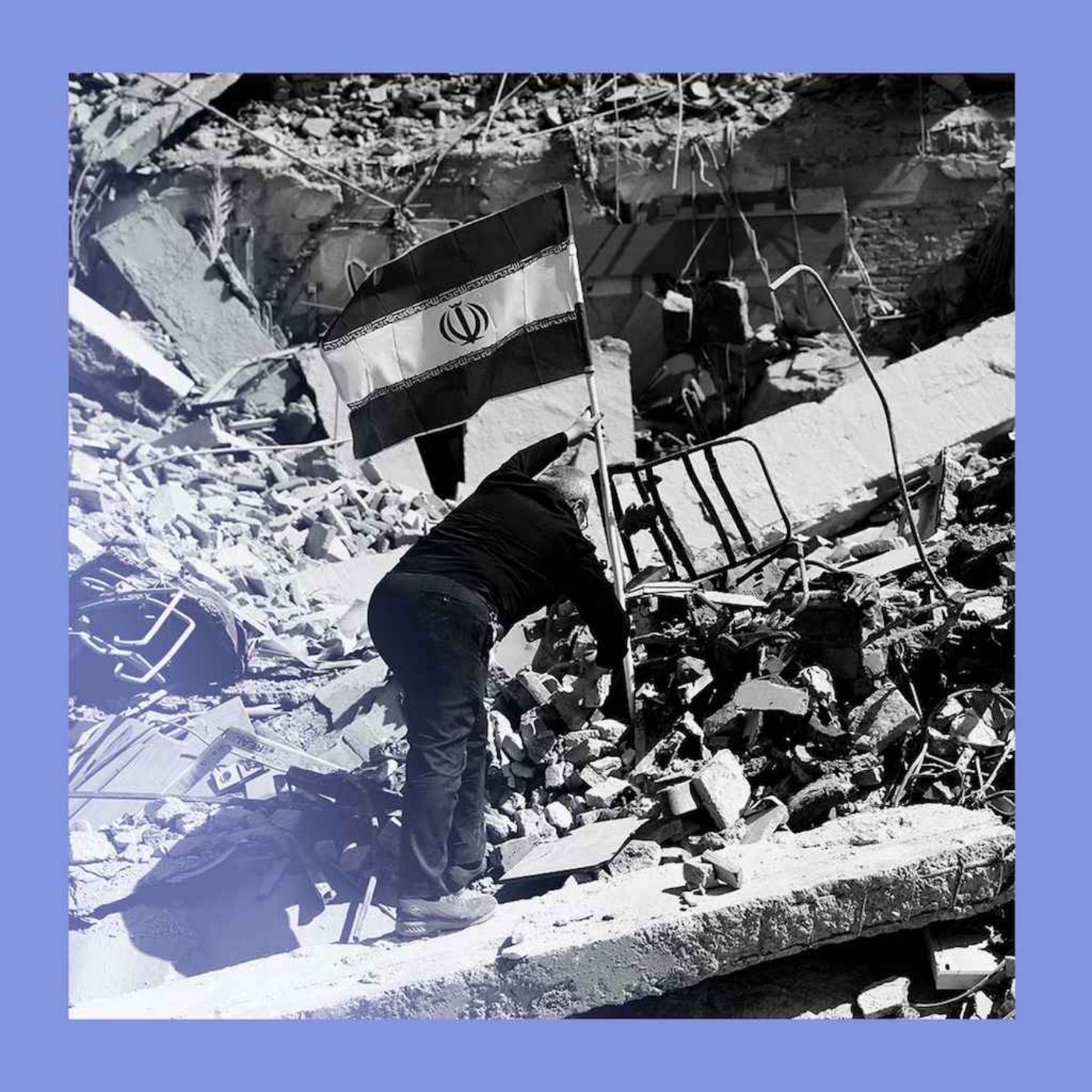
Overview of The Intelligence — "The third Gulf war: one week on"
This episode (host Rosie Bloor) reviews the first week of the renewed Gulf conflict after heavy U.S. and Israeli strikes on Iran. Guests from The Economist—Middle East editor Josie DeLapp, deputy editor Ed Carr, defence editor Shashank Joshi and obituaries editor Anne Rowe—assess the military, political and humanitarian consequences so far, the sustainability of air defences and interceptor stocks, the resilience of Iran’s regime after the killing of Supreme Leader Ayatollah Ali Khamenei, and likely trajectories for the crisis.
Key developments covered
- Heavy U.S. and Israeli air campaign against Iranian targets has continued a week in.
- U.S. officials signalled a “dramatic surge” in firepower; President Trump urged Iran to disarm and called for domestic action in Iran, and reportedly endorsed the use of Kurdish fighters against Iranian targets.
- The U.S. Treasury temporarily waived sanctions to allow India to buy Russian oil, an overt move to blunt a spike in oil prices.
- Israel has escalated on its northern border with Lebanon, increasing pressure on Hezbollah.
- Iran reportedly launched hundreds of ballistic missiles and many drones (Shahed-136 type); several strikes hit regional targets including facilities near U.S. missions and killed U.S. personnel.
- The programme also confirmed that Iran’s Supreme Leader, Ayatollah Ali Khamenei, has been killed in the opening hours of the conflict; the episode includes an obituary overview of his life and rule.
Political analysis and objectives
- Ed Carr: The coalition (U.S. and Israel) demonstrates high operational effectiveness but political aims are unclear — America appears to be pursuing multiple objectives (nuclear program containment, missile program degradation, addressing internal repression, possible regime change, historical reckoning). That vagueness makes defining “victory” difficult and risks open‑ended commitments.
- Josie DeLapp: Iran’s regime is broader than a single leader. Despite high‑level losses, the Islamic Revolutionary Guard Corps (IRGC) and other institutions are intact, and there have not been mass defections or army refusals akin to 1979. Survival of the regime would itself be a form of victory for Tehran.
- The Economist’s editorial position (discussed in the episode): once kinetic action has begun, one argument is to at least complete the task of degrading Iran’s missile capabilities to reduce future escalation risk — but long‑term resolution of the nuclear issue requires Iranian agreement, not perpetual bombing.
Military analysis — missile and air‑defence sustainability
- Modern air defence is central: Israel fields layered systems (Iron Dome for short range, David’s Sling, Arrow systems for higher‑altitude/longer‑range intercepts). Gulf states also possess Patriots and THAAD (high‑altitude) batteries.
- Interceptor usage and production math (estimates discussed):
- Iran fired roughly 400 ballistic missiles in the early days (numbers fluid).
- Air defenders typically launch ~2 interceptors per incoming missile for high confidence, implying hundreds to thousands of interceptors fired in the opening days.
- Production rates are limited: Patriot (PAC‑3) production roughly hundreds per year (commonly cited ~600/yr target growth), THAAD production materially lower today (tens to low hundreds per year). The episode stresses these are limited and cannot be rapidly replenished at scale.
- Consequences:
- At initial launch rates, defenders could face a crisis in under a week; even if Iran paces launches, a sustained campaign of weeks will force rationing of interceptors and likely increase successful strikes.
- Rationing forces hard choices: defend cities vs. military assets vs. critical infrastructure.
- The campaign will draw down stocks available for other theatres (Ukraine, Pacific), with long‑term production and allocation implications.
Risks, scenarios and possible trajectories
- Short term:
- Continued missile/drone salvoes may deplete interceptors and increase casualties and damage in the Gulf and Israel.
- Escalation in Lebanon (Hezbollah) and use of proxy forces raise risk of multi‑front war.
- Medium term:
- Iran could conserve launches to prolong campaign and wait for interceptor depletion, or attempt concentrated salvos once defences are weaker.
- Kurdish involvement (endorsed by some U.S. statements) could spark further fragmentation and more dangerous regional dynamics.
- Long term:
- Three broad outcomes discussed:
- Regime survives (hardliners consolidate): region remains unstable and aggressive Tehran continues regional strikes.
- Regime collapses or fragments: risk of ethnic/sectarian disintegration, prolonged civil conflict and regional spillover.
- A negotiated settlement that meaningfully limits the nuclear/missile threat (deemed unlikely without Iranian consent).
- Three broad outcomes discussed:
- Wider strategic impact:
- Stockpile depletion will affect U.S. and allies’ readiness elsewhere (Pacific, Ukraine).
- Economic effects via oil markets and sanctions policy could have global reverberations.
Obituary summary — Ayatollah Ali Khamenei (Anne Rowe)
- Background: Born to a poor family, steeped in Islamic studies from childhood, imprisoned and tortured under the Shah; rose from being a cleric to supreme leader after Khomeini’s death, aided by rapid elevation to Ayatollah status.
- Rule: Deeply anti‑Western, presided over harsh internal repression (including mass killings of protesters), opposed Western influence (e.g., vaccine skepticism), and pursued an assertive regional posture including nuclear ambitions.
- Personality and legacy: Presented as pious and autocratic; sought to consolidate a more fundamentalist “second step” of the Islamic Republic. His death (aged 86) raises questions about succession but analysts argue institutions and the IRGC reduce the chance of immediate collapse.
Notable lines and insights
- Ed Carr: “They are able to conduct operations at an extraordinary level — but it is not clear what winning means.”
- Josie DeLapp: The regime is “deep, wide” and survival itself would be a victory.
- Shashank Joshi: At initial rates, an interceptor crisis could arrive “in under a week”; if prolonged beyond ~10–12 days, rationing and more missiles getting through are likely.
What to watch next (recommended indicators)
- Iran’s missile/drone launch tempo (sustained rate vs. conservation).
- Interceptor usage reports and announcements on resupplies to Gulf states.
- Signs of Kurdish forces being mobilised/involved and changes on Israel‑Lebanon front (Hezbollah).
- Oil market moves and sanctions waivers (e.g., India/Russia), which affect global economic pressure.
- Internal Iranian political moves: succession processes, elite cohesion, and public protests or military defections.
- U.S. strategic posture: stated objectives, prioritisation (missiles vs. nuclear facilities vs. regime change) and allocation of military resources.
Where to follow more
- The Economist’s further coverage (including the “Checks and Balance” podcast for U.S. politics) and ongoing Intelligence episodes for updates, analysis and reporting on Iran, regional dynamics and military sustainability.