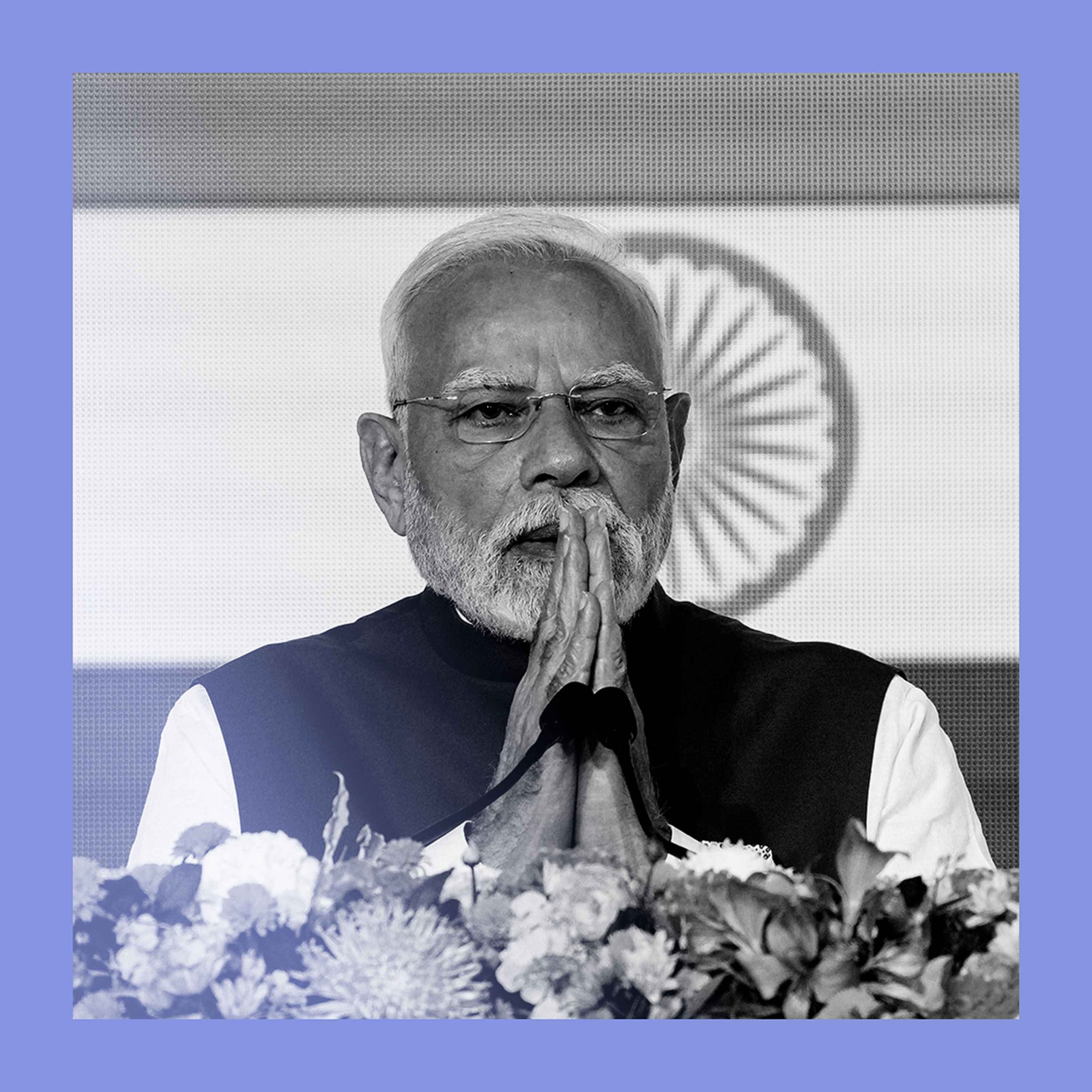
Overview of The Intelligence — “Survival Modi: Indian PM’s fortunes revive”
This episode of The Economist’s podcast covers three main stories: Narendra Modi’s political rebound after a shaky 2024 election and recent policy moves that have strengthened his position; a new Science paper challenging the value of “hothousing” child prodigies; and the symbolic departure of the last giant pandas from Japan as a window into Sino‑Japanese relations.
Modi’s comeback — main developments and context
- Trigger: EU–India long free‑trade agreement. Modi called it India’s largest ever; EU Commission President Ursula von der Leyen touted it as “the mother of all deals.”
- Political picture:
- Despite losing his parliamentary majority in 2024, Modi’s BJP only dropped vote share marginally and remains dominant.
- Since 2024 the BJP and its coalition have won a string of state elections; the opposition (mainly Congress) is fractured and weak.
- Modi’s coalition has been stable, partly by bringing regional parties into government via patronage.
- Policy shift and reforms:
- Greater emphasis on economic measures: inflation reduction, tax simplification, labor‑law overhauls, deregulation in the budget, and high‑profile trade deals (e.g., with the EU).
- Cultural/Hindu‑nationalist rhetoric continues, but the government has been less willing recently to push new incendiary communal policies.
- External pressures (e.g., U.S. tariffs under Trump) nudged elements within Modi’s circle toward economic liberalisation to strengthen India in a more hostile global environment.
- Why his position looks strong:
- Personal popularity remains high (cited ~70% approval in the episode).
- Modi is positioning himself to become India’s longest‑serving prime minister and is widely seen as politically durable.
- Risks noted:
- Persistent public frustration over jobs and socio‑economic challenges.
- Potential complacency or overreach, and the possibility that economic gains may not be enough to sustain long‑term dominance.
Child prodigies vs. late bloomers — findings and implications
- Study summary:
- Paper by Arne Gullich and colleagues analyzed data on >34,000 elite performers across sports, chess, classical music, academia, etc.
- Key finding: top adult performers often were not top performers as teenagers; conversely, many teenage stars don’t remain top adults.
- Statistic highlighted: about 90% of top adults were not top teenagers, and 90% of top teenagers are not top adults (across fields studied).
- Why early hothousing may not produce the absolute best:
- Hothousing reliably makes highly competent performers but appears less likely to produce the exceptional top few who reach superstardom.
- Plausible mechanisms suggested by the authors:
- Search and match: broader early exploration helps people find the domain best suited to their talents.
- Enhanced learning: varied early experiences build “learning to learn” skills, raising later training efficiency.
- Limited risk (burnout): narrow early specialization increases risk of burnout, boredom, or drop‑out.
- Practical takeaways:
- Hothousing is effective at producing high performers but not necessarily the very top stars.
- For parents, educators, and academies: clarify whether the goal is broadly elite performance or to maximize the small chance of producing a world‑beating superstar; consider encouraging broader interests and delayed specialization if aiming for the latter.
Panda diplomacy — pandas leaving Japan and the geopolitical signal
- What happened:
- Ueno Zoo’s twin pandas (Xiao Xiao and Lei Lei) left Japan under the terms of their loan, leaving Japan temporarily without any giant pandas for the first time in 54 years.
- The farewell attracted large, emotional crowds and highlighted pandas’ cultural popularity in Japan.
- Geopolitical interpretation:
- Giant pandas are technically owned by China and are commonly loaned as diplomatic symbols (“panda diplomacy”).
- Analysts argue that China’s decision not to immediately send replacements is a signal of cooling relations with Japan following hawkish Japanese statements about potential intervention in a Taiwan contingency.
- China has also used other retaliatory measures (travel advisories, suspended seafood imports, export restrictions on certain goods) in response to warming Japanese hawkishness.
- By contrast, China is sending pandas to South Korea after friendly high‑level meetings, underscoring shifting regional ties.
- Outlook:
- Some think pandas will return when relations thaw (parallel cited with U.S.–China panda history), but timing depends on political dynamics.
- For many fans, the attraction to pandas remains strong—some plan to travel to China to see the animals.
Notable quotes and data points
- Ursula von der Leyen: “We did it. We delivered the mother of all deals.” (on EU–India trade deal)
- Approximate approval: “70% of Indians” still approve of Modi (as cited in the episode).
- Research study scale: data from more than 34,000 elite performers; ~90% overlap statistics between teenage and adult top performers described.
Key takeaways and recommended attention
- Modi’s political resilience rests on modest electoral shifts, strategic coalition management, economic reform momentum, and continued personal popularity—but structural challenges (jobs, inequality) remain.
- If the aim is to produce absolute superstars, delaying narrow specialization and encouraging varied early experiences may be more effective than intensive early hothousing.
- Small cultural markers—like the presence or absence of pandas—can serve as useful, visible indicators of broader diplomatic warmth or strain in Asia; watch China’s panda allocations alongside trade and diplomatic moves.