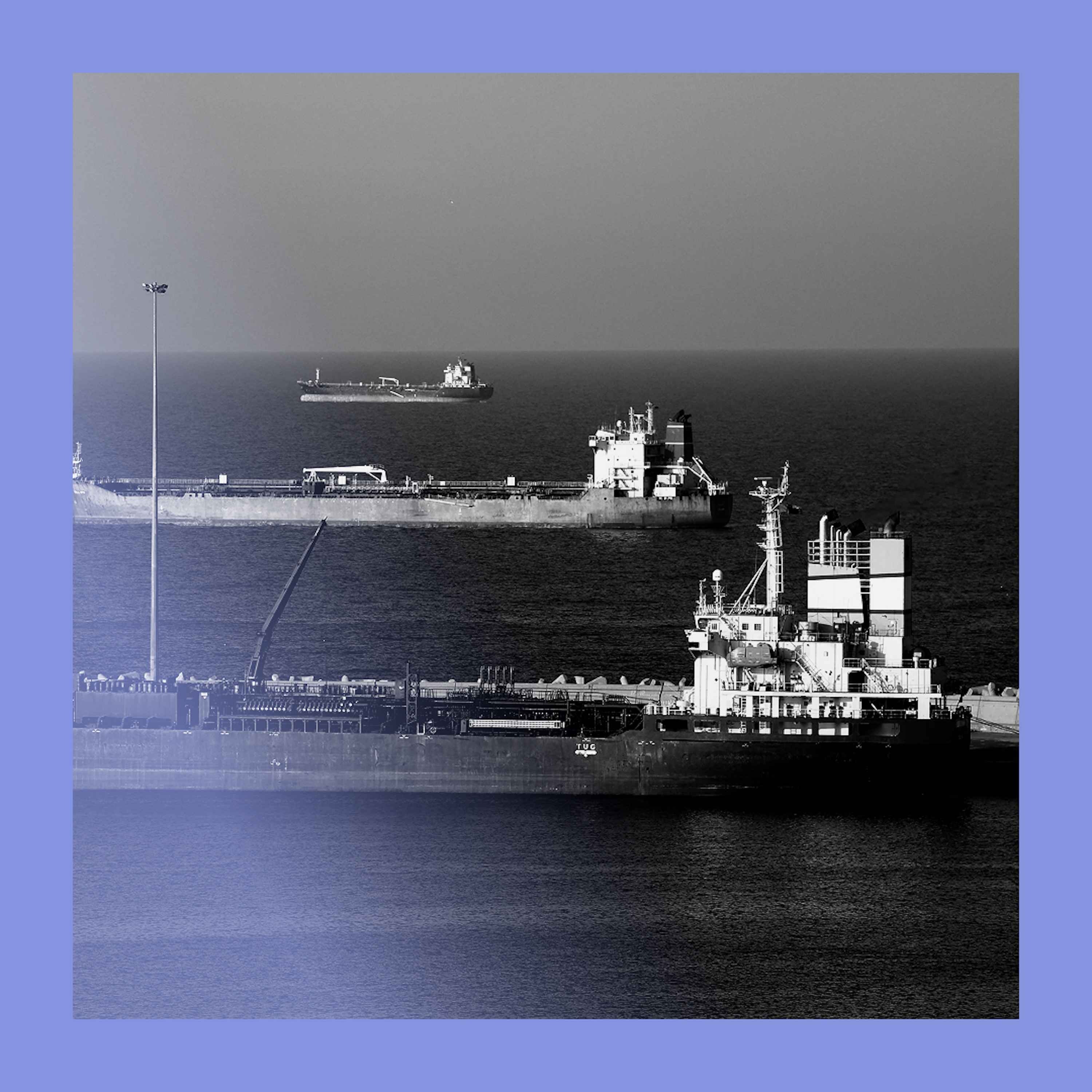
Overview of The Intelligence — Strait of shock: Iran economic fallout
This episode of The Economist’s podcast The Intelligence (host Rosie Bloor) examines the immediate economic fallout from the escalating Iran-related conflict — focusing on disruptions to shipping through the Strait of Hormuz and consequent oil-market volatility — and connects those shocks to wider energy-policy developments, notably Japan’s renewed push for nuclear power. The episode closes with a cultural piece on Jafar Panahi’s Cannes-winning film It Was Just an Accident and how the director’s persecution in Iran informs the film’s themes.
Key takeaways
- The Strait of Hormuz is again a flashpoint: recent military incidents (Pentagon says 16 Iranian mine-laying vessels were neutralised; a tanker was hit and evacuated) have raised market jitters.
- Roughly $20 billion worth of oil and a similar share of LNG transit the Strait daily; closures or attacks create large supply shocks and price volatility.
- Oil prices spiked toward $120/barrel at one point, then fell and stabilised around $90 after unclear/contradicted official tweets and statements; markets are urgently pricing the chance of a quick de‑escalation.
- Practical mitigations (releasing strategic reserves, naval escorts, alternate suppliers) face meaningful limits and trade-offs; any sustained disruption could have sizeable macroeconomic consequences.
- The crisis is accelerating energy-policy shifts elsewhere: Japan is restarting idle nuclear capacity (notably Kashiwazaki-Kariwa), driven by energy security and climate concerns.
- Cultural note: Jafar Panahi’s It Was Just an Accident, drawn from his experience under Iran’s regime, is receiving renewed attention as an urgent meditation on responsibility and justice.
The Strait of Hormuz: immediate economic implications
- Scale of flow: The episode emphasises the importance of the strait — billions of dollars of oil and a significant share of global LNG pass through it daily, so any persistent closure amplifies global energy stress.
- Recent incidents: US claims to have eliminated mine-laying vessels; tankers have been attacked/evacuated. Iran has threatened to target ships attempting to pass.
- Market reaction: Prices surged (nearly $120/bbl) on worst-case headlines, then fell amid mixed official messaging and hopes for de-escalation; volatility remains high.
- Time dynamics: Even if hostilities end, Gulf producers need 2–6 weeks to restore output, so supply interruptions are not instantly reversible.
Policy options and practical limits
- Strategic stock releases
- IEA members hold ~1.2 billion barrels in emergency reserves. Releases can blunt price spikes but sometimes signal longer hostilities (which can paradoxically raise prices).
- Physical and operational limits: caverns/storage have constraints (US must retain a minimum level for geological stability), so releases can only provide temporary, limited relief.
- Naval escorts / convoys
- Historical precedent in 1980s Iran–Iraq war; escorts can allow some shipping but are slow, resource-intensive, potentially costlier than the cargo they protect, and expose naval forces to risk.
- Bottlenecks: a huge traffic backlog and the slow convoy pace would take a long time to clear.
- Alternative suppliers
- Russia: US waivers have allowed buyers (e.g., India) to take sanctioned Russian oil that’s already at sea — a pragmatic short-term relief but politically fraught (undermines Ukraine-policy leverage) and insufficient to close the gap.
- US shale: could add supply quickly but only modestly (~300,000 barrels/day estimated) and depends on private producers’ willingness to invest amid price uncertainty.
- Net supply gap
- The guest estimates the current disruption (~including refined products) at roughly 14 million barrels/day — orders of magnitude larger than what short-term alternative measures can plug.
Wider economic and social effects
- Inflationary and activity effects: higher fuel costs pass through to consumer prices and curb energy-intensive activities (flying, driving). Longer disruptions amplify those effects.
- Examples of immediate measures: Asian governments (most exposed) taking demand-reducing steps — e.g., four‑day work weeks; Bangladesh moved holidays forward to save fuel.
- Potential macro loss: by analogy, the Ukraine shock cut ~2.4% off the Eurozone’s GDP over 18 months; the podcast warns this disruption could be larger and politically testing for leaders balancing war aims with domestic economic pain.
Japan’s nuclear revival (Kashiwazaki‑Kariwa and national strategy)
- Context: 15 years after Fukushima all reactors were shut. Japan’s energy mix is heavily import-dependent: most power still comes from fossil fuels and a large share of oil and gas is sourced from the Gulf.
- Kashiwazaki‑Kariwa: TEPCO restarted one reactor in February; operator hopes to begin commercial supply to Tokyo soon. The plant is symbolically charged because TEPCO also ran Fukushima.
- Policy shift: Prime Minister Kishida’s government aims to raise nuclear’s share to ~20% by 2040, restart idled reactors, extend life of existing plants and potentially build new units.
- Public mood & safety: support has risen due to energy security and climate concerns, plus safety upgrades (e.g., a new 15m seawall), but local mistrust and NIMBY dynamics persist.
- Trade-off: Japan is pursuing a broad “do-everything” strategy — nuclear, renewables, efficiency — which risks under-delivering if resources and focus are spread too thin.
Film spotlight — It Was Just an Accident (Jafar Panahi)
- The film: a tense, moral thriller about a labourer who kidnaps a man he suspects was his torturer after a car incident; the group seeks confirmation and faces choices about justice and revenge.
- Themes: responsibility vs systemic guilt, cycles of violence, moral reckoning under/after authoritarian abuse.
- Production and context: Panahi drew on previous imprisonments and censorship; filmed discreetly (desert/interiors first), street scenes were interrupted by police. Panahi has a history of creative defiance (This Is Not a Film, Taxi Tehran).
- Recognition and censorship: The film won Cannes’s top prize and is up for two Oscars even as Panahi faces renewed sentencing in Iran. Panahi: “if they stop me making movies, that’s their problem, not mine. I’ve made my choice.”
- Why it matters now: the war/chaos has intensified the film’s themes and highlighted the ongoing clash between artists and authoritarian regimes.
Notable quotes
- Rachna Shanbhog: “There’s a desperation now that the war will come to an end soon.”
- Jafar Panahi: “You either look for alternative work or you find a way to continue… if you’re determined to keep going, the solution comes to you.”
- Panahi on censorship: “If they stop me making movies, that’s their problem, not mine. I’ve made my choice.”
Practical implications and recommended attention points
- For policymakers: weigh short-term market relief (strategic releases, diplomatic pressure to reopen shipping lanes) against long-term strategic aims (sanctions effectiveness, military risk). Prepare for sustained price and supply shocks.
- For businesses and consumers: expect continued fuel price volatility; hedge exposure where possible, review supply-chain vulnerabilities, plan for energy-cost-driven inflation in operating budgets.
- For investors and analysts: monitor IEA actions, US strategic decisions, Russia oil waivers, and Navy operations in the Gulf; shale response will be limited in scale.
- For general readers: follow developments in shipping security, oil-price trajectories, and national policy reactions (e.g., Japan’s nuclear restarts) to understand ripple effects on inflation, travel costs and geopolitical alignments.
Further resources mentioned
- The Economist’s video episode “An Anatomy of the Oil Shock” (subscriber-only).
- Follow-up reporting on market moves, IEA discussions and local reactions to Japan’s nuclear restarts for ongoing context.