Overview of Refine and dandy: Iran’s war bounty
This episode of The Intelligence (The Economist) covers three main stories: how Iran has maintained—and even increased—oil revenues during the war through a sanctions‑evasion ecosystem; India’s campaign to wipe out Maoist (Naxalite) insurgents by a March 31, 2026 deadline and the human cost of that campaign; and the often invisible but vital role of understudies in theatre, including recent moves to raise their pay. Each segment balances reporting on systems (logistics, finance, security, labour) with on‑the‑ground colour.
Iran’s wartime oil revenues and sanctions‑evasion
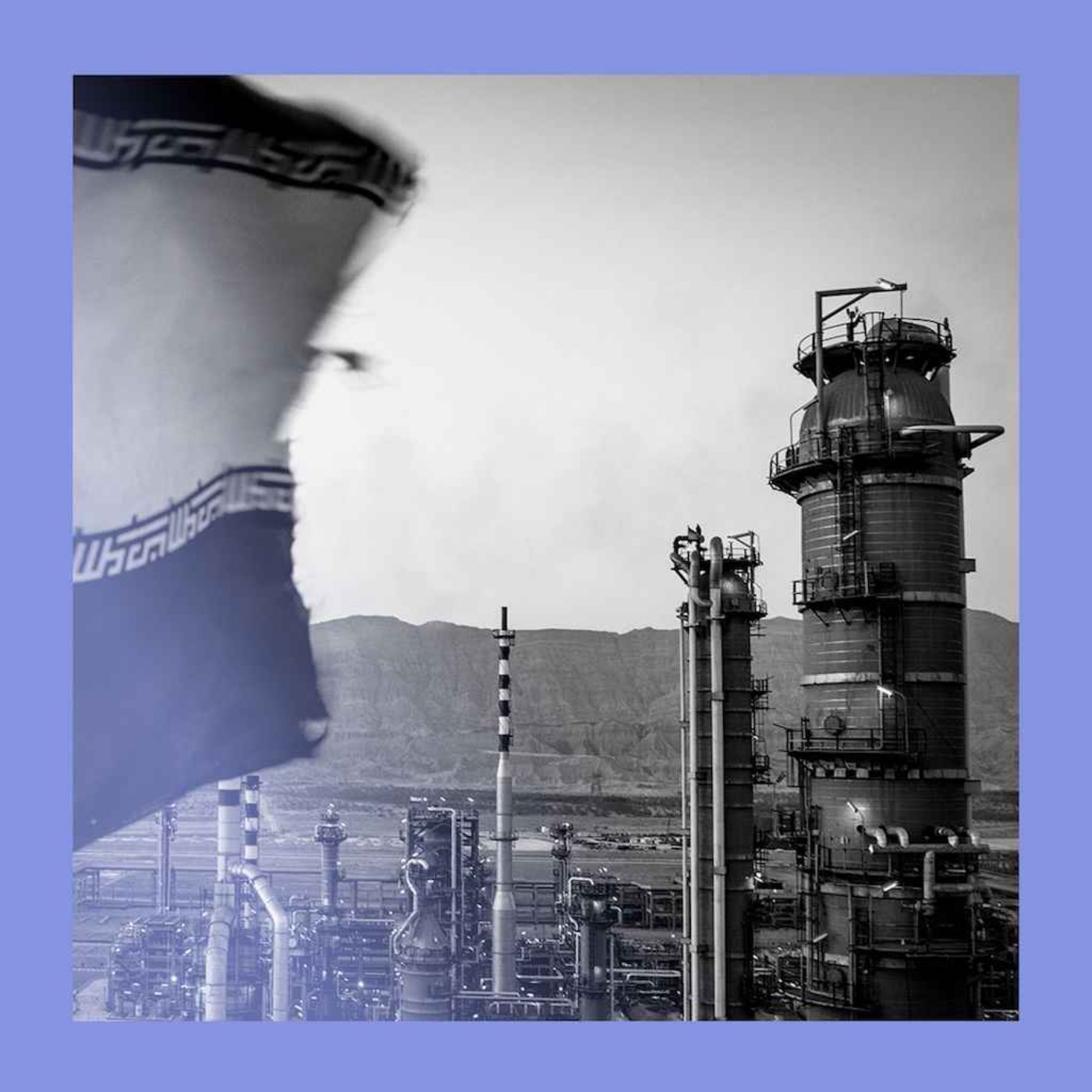
- Main claim: Despite war and threats to its infrastructure, Iran is selling roughly 2.4–2.8 million barrels per day—about prewar levels—and earning nearly twice as much in oil revenue than before the conflict because constrained global supply is pushing prices up.
- Why revenues are up
- Global supply constraints (Strait of Hormuz disruption) have pushed prices higher, so Iranian crude commands higher receipts.
- China is the primary buyer and demand remains steady.
- How Iran gets oil out
- Exports are heavily routed from Kharg Island (transcript: “Karg”), which handles about 90% of exports.
- A decades‑old sanctions‑evasion logistics machine is in place: front shipping companies, forged credentials, AIS spoofing (faking ship locations), and coastal sailing to permit land checks and “tolls.”
- Many shipping companies used are nominally private but act as IRGC (Islamic Revolutionary Guard Corps) fronts.
- Who buys and how they pay
- China purchases roughly 90% of Iranian crude via hundreds of small “teapot” refineries that are less wary of U.S. sanctions than big state companies.
- Payments flow through disposable trust accounts, small Chinese banks, shell companies and layered trust accounts, creating opaque paths that disperse proceeds to China, India, Kazakhstan, Turkey, etc.
- Where the money goes
- A significant share flows to the IRGC and Iran’s defence apparatus, helping to finance military operations.
- Policy context and risks
- The U.S. briefly waived sanctions on Iranian oil at sea recently, but tankers continue clandestine procedures developed over years.
- Military strikes on Kharg or Iranian export infrastructure are on the table but risky: they could further hike global oil prices and provoke retaliation across Gulf energy infrastructure.
- Notable insight: The sanctions‑evasion systems built up over years have proved adaptable under wartime conditions, making it difficult for outside powers to fully throttle Iranian oil income.
India’s Maoist insurgency: deadline, crackdown, and local impact
- Background
- The Maoist/Naxalite movement began in Naxalbari (West Bengal) in 1967 as a peasant uprising and later aimed at revolutionary overthrow of the state.
- At its peak (~2010) it had roughly 20,000 fighters in large parts of eastern and central India.
- The government deadline and current status
- Home Minister Amit Shah set a target to make India “Maoist‑free” by March 31, 2026 (the episode’s date).
- Security operations have intensified: since 2024 some 748 guerrillas have been killed; leadership is largely disrupted; many fighters have surrendered.
- Field reporting from Kotol, Chhattisgarh
- Kotol was a former Maoist stronghold now emptied of armed rebels but heavily militarized with paramilitary forward operating bases every few kilometres.
- Locals expressed relief at the rebels’ departure but also resentment and fear about the security forces.
- Methods used to defeat the insurgency
- Carrots: cash bounties, housing, Aadhaar IDs, public services to encourage surrender.
- Sticks: intensified military operations, alleged staged killings and abuses by security forces (reports of torture and rape).
- Recruitment into local security forces: the 5,000‑strong District Reserve Guard is heavily recruited from vulnerable tribal youths and surrendered fighters—those same communities that ideally should be protected.
- Social and human‑rights concerns
- Under Maoist control, villagers faced coercion (forced errands, food seizures, ideological schooling), restricted education, kangaroo courts and forced measures (e.g., reported forced vasectomies).
- Removing Maoists may expose tribal lands—rich in minerals and iron ore—to mining and displacement; villagers fear being driven off their land amid development.
- Political implications
- The government presents the campaign as a major achievement of Modi’s third term; reporters caution that the methods used and the marginalization of tribal communities raise troubling questions about democratic values and rights.
Understudies: the hidden insurance of theatre
- Role and importance
- Understudies and swings (performers who cover many ensemble/lead parts) serve as a production’s insurance policy; without them, cancellation of major shows could cost producers hundreds of thousands of dollars a performance.
- Offstage understudies can make up about a quarter of performers; swings may cover 10–20 roles.
- Skills and pressures
- Understudies must learn multiple tracks—lines, choreography, harmonies—with less rehearsal time and be ready to perform to large audiences at a moment’s notice.
- They oscillate between anonymity and instant stardom; some famous actors (e.g., Catherine Zeta‑Jones) began as understudies.
- Pay and recent labour moves
- Because of the extra responsibilities, recent agreements have raised compensation for swings/extra duties more than base rates.
- In the U.S., Actors’ Equity negotiated modest base increases but larger percentage increases for swing responsibility; swings earn a notable premium over standard performers. In the U.K., Equity seeks substantially larger increases (~50%) for added responsibilities.
- Audience perceptions
- Some theatre‑goers demand refunds when stars are absent, but this overlooks the skill and commercial necessity of understudies.
Key takeaways
- Iran: Longstanding sanctions‑evasion networks (shipping fronts, document spoofing, opaque payment chains) and China’s willingness to buy have allowed Iran to sustain—and even increase—oil revenues during wartime; disrupting that system is logistically and geopolitically risky.
- India: The state has materially weakened the Maoist insurgency, but the combination of militarized control, rights abuses, recruitment of vulnerable locals into security roles, and the prospect of resource extraction on tribal lands create a fraught and contested outcome.
- Theatre: Understudies and swings are essential risk‑mitigators for live performance; their complex skills and high stakes are increasingly reflected in rising pay and union negotiations.
Notable quote
- On Iran’s financial networks: “It’s becoming more and more opaque,”—summing up how layered trust accounts, shell entities and informal banking have insulated proceeds from easy detection.
Actionable suggestions for readers
- For policy watchers: monitor Chinese teapot refiners and small‑bank payment flows to understand how energy revenues move despite sanctions.
- For human‑rights observers: track recruitment into local security units (like the District Reserve Guard) and allegations of abuses in former Maoist areas to assess the long‑term social cost of the crackdown.
- For theatre supporters: recognize understudies as skilled professionals and follow union negotiations that affect their pay and working conditions.