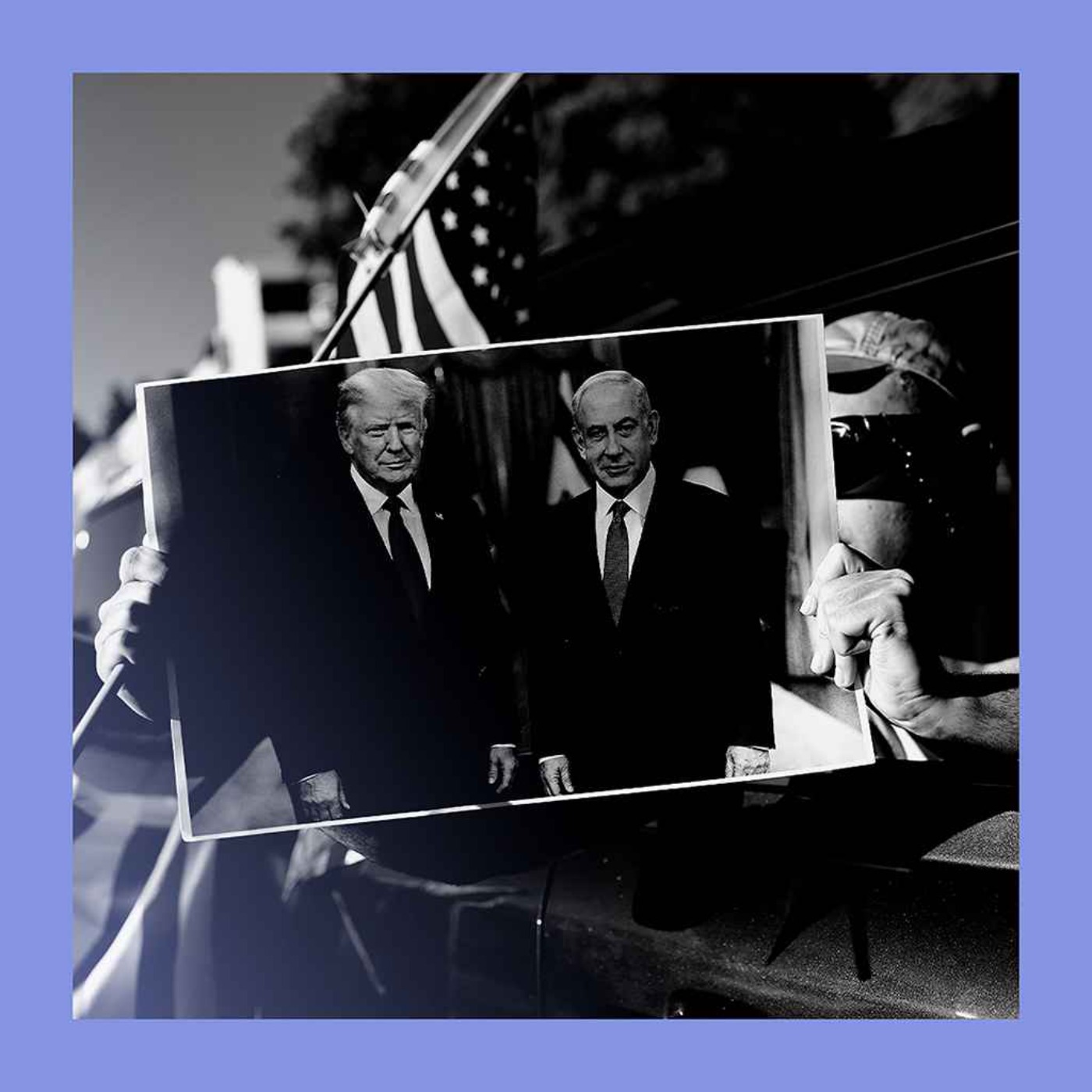
Overview of The Intelligence — “On goal difference: are America and Israel diverging on Iran?”
This episode of The Economist’s The Intelligence (hosts Rosie Bloor and Jason Palmer) focuses on whether US and Israeli objectives in the war with Iran are drifting apart. It features an interview with Anshul Pfeffer (Israel correspondent) about the political, military and diplomatic tensions between Washington and Jerusalem; two shorter segments follow: Suleen Wong on Asia’s dominant role in crypto (especially stablecoins) and John Fassman on a new global history of mafias and their cultural influence.
Key segment — US, Israel and Iran: divergence in aims and leverage
- Main guest: Anshul Pfeffer, Israel correspondent.
- Core question: Are American and Israeli goals in the campaign against Iran converging or diverging — and what happens if talks begin between the US and Iran?
Main points
- Public messaging vs. reality:
- President Trump has loudly claimed he’s negotiating with Iran and even suggested Iran “gave us a present,” while Iranian officials publicly deny direct talks and frame any US statements as defeatism.
- Israel is watching anxiously because it fears Trump might end the conflict without securing Israeli-defined objectives.
- Diverging priorities:
- Trump appears increasingly focused on securing energy routes (reopening and securing oil flows, freedom of navigation through the Strait of Hormuz) and minimizing economic disruption.
- Israel’s aim is broader: to leave Iran politically and socially weakened — ideally triggering domestic unrest that could topple or seriously destabilize the regime.
- Military picture:
- Intense, continuing joint US-Israeli operations (airstrikes, refueling/coordination), plus US force deployments (Marine expeditionary unit, elements of 82nd Airborne) that suggest options beyond air power, including possible ground operations.
- Israel claims much of Iran’s missile launch infrastructure has been targeted (estimates like ~75% of launches intercepted/destroyed cited), but Iran continues to launch missiles daily — underscoring the war remains unfinished.
- Propaganda and narrative operations:
- Persian-language broadcasts and information campaigns are being used to show Iranian forces as retreating, aiming to encourage popular protest — but the effectiveness of these information operations is difficult or impossible to quantify.
- Political and diplomatic constraints:
- Any US-Iran deal will likely obligate Israel to abide by a ceasefire; Israel can’t realistically continue the campaign alone given US partnership and military integration.
- Trump holds decisive leverage over the pace and terms of any settlement; Netanyahu values public proximity to Trump and is reluctant to be seen in open conflict with him—even though his political survival depends on delivering Israeli security.
- Israeli public opinion:
- Broad popular support in Israel for the war (Iran seen as existential threat) does not translate into increased support for Netanyahu: his coalition’s polling hasn’t improved, so domestic politics are complicated.
- Bottom line from Pfeffer:
- Goals are diverging in practice: the US may prioritize stability and energy security; Israel wants regime change or severe weakening. If Trump calls time, Israel will be obliged to accept terms it may find unsatisfactory.
Notable quotes (paraphrased)
- Iranian military spokesman to the US: “Do not call your defeat an agreement.”
- Pfeffer: “This is an unfinished war… If Trump reaches an agreement, Israel would almost certainly be obliged to abide by it.”
Secondary segment — Asia’s outsized role in crypto, especially stablecoins
- Guest: Suleen Wong (host of Scam Inc, Asia correspondent).
- Main points:
- Asia is a leading region for crypto adoption — India tops Chainalysis’s adoption index; nine of the top 20 adopters are Asian countries.
- Use cases in Asia differ from Western speculative framing:
- Remittances: stablecoins (USDT, USDC) reduce fees and speed transfers for migrant workers.
- Business cross-border payments and gig economy payouts: stablecoins allow faster settlements with fewer intermediaries.
- Stablecoins are increasingly the operational backbone of real crypto use in the region, not volatile tokens like Bitcoin.
- Risks and unresolved tensions:
- The attributes that make stablecoins useful (low fees, speed, accessibility without bank accounts) also attract criminals and fraud syndicates; Asia must balance legitimate innovation with anti-money-laundering enforcement.
- Outcome matters: if regulators and infrastructure succeed, stablecoins could become significant global financial plumbing; if they fail, crypto risks remaining a speculative niche.
- Takeaway: Watch regulatory moves in Asia and the development of on-ramps/off-ramps for stablecoins — these will determine whether stablecoins scale as real financial infrastructure.
Tertiary segment — Mafia, culture and history
- Speaker: John Fassman, senior culture correspondent.
- Based on Ryan Gingeras’s book Mafia: A Global History.
- Highlights:
- Mafias tend to emerge where state control is weak or uneven; historical antecedents include brigands and bandits.
- Prohibition-era markets (alcohol in the US, opium in China, gambling restrictions in Japan) catalyzed modern organized crime.
- Legal and institutional responses (e.g., the U.S. RICO Act) reduced traditional mafia power in the late 20th century.
- Cultural feedback loop: film and TV (The Godfather, The Sopranos, Peaky Blinders) shape how criminals see themselves; in turn, media keeps the mob myth alive in popular culture.
- Examples of cultural spillover: cartels forcing recruits to watch The Godfather; “baba” (godfather) usage in Turkey; Las Vegas mob history turned into tourism (Mob Museum).
- Takeaway: Organized crime has been both a product of weak state reach and of market opportunities created by prohibition; its cultural imprint persists even as structures evolve.
Key takeaways and implications
- US-Israel dynamic:
- The US and Israel may end up with different definitions of “victory.” Any US decision to negotiate or end hostilities will heavily shape Israel’s strategic options.
- Israel’s military successes are meaningful but incomplete; political solutions (or lack thereof) will determine whether the campaign achieves Israeli goals.
- For observers: monitor US-Iran diplomacy closely, Israeli public opinion and elections, and continued force deployments in the region.
- Crypto in Asia:
- Stablecoins are moving from speculative instruments to practical tools for remittances, business payments and gig-economy payouts across Asia.
- Regulatory choices in the region will largely determine whether stablecoins become mainstream financial infrastructure or remain prone to abuse.
- Organized crime and culture:
- The interaction between popular media and real-world criminal organizations sustains mafias’ influence on culture and recruitment even as legal frameworks erode their traditional power.
What to watch next
- US-Iran channels and any credible reports of negotiations or ceasefire terms, and whether those terms require Israel to stand down.
- Military indicators: continued missile launches from Iran, US force rotations to the Gulf, and any sign of planned ground operations.
- Israeli politics: polls ahead of elections, Netanyahu’s positioning with respect to Trump and security outcomes.
- Crypto regulation in Asian financial centers (India, Singapore, Vietnam, Philippines) and trends in stablecoin adoption for remittances and business.
- Cultural/political research on the influence of media portrayals of organized crime on real-world groups.
Recommended short reads/listens (from the episode)
- The full interview with Anshul Pfeffer (The Economist) for deeper context on Israel’s security calculus.
- The Economist’s Scam Inc podcast series (Suleen Wong) for crypto fraud and adoption stories in Asia.
- Mafia: A Global History by Ryan Gingeras (discussion summarized by John Fassman) for a wide historical sweep of organized crime.