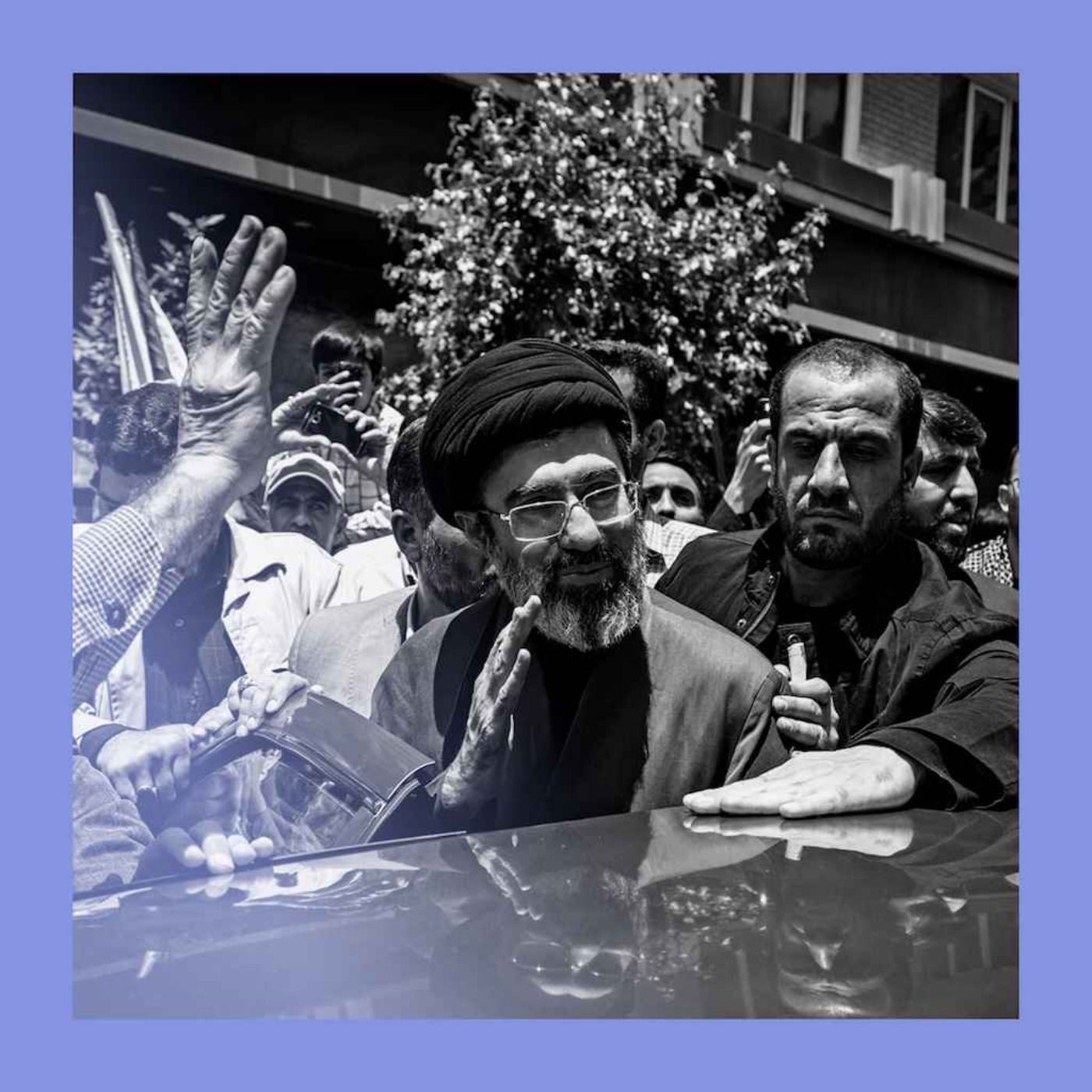
Overview of Follow the leader: Iran picks the son
This episode of The Economist's The Intelligence (host Rosie Bloor) covers three distinct stories: Iran’s appointment of Mojtaba (transcript: Moshtaba/Mostaba) Khamenei as supreme leader amid ongoing Gulf conflict; an overview of cuts and institutional disruption to U.S. science under the Trump administration; and a feature on a growing shortage of tenors in choirs and how ensembles are coping.
Iran: Mojtaba Khamenei chosen amid an escalation of attacks
-
What happened
- The programme reports that following U.S.-Israeli strikes that killed Ayatollah Ali Khamenei, clerics appointed his son Mojtaba Khamenei as Iran’s new supreme leader.
- The appointment is presented as a signal of continuity and regime resilience during active hostilities in the Gulf (strikes on oil depots, refineries, desalination plants, airports and repeated drone/missile attacks).
-
Key characteristics of the new leader
- Mojtaba is described as reclusive, long involved in his father’s office, close to the Islamic Revolutionary Guard Corps (IRGC), but lacking high clerical rank (not an ayatollah).
- His theology and public political positions are not well known; widely expected to be a hardliner.
- The choice is likely unpopular domestically because it looks dynastic and confirms lack of reform.
-
Power dynamics & practical governance
- Nominally supreme leader, but his real authority may be limited at first: Iran is in wartime transition, senior figures are in hiding, and internal factions (notably the IRGC) are likely to exert much control.
- The regime appears more interested in signaling stability than in courting domestic legitimacy.
-
Military/economic escalation and regional consequences
- Both sides are increasingly targeting critical infrastructure — oil fields, fuel depots, desalination plants, water supplies and major refineries — shifting the conflict toward economic warfare.
- Oil prices spiked above $100/barrel; forecasts warn of much higher levels if conflict continues.
- Gulf monarchies have hardened their stance; risk grows that escalation could widen (possible Saudi entry if its oil industry is threatened).
- The central test: which side “blinks” first — prolonged conflict risks cumulative economic and reputational damage for Gulf states and intense strain on Iran’s already fragile economy.
-
Notable quotes/insights
- “The choice…is a signal of continuity rather than change.” — Greg Karlstrom
- “This looks to be shifting into a phase where it is an economic war…a war on critical infrastructure.” — Greg Karlstrom
-
What to watch next
- Further strikes on energy and water infrastructure, oil-market volatility, signs of factional power struggles inside Iran, and diplomatic moves by Gulf states and external powers.
U.S. science: budget cuts, institutional disruption and consequences
-
Overview of the situation
- The episode outlines what it calls a sustained assault on U.S. science under the Trump administration: deep proposed budget cuts, program cancellations and structural disruption across agencies (NIH, NSF, DOE, HHS, NASA).
- Congress has pushed back—bipartisan resistance protected many headline budgets (NIH, NSF, NASA)—but significant damage remains at program and institutional levels.
-
Concrete impacts and examples
- Proposed steep cuts early in the administration (example cited: a suggested ~40% cut to NIH).
- Renewable energy research: Department of Energy solar research funding reportedly cut by around a third while coal research ballooned (cited +260%).
- Large cancellations: roughly $7.5 billion in DOE research funding was canceled, leaving university labs and projects at risk (example: an $8m solar grant cut putting a lab at University of Colorado at risk).
- Advisory infrastructure: ~200 advisory committees across government have been suspended/terminated, reducing external scientific oversight and expertise.
- Vaccines and mRNA research: grants and committees affecting vaccine policy and mRNA development were reduced; the programme links this to a resurgence in vaccine-preventable disease (largest U.S. measles outbreak in decades cited).
-
Wider consequences
- Corporations (e.g., Moderna cited) may scale back clinical trials and R&D in response to reduced federal support.
- Erosion of public trust: politicization and instability risk making mistrust of scientific institutions more understandable and durable.
- Congressional safeguards exist but are uneven; politically sensitive areas (renewables, certain public-health programmes) remain exposed.
-
Notable quotes/insights
- “What’s happening in America does really matter because it’s a kind of center of gravity for global science.” — Daniela Raz
- “This all really fosters mistrust in America’s scientific bureaucracy…that is probably one of the most damaging legacies.” — Daniela Raz
-
What to watch next
- Budget fights in Congress, specific programme-level restorations or cancellations, public-health indicators (vaccine-preventable outbreaks), and private-sector R&D responses.
Choirs and the shortage of tenors: causes and coping strategies
-
The problem
- Many amateur and church choirs face a persistent shortage of tenors (high male voices). Women outnumber men in choral singing roughly 2:1 in surveys cited (Germany, similar ratios in other countries).
-
Why tenors are scarce
- Technical difficulty: tenor parts are vocally and musically demanding (often jumpy lines, require trained technique).
- Cultural/physiological factors: men’s speaking and singing habits, voice changes at puberty (boys drop out when voices change), and possible population changes in voice pitch.
- Training gap: becoming a reliable tenor typically requires deliberate technique and training; casual singers often sit naturally in baritone ranges.
-
How choirs are adapting
- Women (especially alto/older female voices) sometimes sing tenor parts — increasingly accepted but not a perfect substitute.
- Hiring semi-professional “ringers” or “stiffeners” for rehearsals/performances.
- Programming repertoire without distinct tenor lines where possible.
- Long-term fix: stronger early music education to keep boys and young men singing through adolescence and to build technical skill.
-
Notable quotes/insights
- “The tenor line in a choral work is often quite alarming.” — Joel Budd (summary)
- “To become a tenor takes work.” — Joel Budd / choristers in the piece
-
What to watch or do
- Choirs and music educators: prioritize vocal training and retention programs for boys/young men; consider flexible casting and hiring models.
- Choir-goers and funders: support music-in-schools and community initiatives that sustain choral pipelines.
Key takeaways
- Iran’s appointment of Mojtaba Khamenei is being framed as continuity amid war, but real power may be contested and escalation toward economic/infrastructure warfare raises regional risks and oil-market volatility.
- The U.S. scientific enterprise faces program cuts and institutional disruption with concrete effects on renewable-energy research, vaccine R&D and public trust; Congress has defended major agencies but vulnerabilities remain.
- The shortage of tenors is a structural, technical and cultural problem for choirs; short-term fixes (female tenors, ringers, programming) help, but long-term solutions require investment in early music education and vocal training.
Recommended follow-ups (practical)
- For readers tracking geopolitics: monitor infrastructure-targeted strikes, oil-price moves, Gulf states’ diplomatic/military posture, and signs of factionalism inside Iran.
- For science watchers: follow Congressional budget negotiations, programme-level restorations/cuts, and public-health surveillance for vaccine-preventable diseases.
- For choral and music communities: consider recruitment drives, training programmes for young male singers, and flexible programming to sustain ensembles.