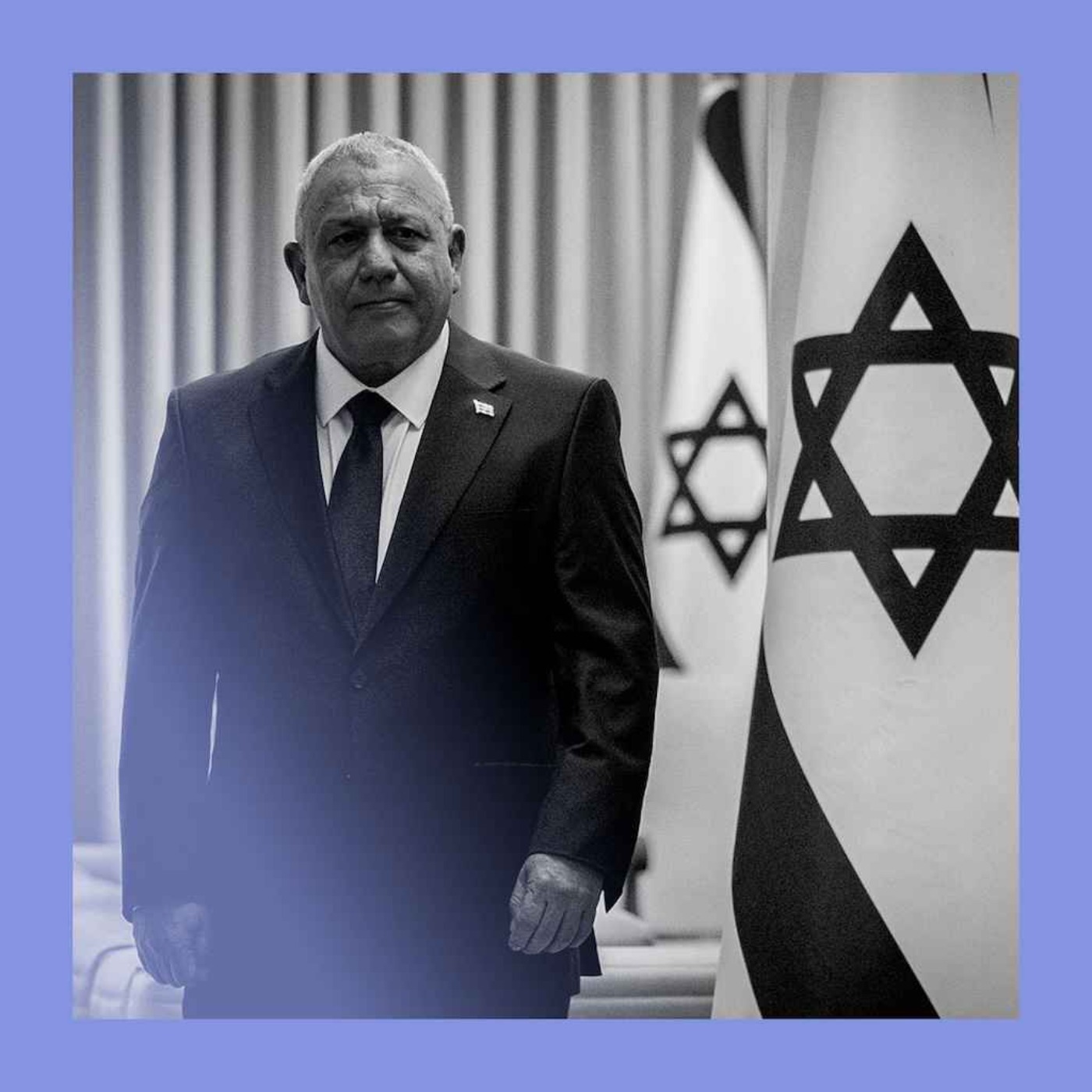
Overview of All eyes on Eisenkot: Israel’s could-be prime minister
This episode of The Intelligence from The Economist centers on a possible change in Israeli leadership, with former general Gadi Eisenkot given the mandate to try to form a new government after a close election produced no clear majority. The episode also examines two broader themes: how the war in Ukraine is evolving along the front lines and through deep-strike attacks, and why Britain’s old elite directory Who’s Who remains historically revealing even as it faces an uncertain future.
Israel: Eisenkot’s narrow path to power
Why Eisenkot matters
- Gadi Eisenkot, a former Israel Defense Forces chief, is positioned as Benjamin Netanyahu’s strongest rival.
- He has been tasked with assembling a coalition after elections failed to deliver a majority for any bloc.
- His appeal is that he represents new leadership at a moment of political crisis and international pressure.
The coalition problem
- Eisenkot is reportedly trying to build a minority government with only four opposition parties.
- That bloc holds barely a third of Knesset seats, so outside support would be essential.
- To be sworn in, he would likely need either:
- abstentions or backing from Arab parties, or
- support from ultra-Orthodox parties, or
- a mixture of both.
Key obstacles
- Coalition partners are not fully aligned:
- Some opposition figures are reluctant to rely on Arab support.
- Others resist concessions to the ultra-Orthodox on issues like national service.
- Avigdor Lieberman is a major complication:
- He is pursuing his own deal-making with ultra-Orthodox parties.
- He has said he will not back a minority government supported by Arab parties.
- Eisenkot has roughly six weeks to succeed.
Netanyahu’s response
- Netanyahu cannot easily overturn the result, but he is trying to delay or delegitimize Eisenkot’s efforts.
- He is pushing for a unity government that would keep him in power.
- He has also used harsh rhetoric, portraying an Eisenkot-led government as dangerous and unstable.
U.S.-Israel implications
- The episode suggests Israel may face a tougher environment in Washington:
- Democrats are becoming less supportive of Israeli policy and unconditional arms sales.
- Some Republicans, including figures around Trump, are also increasingly willing to blame Israel for political setbacks.
- That makes the identity of Israel’s next government even more consequential.
Ukraine: Front-line gains and escalating strikes
What the satellite data shows
- The Economist says it is using NASA satellite data originally designed to track forest fires to monitor war activity through heat signatures.
- Over the last three months, it found more front-line activity than in any comparable period of the war.
- The surprising result: Ukraine is gaining ground, not Russia.
Ukrainian gains
- Ukraine gained about 73 square kilometers net in the past 90 days.
- That is small in absolute terms, but significant relative to the long stalemate.
- The episode highlights Operation Vivaldi, a Ukrainian counteroffensive that blunted a Russian enveloping attack and trapped some Russian forces.
Casualties and Russian pressure
- Russian losses are described as extremely high:
- Estimated Russian fatalities: 370,000 to 780,000
- Estimated total casualties: 1.4 million to 2.1 million
- Ukrainian fatalities are estimated in a lower range, though still severe:
- 116,000 to 220,000 dead or missing, based on cited sources.
Russia’s air campaign
- Russia has sharply increased deep strikes against Ukraine, hitting targets far beyond the front line.
- These strikes are aimed at:
- cities
- rail infrastructure
- industry
- civilian energy systems
- In the past month alone, Russia hit 290 civilian infrastructure targets and killed at least 62 civilians.
- The result is a strategy that appears aimed not just at military defeat, but at wearing down Ukrainian society and the economy.
Diplomacy and winter
- The episode says Trump’s effort to push both sides toward talks has not produced a meaningful pause.
- A proposed energy ceasefire never truly took effect.
- With colder weather and ongoing blackouts, Ukraine faces a very difficult winter.
Britain: Why Who’s Who still matters
What it is
- Who’s Who is Britain’s long-running elite directory, first published in 1849.
- It catalogs the country’s notable figures, from politicians and judges to actors and writers.
- It has become an unusual historical record of British elite life.
Why it’s valuable
- The book is rich in incidental details: hobbies, habits, addresses, and later even social-media handles.
- Historians prize it because it offers a contemporaneous snapshot rather than retrospective interpretation.
- It can be eerie and revealing, especially when comparing past and present editions.
What it reveals about the elite
- The directory remains strikingly unrepresentative of Britain:
- overwhelmingly male
- disproportionately white
- heavily London-based
- very likely to be privately educated
- heavily Oxbridge-educated
- It captures not just who the elite are, but how they present themselves — often with eccentricity or coded humor.
The uncertain future
- Bloomsbury, the publisher, is selling the title.
- If the book disappears, it would mean losing a uniquely useful record of British social and institutional history.
Key takeaways
- Israel: Gadi Eisenkot has a real chance to challenge Netanyahu, but only if he can build an awkward and fragile coalition fast.
- Ukraine: The front line remains fluid, and Russia’s campaign is now increasingly about deep strikes on civilian and economic infrastructure.
- Britain: Who’s Who is more than trivia — it is a long-running archive of how Britain’s elite sees itself, and how that elite has changed over time.