Overview of A murder exploited: Britain’s George Floyd moment that wasn’t and related Economist segments
This transcript bundles three Economist pieces: a political analysis of how the murder of Henry Novak in Southampton became a flashpoint in Britain’s culture-war debate over race and policing; a geopolitical discussion of how NATO is preparing for a possible future without full U.S. support; and a culture essay on why TV title sequences are being squeezed out by the modern “skip intro” habit.
Britain’s “George Floyd moment” that wasn’t
What happened
- Henry Novak, an 18-year-old student, was fatally stabbed in Southampton after a late-night altercation.
- Police bodycam footage later showed officers briefly treating Novak as the suspect because the killer, Vikram Digwa, falsely claimed he was the victim of a racist attack.
- Digwa, who carried a ceremonial Sikh dagger, was ultimately convicted of murder and sentenced to life in prison with a minimum term of 21 years.
Why it became politically explosive
- Right-wing figures, especially Reform UK and Nigel Farage, seized on the footage to argue that Britain suffers from “two-tier policing” or a double standard in which white victims are treated less seriously than ethnic minority suspects.
- The episode was framed by some on the right as a British mirror image of George Floyd and Black Lives Matter.
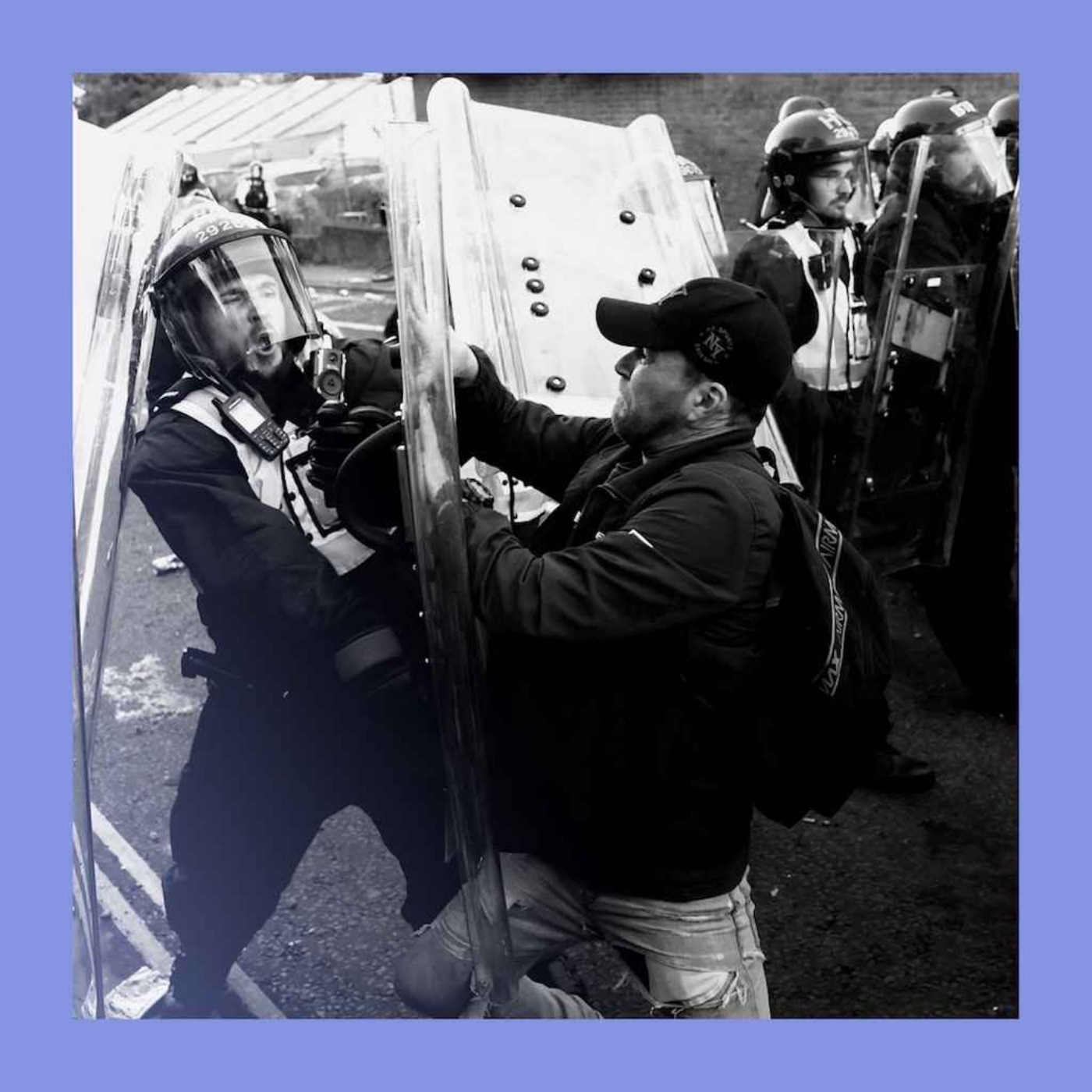
- Protests in Southampton, including ones led by Tommy Robinson, turned violent, pushing the issue from media debate into street politics.
Main argument of the segment
- The Economist rejects the claim that Britain has a systemic, widespread “two-tier” policing culture against white people.
- The police made a mistake in the heat of an unclear emergency, but once the facts were established, Digwa was arrested and convicted relatively quickly.
- The bigger issue is how political actors exploit a tragic case to inflame racial division.
Political significance
- The segment argues that Reform UK’s rhetoric marks a shift: Nigel Farage is increasingly positioning himself as defender of the white majority, not merely as a colorblind populist.
- This shift is tied to:
- competition from even more hard-right parties,
- resentment over the legacy of Black Lives Matter,
- and Reform’s electoral confidence in a fragmented multi-party system.
- The government says it will review police guidance that encourages race-sensitive handling of suspects and victims, though Starmer has said he does not believe Britain has systemic two-tier policing.
Key message from the victim’s family
- Henry Novak’s father urged people not to use his death to create further division, hatred, or tension.
- He said the goal should be safer streets for everyone, not political exploitation.
NATO preparing for life without America
The core concern
- Donald Trump’s second term has intensified fears that the U.S. may no longer fully honor NATO’s central promise: that an attack on one is an attack on all.
- The U.S. has also reduced some military commitments in Europe and signaled a broader pullback.
Why NATO is vulnerable
- The U.S. provides:
- critical intelligence, surveillance, and reconnaissance,
- unified command structure,
- and political “glue” that keeps European allies aligned.
- Without America, European NATO members may struggle with coordination, leadership, and credibility even if they have the raw military capacity.
What “Plan B” could look like
- NATO officials are increasingly thinking about alternatives:
- the British-led Joint Expeditionary Force (JEF),
- an Anglo-French “coalition of the willing,”
- or a more Europeanized NATO command structure.
- The JEF is presented as the most ready-made option because it already has:
- a standing headquarters,
- joint exercises,
- logistics and planning structures,
- and faster decision-making than NATO’s unanimity requirement.
Limits of the alternatives
- JEF does not include key powers such as Germany, France, or Poland.
- Britain’s own military limitations and spending pressures make long-term leadership difficult.
- Still, the segment argues that Europe could, in raw terms, defend itself without the U.S.:
- larger population,
- far bigger economy than Russia,
- and more modern fighter jets.
- The issue is not capability alone, but how long and how costly a conflict would be.
The fading art of TV title sequences
What the essay argues
- TV title sequences are under threat from the “skip intro” button and the pace of streaming.
- What was once a key part of television storytelling is now often treated as disposable.
Why title sequences mattered
- They evolved from simple credits into:
- mood-setting prologues,
- character introductions,
- artistic statements,
- and miniature works of design and music.
- Examples cited include:
- The Sopranos,
- True Detective,
- The Addams Family,
- Bewitched,
- and The Dukes of Hazzard.
Why they are disappearing
- Streaming has made viewers more impatient.
- People binge-watch and want to move directly to the next episode.
- Netflix and other platforms normalized the “skip intro” button, and its use has soared.
What is lost
- The essay argues that title sequences do more than fill time:
- they create suspense,
- help viewers cross into the fictional world,
- and act like a ritual or overture before the drama begins.
- Their decline reflects a broader cultural impatience: everything gets faster, but little feels more special.
Main takeaways
- Politics can weaponize tragedy: the Novak case became a vehicle for broader arguments about race, policing, and white grievance.
- NATO’s future is uncertain: Europe is beginning to plan seriously for a world in which U.S. commitment is weaker or absent.
- Modern convenience has trade-offs: even something as small as skipping TV intros can erode the atmosphere and artistry of storytelling.
Notable insight
- The most important thread across the transcript is how institutions and rituals break down under pressure:
- policing under crisis and political scrutiny,
- alliances under geopolitical uncertainty,
- and television under the pressure of convenience and speed.