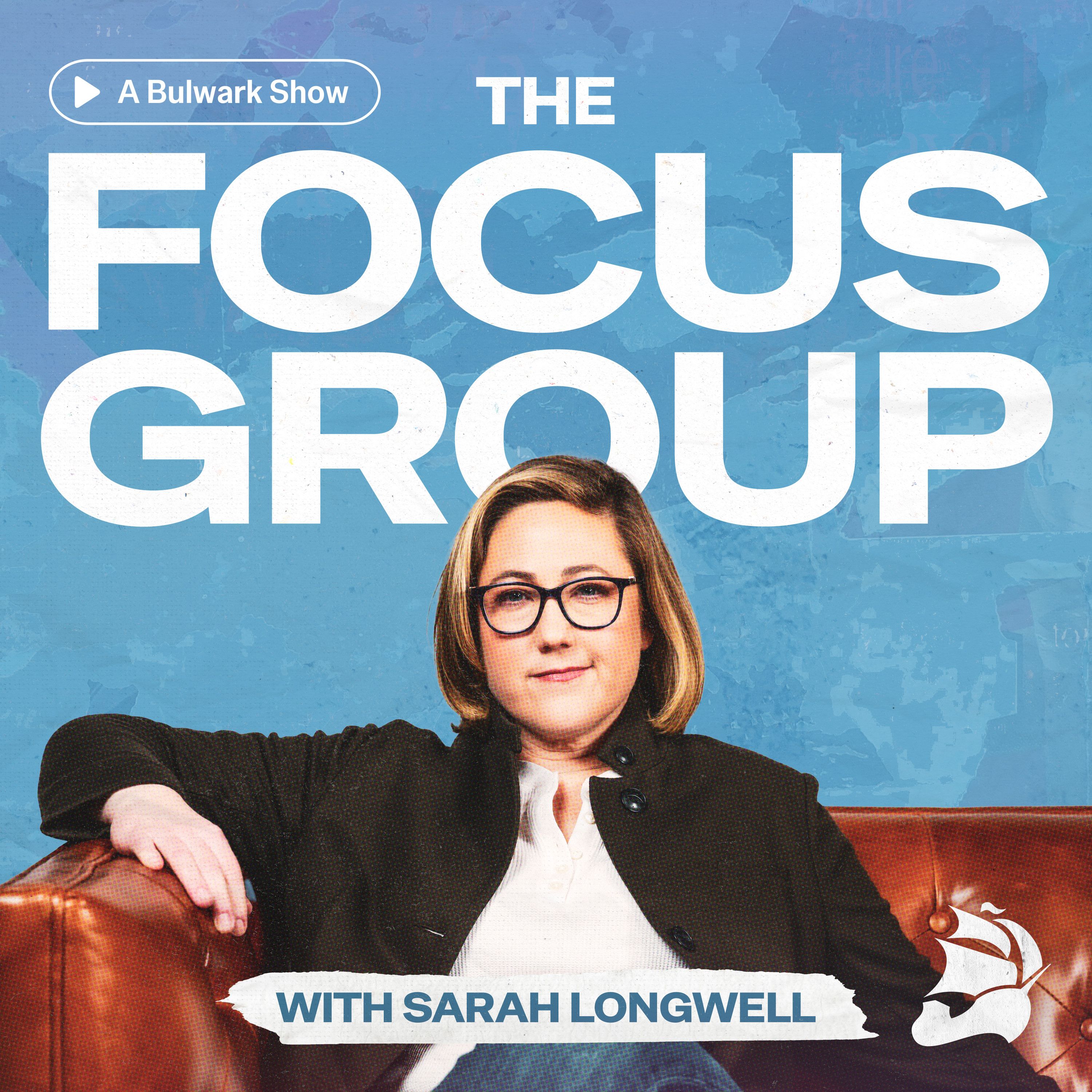
Overview of S6 Ep59: LIVE from San Francisco: Focus Groups Are Revealing a HUGE Weakness for Republicans
This live conversation between Dan Pfeiffer and Sarah Longwell centers on how focus groups shape Longwell’s political analysis, what they reveal about today’s media environment, and why she believes Republicans are structurally weaker than they look going into the midterms and 2028. The discussion also digs into potential presidential contenders, especially J.D. Vance, Marco Rubio, Kamala Harris, Gavin Newsom, Josh Shapiro, John Ossoff, and AOC.
Focus Groups: Why Longwell Trusts Them
How her process works
- Longwell says she runs focus groups at scale and repeatedly over time, not as one-off “gotcha” exercises.
- Her team screens for relevant voters, especially Trump disapprovers and swing voters.
- During COVID, she moved much of the work to Zoom, which dramatically increased volume and consistency.
Why she finds them valuable
- Focus groups reveal recurring themes that polls or media coverage can miss.
- She argues the point is not statistical precision from one group, but pattern recognition across many groups.
- Her “trapdoor policy” removes overly dominant participants who distort the conversation.
Her core insight
- The most useful question is always: “How do you think things are going in the country?”
- The answers consistently surface broad concerns like:
- Cost of living
- Gas and grocery prices
- Wars and instability
- Polarization and social decay
The Modern Media Environment
“News seekers” vs. “news receivers”
- Longwell says most voters are no longer active news seekers.
- Instead, they are “news receivers” who absorb headlines, social posts, and algorithm-driven content passively.
- This helps explain why many voters are unaware of major political controversies that dominate elite media.
Trump’s advantage
- Trump thrives in the “vibes” economy:
- He dominates attention
- He floods the zone with simple, repeated messages
- He creates a sense of omnipresence
- Longwell argues Republicans are better than Democrats at pushing inputs into the media system that eventually shape low-information voters.
Democrats’ media problem
- Democrats still rely too heavily on traditional outlets like CNN, Meet the Press, and mainstream press coverage.
- Longwell says many Democrats misunderstand the current information ecosystem and are behind on adapting.
- She notes that some Democrats are doing better than others, but the party as a whole has not built a strong enough amplification system.
Republicans’ Structural Advantage—and Weakness
The “Republican Triangle of Doom”
Longwell describes the right’s feedback loop between:
- Elected officials
- Right-wing infotainment media
- The voter base
This loop amplifies lies, reinforces loyalty, and keeps the party synchronized around Trump.
Why that matters
- Republicans have built their own media ecosystem over decades.
- Democrats, by contrast, still lack an equivalent apparatus.
- The result is that Republicans can turn elite messaging into mass belief more effectively.
The big weakness
- The Republican Party has become deeply dependent on Trump personally.
- Longwell argues the party has been hollowed out ideologically and organizationally.
- Without Trump on the ballot, Republicans may struggle to motivate key voters at the same level.
Midterms: Why Longwell Feels Better About Democrats
Reasons for optimism
- She sees a real enthusiasm gap favoring Democrats.
- Republican voters seem demoralized, especially on:
- Prices
- The Iran war
- Broken promises
- Trump’s overall performance
- She believes Democrats may be in the best position they could reasonably be in this cycle.
What still worries her
- Mid-cycle redistricting has narrowed Democrats’ pickup opportunities.
- Some key races remain precarious, especially:
- Michigan
- Maine
- She is skeptical of some polling, especially lower-quality primary polls.
Candidate quality matters
- Longwell repeatedly praises candidates who:
- Work hard
- Show up everywhere
- Have a clear theory of the case
- Connect with voters personally
- She highlights strong candidates like:
- John Ossoff
- Roy Cooper
- Mary Peltola
- Some state-level candidates in Texas and elsewhere
Texas as a test case
- She thinks Texas is still difficult, but increasingly interesting.
- She notes Democrats like Colin Allred/Tallarico-type candidates and others are benefiting from candidate discipline and relentless field work.
- Her broader point: money helps, but work and candidate quality still matter a lot.
2028: The Democratic Side
Kamala Harris
- Longwell is sympathetic to how badly Harris was handled by the Biden White House in 2024.
- She believes Harris was denied the chance to define herself and build a standalone reputation.
- But she also says Harris still has a core problem:
- Voters do not feel they know who she is
- Her “why” as a candidate is unclear
- She struggles to connect emotionally and consistently
Gavin Newsom
- Longwell sees Newsom as slick, performative, and overly focused on political theater.
- She thinks he lacks the authenticity and “fight for voters” energy that the moment demands.
- She views his California identity as a liability in a national race.
Josh Shapiro
- Longwell thinks Shapiro is very strong politically and worth serious attention.
- He has:
- Broad crossover appeal
- A strong record in Pennsylvania
- Winning margins that make him look formidable
- But she has cooled slightly on him because she wants 2028 hopefuls to be actively going after Trump now, not waiting for their moment.
John Ossoff
- One of Longwell’s favorite examples of a modern Democrat who gets it.
- She likes his:
- Message discipline
- Visual/presentation savvy
- Repetition around affordability and corruption
- Ability to create “content” without being cringe
- She sees him as a model for how a politician can build omnipresence without trying too hard to be a content creator.
AOC
- Longwell believes AOC has grown substantially as a politician.
- She sees her as more pragmatic and more electable than some on the left want to admit.
- She does not think AOC is likely to win a presidential election, but she could be a major national figure or vice-presidential pick.
- Her biggest strength is her mastery of social media and direct communication.
2028: The Republican Side
J.D. Vance
- Longwell is highly skeptical of Vance as a national candidate.
- Her main criticisms:
- He lacks charisma
- He feels forced and inauthentic
- He comes across as a “goober”
- He has none of Trump’s natural dominance or humor
- She thinks he’s being overestimated by some in the media because they want a new Republican star.
Marco Rubio
- She thinks Rubio is much smarter and more survivable politically than Vance.
- Rubio may be positioning himself as the “responsible” option if Trump-era politics collapse.
- But he also risks being too closely tied to Trump’s failures.
Trump’s successor problem
- Longwell suggests Trump will want to choose his successor, but his legacy may be so toxic that it becomes a liability.
- She expects an open fight among:
- Vance
- Rubio
- Possibly influencer/media figures like Tucker Carlson or Megyn Kelly
- Her bottom line: the post-Trump Republican field is unsettled and vulnerable.
Key Takeaways
For Democrats
- Stop relying so heavily on legacy media.
- Build your own media ecosystem.
- Learn to communicate like voters actually consume information now.
- Don’t force everyone into the same “content creator” mold.
- Be more consistent, visible, and emotionally legible.
For Republicans
- Trump remains the party’s center of gravity, but also its biggest liability.
- The party is boxed in by him and struggles to imagine a future without him.
- Their coalition works best when Trump is directly on the ballot.
For political observers
- Voter behavior is often driven by vibes, repetition, and familiarity more than policy detail.
- Focus groups are especially useful for capturing those hidden patterns.
- The people least engaged in politics are often the ones most decisive in elections.
Notable Lines and Ideas
- “Voters are always right.”
- “News seekers” vs. “news receivers.”
- Trump’s power comes from being omnipresent, not just persuasive.
- Republicans have built a full ecosystem; Democrats still haven’t.
- The biggest challenge for Republicans is that Trump is historically unpopular, but they can’t run away from him.
Bottom Line
Sarah Longwell’s central argument is that politics has changed: attention, identity, and media ecosystems matter more than ever. Republicans, especially Trump, have adapted to that world better than Democrats. But she also believes Trump’s dominance has hollowed out the GOP, creating a major opening for Democrats—if they can modernize their communication, build stronger institutions, and field candidates who feel real to voters.