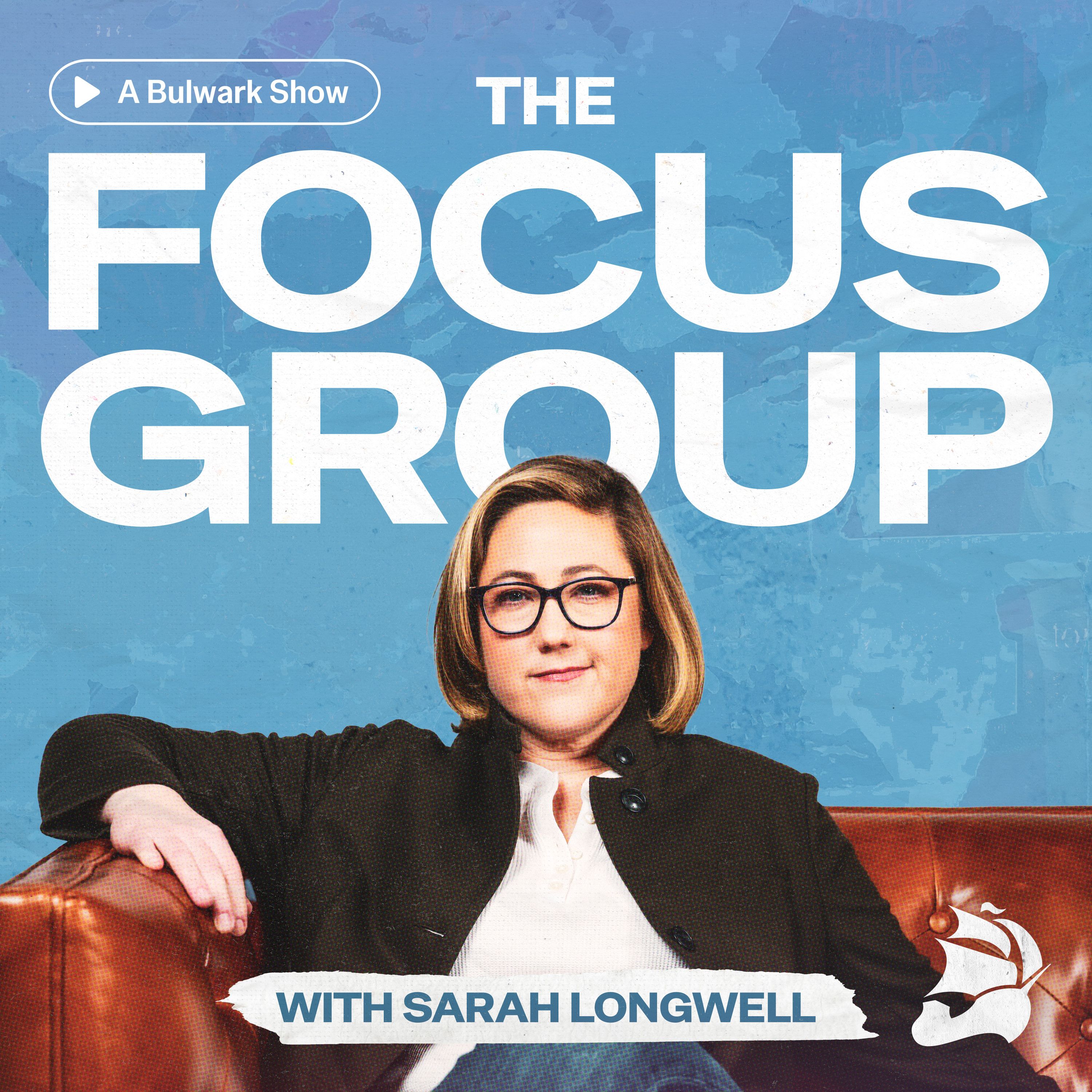
Overview of S6 Ep57: The GOP is MIA in North Carolina (The Bulwark)
This episode of The Focus Group examines why North Carolina remains one of the nation’s most competitive purple states, yet Republicans appear weak in the 2024/2026 cycle. Host Sarah Longwell speaks with political scientist Christopher Cooper about the state’s split-ticket voting, Roy Cooper’s unusually strong political brand, the vulnerabilities of Republican Senate candidate Mike Whatley, and how local issues like Hurricane Helene and crime messaging are shaping voter attitudes.
Main Takeaways
- North Carolina is still a true purple state, not a reliably red or blue one.
- Roy Cooper is the Democrats’ biggest advantage: he is well-known, scandal-light, and broadly seen as competent and moderate.
- Republicans are struggling with candidate visibility in the Senate race; many voters barely know Mike Whatley.
- Negative attacks on Cooper, especially over prisoner releases, are the GOP’s main line of attack, but they may be reinforcing Cooper’s name recognition more than hurting him.
- Hurricane Helene remains a real political fault line in western North Carolina, with some voters blaming Cooper’s response.
- North Carolina’s congressional map has a few genuinely competitive districts, especially NC-1 and NC-11.
North Carolina’s Political Identity
A Stable Purple State
Christopher Cooper argues that North Carolina has stayed remarkably consistent as a battleground state rather than “pinking” significantly:
- The state has heavy split-ticket voting, including in 2024.
- Democrats and Republicans each hold five of the state’s 10 Council of State offices.
- The state combines:
- fast-growing metro areas like Charlotte, Raleigh-Durham, Asheville, and Wilmington
- with a large rural electorate, which remains heavily Republican
Why the State Keeps Splitting
The episode emphasizes that North Carolina’s electorate is not dramatically shifting so much as staying closely balanced. Even when Democrats win statewide offices, Republicans still dominate many rural areas and federal contests.
Roy Cooper’s Political Strength
Why Democrats Like Him
Cooper is presented as the main reason Democrats are hopeful:
- Near-universal name recognition
- No major scandals
- Seen as competent, calm, and moderate
- Long record in statewide office, making him familiar to voters
His Political Style
Cooper is described as:
- “Mr. Rogers with a switchblade in his back pocket”
- Careful, disciplined, and rarely making mistakes
- Able to project “quiet competence” while still being effective behind the scenes
Why He Resonates
Voters in the focus groups repeatedly described Cooper as:
- boring in a good way
- stable
- a governor who kept things running
- someone who felt familiar during COVID and beyond
The Senate Race: Roy Cooper vs. Mike Whatley
Whatley’s Biggest Problem: Visibility
The episode repeatedly notes that many voters:
- don’t know who Mike Whatley is
- haven’t seen positive intro ads for him
- mostly see anti-Cooper messaging rather than a case for Whatley
This creates a major hurdle: voters are being asked to oppose Cooper without being given a compelling alternative.
The Main GOP Attack: Prison Releases
Republicans are focusing on a prisoner-release program tied to Cooper’s time as governor:
- The number 3,500 becomes a recurring talking point
- The attack has emotional power, especially around public safety
- But the hosts suggest the details are often fuzzy, and the messaging may be more effective at reminding voters about Cooper than defining Whatley
Polling and Momentum
Cooper is described as sitting around the low-50s in polling, with the race tightening mostly because some pollsters move undecided voters toward Whatley rather than because Cooper is weakening.
Betting Odds
Cooper is viewed as the likely favorite, though not by a blowout margin. The consensus in the conversation is that:
- this will likely be a closer race than the polling in Cooper’s favor suggests
- but Whatley needs a major change in name recognition and funding to catch up
Congressional Races to Watch
NC-1: Don Davis
- Democrat Don Davis holds a district that was redrawn to be more Republican-friendly.
- He is seen as a fairly conservative Democrat, which helps him survive in a tough district.
- The race is competitive, but Davis has a real chance to hold on.
NC-11: Western North Carolina
- The district includes the territory once represented by Madison Cawthorn and Mark Meadows.
- Democrat Jamie Ager, a farmer and local business owner, is running a well-funded campaign.
- Ager has raised over $3 million early, making him a serious candidate.
- Republicans were thrown into scramble mode after Chuck Edwards dropped out amid ethics controversy, forcing them to substitute Jennifer Balcom late in the race.
What Voters Said in the Focus Groups
About Josh Stein
Voters praised Stein for:
- keeping state politics calm and boring
- improving DMV wait times
- advocating for teachers
- seeming competent and non-dramatic
About Roy Cooper
Common themes from voters:
- “He’s not bad.”
- “He’s very moderate.”
- “He got stuff done.”
- “He was on TV all the time during COVID.”
- Some Republicans still dislike him, especially over school choice and the prisoner issue, but the tone is often more neutral than hostile.
About Hurricane Helene
The episode includes strong criticism from western North Carolina voters who felt:
- state officials were absent
- warning and response were inadequate
- recovery money did not reach affected communities
The host and guest note that Helene could be a meaningful liability for Cooper in the West, though it’s still unclear whether blame lands more on state or federal actors.
Key Strategic Insight
The GOP’s Weakness
The episode’s core thesis is that Republicans are “MIA” because they have not built a strong, visible case for their candidates. Their strategy appears to lean heavily on attacking Cooper rather than elevating Whatley.
The Cooper Formula
Cooper’s success comes from:
- matching North Carolina’s political temperament
- avoiding mistakes
- sounding local, moderate, and stable
- staying just separate enough from national Democratic branding
Notable Quote / Framing
- Roy Cooper is described as: “Mr. Rogers who carries a switchblade in his back pocket.”
- The broader lesson: you win by fitting the state, not by importing a generic national message.
Bottom Line
North Carolina remains one of the most important swing states in the country, but the episode argues that Democrats currently have the edge because Roy Cooper is uniquely well-suited to the state and Republicans have not yet made Mike Whatley into a compelling statewide figure. The Senate race is competitive, the House map has a few true battlegrounds, and Hurricane Helene could still reshape the final margins—especially in western North Carolina.