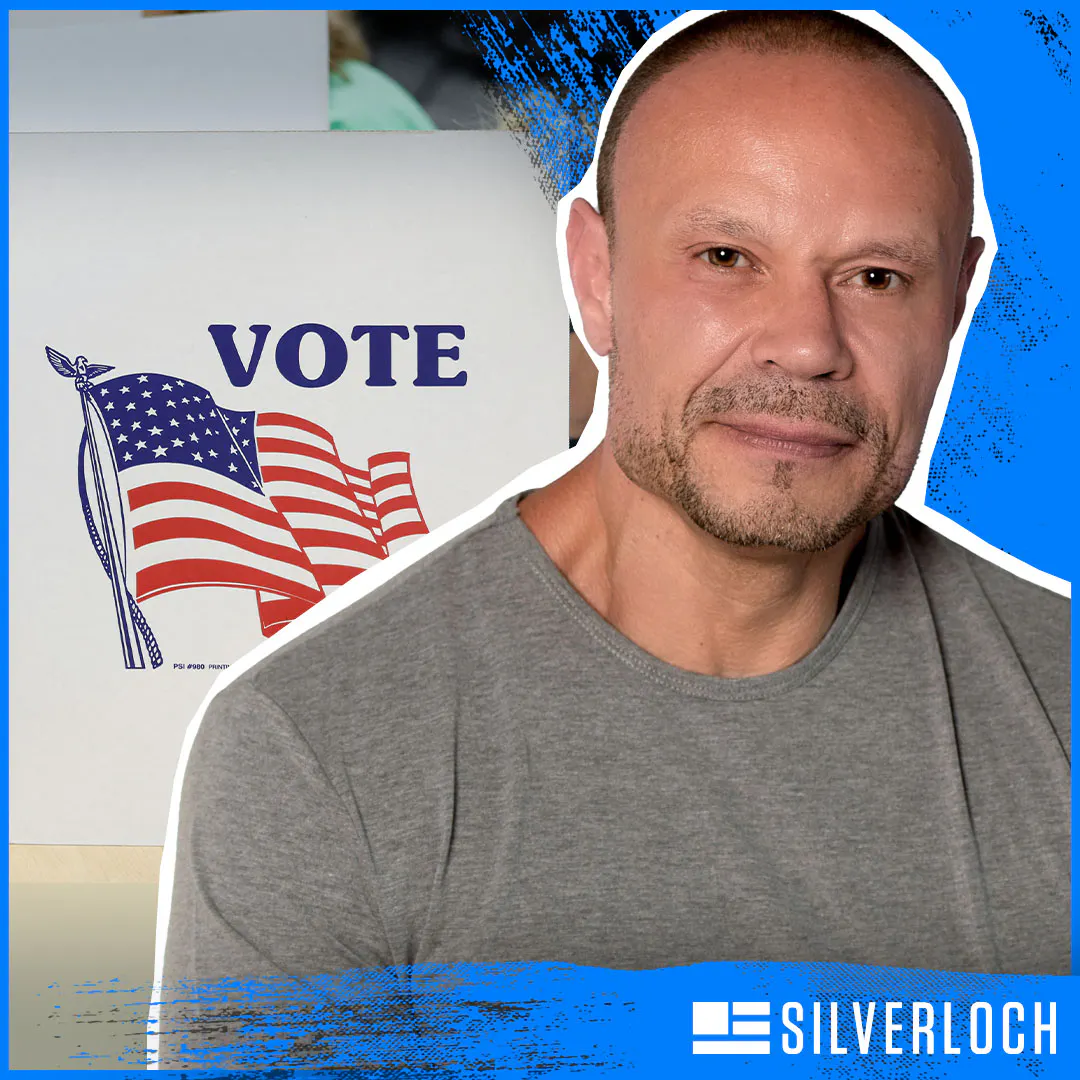
Overview of I Thought This Never Happened (Ep. 2558)
This episode of The Dan Bongino Show focuses on Dan Bongino’s argument that left-wing politics, Islamist extremism, and media manipulation are forming what he calls an “unholy alliance” aimed at weakening the United States. A major segment centers on New Jersey’s admission that thousands of ineligible people were registered to vote, which Bongino uses to argue that voter fraud denial has collapsed. The show also features an extended interview with Michael Alfonso, a congressional candidate in Wisconsin’s 7th District, covering the SAVE Act, socialism, term limits, congressional stock trading, and the importance of local, accountable government.
Main Themes and Arguments
“Stupid is a choice” / manipulation vs. ignorance
Bongino opens by arguing that some people are genuinely misled because they choose not to verify claims, while others are intentional manipulators who exploit them. He repeatedly says that many political narratives survive only because people want to believe them, not because they are true.
The “unholy alliance”
A central thesis of the episode is that:
- Communists / left-wing activists
- Islamist extremists
- and media/online propagandists
are working toward the same end: weakening or destroying U.S. institutions. Bongino says they use emotional “entry points” — such as Israel, Netanyahu, Epstein, climate change, or racism — to recruit people into broader anti-American politics.
Media distrust
He argues that much of mainstream reporting is either propaganda or misleading framing, especially on issues like Iran, voter fraud, and Trump administration policies. He portrays the press as consistently distorting events to fit a political narrative.
Voter Fraud, New Jersey, and the SAVE Act
New Jersey registration bombshell
Bongino highlights a New Jersey admission that more than 6,000 ineligible people were registered to vote. He says this disproves years of Democratic claims that such problems “never happen.”
Why he says it matters
He argues that even if the number seems small, it could affect closely contested races across the state:
- state legislative races
- county races
- municipal races
- school board elections
- ballot measures
He uses this to argue that election integrity is not theoretical and that small irregularities can matter a great deal.
Defense of the SAVE Act
Bongino strongly supports the SAVE Act, saying the only reason to oppose it is if someone wants to make cheating easier. In his view:
- voter ID and registration cleanup are basic safeguards
- secure elections are more important than making voting “easy”
- claims that the bill is racist or anti-woman are manipulative talking points
He also uses a CNN exchange with Scott Jennings and Abby Phillip to illustrate what he sees as bad-faith deflection from Democrats and the media.
Socialism, Communism, and Historical Warnings
Attacking “democratic socialism”
Bongino and Alfonso both argue that “democratic socialism” is a deceptive label for collectivist control. They say it leads to:
- confiscation of property
- reduced economic freedom
- government control over healthcare and education
- authoritarian outcomes
Examples used in the show
The episode cites:
- Bernie Sanders as a millionaire who criticizes capitalism while benefiting from it
- Daniel Ortega in Nicaragua as an example of a socialist authoritarian who eliminated elections
- Mao Zedong as evidence that communist systems produce mass suffering and death
Bongino references historical atrocities under Mao to argue that socialism’s real-world track record is catastrophic, not idealistic.
Youth and socialism
He argues that younger voters are especially vulnerable to socialist messaging because they feel economically stuck and alienated. His response is that their frustration is understandable, but the solution is not more government control — it is better policy and more accountable leaders.
Interview: Michael Alfonso for Congress (Wisconsin’s 7th District)
Campaign and personal background
Michael Alfonso discusses:
- running for Congress in Wisconsin’s 7th District
- the physical grind of campaigning across a very large district
- losing significant weight from the demands of constant travel and door-knocking
- how Trump’s endorsement boosted his race
What voters are saying
Alfonso says the biggest concern he hears is that Congress is not doing enough, especially on issues like:
- election integrity
- the SAVE Act
- supporting Trump’s agenda
His policy views
He strongly supports:
- the SAVE Act
- banning new congressional stock purchases
- term limits for Congress
- shifting power back to the states
He says public service should not be a path to personal enrichment.
Government and subsidiarity
Alfonso argues that the most responsive and least tyrannical government is the one closest to the people. He favors:
- empowering states and local governments
- reducing federal overreach
- strengthening accountability
Messaging to younger voters
He emphasizes that younger Americans are not inherently radical; rather, they are often frustrated by poor outcomes and bad systems. He argues Republicans need to speak to their economic concerns more effectively.
Notable Takeaways
- Bongino sees the New Jersey voter registration issue as proof that voter fraud concerns are real and measurable.
- He frames the political battle as a clash between American self-government and a coalition of anti-American ideologies.
- The episode strongly criticizes “democratic socialism,” portraying it as a rebrand of authoritarian communism.
- Michael Alfonso presents himself as a grassroots conservative focused on election integrity, local control, and limiting political self-dealing.
- A recurring message throughout the show is that voters should verify claims themselves rather than trusting activists, media figures, or charismatic politicians.
Style and Tone
The episode is highly combative, sarcastic, and emotionally charged. Bongino uses profanity, ridicule, and repeated insults to make his points, especially when discussing:
- Mamdani
- Jasmine Crockett
- Bernie Sanders
- pro-socialist activists
- mainstream media figures
The overall tone is partisan and confrontational, with a strong emphasis on persuasion, election integrity, and anti-socialist messaging.