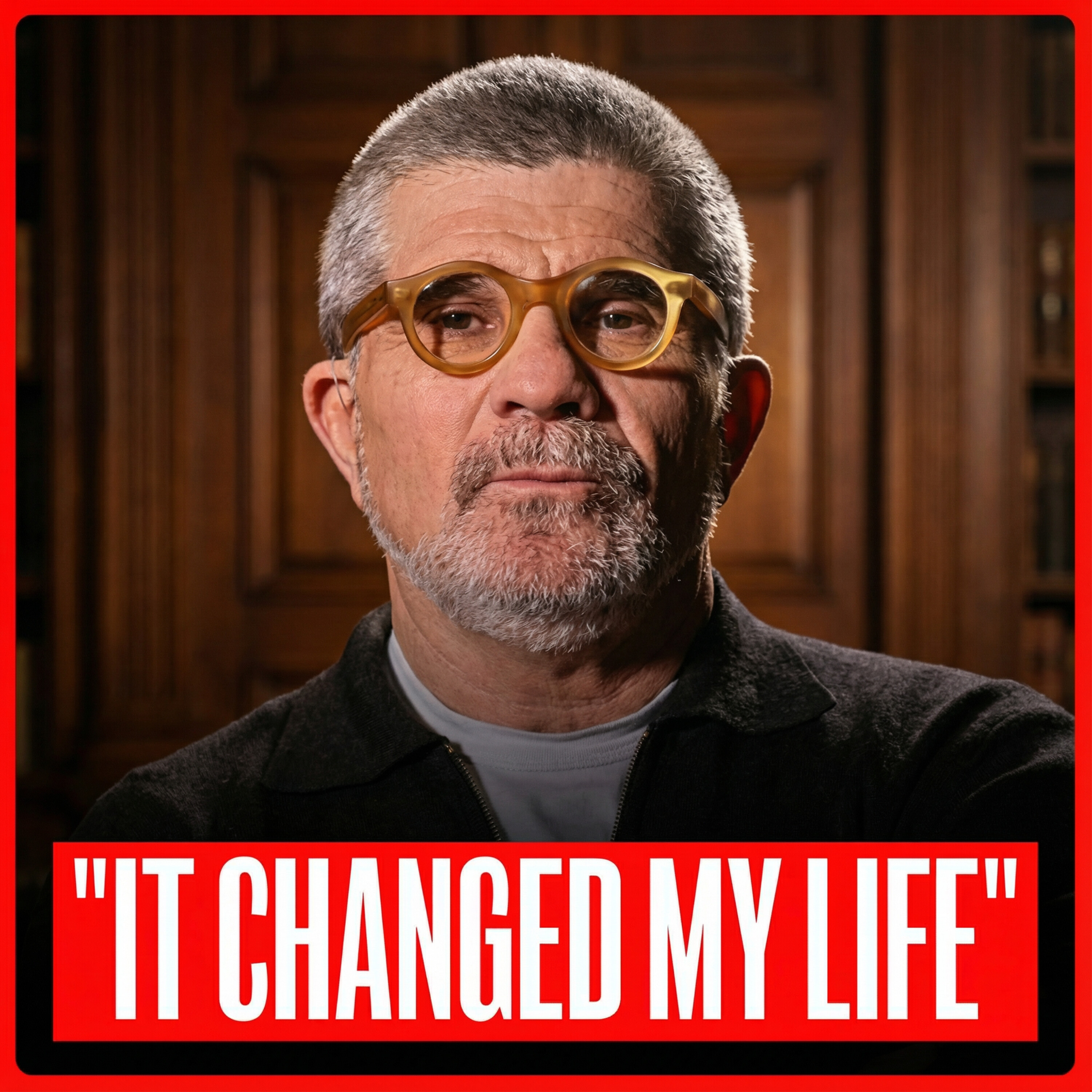
Overview of The Stoic Question — Daily Stoic Podcast
This episode features host Ryan Holiday interviewing playwright, filmmaker, and novelist David Mamet. The conversation links practical Stoic ideas to creative craft, education, fame, and modern life. Mamet explains how Stoic discipline shows up in acting and writing, why restraint and clear execution beat theatrical “talent,” how to apply short Stoic prompts daily (he engraved “What hinders you?” on his watch), and why modern institutions — education, media, and politics — often fail when they ignore human nature.
Guest snapshot
- David Mamet: Pulitzer Prize–winning playwright (Glengarry Glen Ross), filmmaker (House of Games, The Spanish Prisoner, Redbelt), novelist (Chicago; new: Some Recollections of St. Ives), and writer on craft.
- Current/available work mentioned: film Henry Johnson (streaming) and novel Some Recollections of St. Ives.
Key topics discussed
- Stoicism in practice
- Epictetus quote: “We are actors in a play…” as a framework for accepting what we can’t control and focusing on how we perform our part.
- Mamet’s practical Stoicism: short prompts to surface obstacles and guide action (e.g., “What hinders you?”, “I really should”, “Why do I always…”).
- Acting, writing, and craft
- The actor’s job is primarily to “say the stupid fucking words” clearly — courage, presence, and restraint trump excessive preparation or theatrical embellishment.
- If the script is good, embellishment is unnecessary; if it’s bad, embellishment won’t save it.
- Rehearsal paradox: too much self-conscious preparation harms performance; working with audiences and doing the work live corrects and clarifies.
- Masks and ancient theater: removing the actor’s personal psychology can heighten focus on language and objective.
- Character, action, and identity
- Mamet: “There is no such thing as character” in the metaphysical sense — people are judged and defined by actions; “we are what we do.”
- Love, motives, crimes: actions matter more than proclaimed intentions.
- Education and learning
- Critique of modern schooling: too pedagogical, often removes daydreaming and exposure to classic works; kids are capable of wrestling with difficult texts.
- Authentic learning happens in real situations (doing, experiencing), not only at desks.
- Fame, audience, and prominence
- Prominence creates illusions of power and virtue; audiences collectively are smart but also project meaning onto fame.
- Artists often seek approval from people whose validation is meaningless (Epictetus on wanting praise from the “mad”).
- Media, attention, and addiction
- News and social media are engineered to be unresolved, keeping attention addictive; better to replace screen-addiction with purposeful engagement (reading classical works, Torah reading anecdote).
- Politics, constitution, and human nature
- The founders designed institutions accepting imperfect human nature (checks and balances, duty).
- Demagoguery recurs when systems and civic virtues weaken.
Main takeaways
- Focus on what you can control: execute your role (in art or life) rather than obsessing over what you cannot control.
- Courage + restraint > “talent”: show up, speak clearly, and resist over-intellectualizing or over-acting.
- Short, concrete Stoic prompts can be more effective than abstract self-help; name the obstacle to address it.
- Real learning is embodied and practical — audience feedback and lived experience teach more than excessive rehearsal or passive instruction.
- Limit attention to media that fuels anxiety; engage with enduring art and literature to expand perspective and steadiness.
- Actions, not self-descriptions or motives, define character.
Notable quotes & lines
- “Just say the stupid fucking words.” — Mamet on acting and courage.
- Mamet’s watch engraving: “What hinders you?” — a Stoic prompt to name and confront obstacles.
- “There is no such thing as the character. It’s just lines on a page.” — on acting and identity.
- “The audience is a genius collectively and individually.” — on learning from performance and feedback.
- “News is always inciting us to want more news” — on media design and attention economy.
Practical actions & recommendations
- Adopt short Stoic prompts in daily life: write/engrave a short question like “What hinders you?” and use it to focus action.
- When creating (writing, acting, leading), narrow focus to the protagonist’s objective and cut extraneous material.
- Practice “saying the lines” in work and decisions — prioritize clear execution over endless theorizing.
- Reduce compulsive news/social media use; replace with reading serious literature or classical texts to gain perspective.
- Give adolescents access to challenging classics; let them grapple with big ideas rather than over-sanitizing content.
- Learn by doing: seek early-stage, real-world practice (audiences, feedback) rather than waiting for perfection.
Recommended further listening/reading/viewing (from episode)
- David Mamet: Glengarry Glen Ross, House of Games, Redbelt, The Spanish Prisoner, The Untouchables, Chicago (novel), Some Recollections of St. Ives (new).
- Epictetus (Discourses & Enchiridion), Seneca, Stoic texts.
- James Romm on Seneca (mentioned); Joseph Addison’s Cato (influence on the founders).
- Watch Mamet’s film Henry Johnson; follow David Mamet on Instagram (@davidmamet).
Episode notes
- Format: interview with host Ryan Holiday; includes personal anecdotes (Whole Foods, family routines) and multiple sponsor reads (Whole Foods, Human, Momentus, Chime, Fundrise, ASU Online).
- Tone: conversational, candid; Mamet is forthright and sometimes contrarian — emphasis on plain language and pragmatic advice.
This summary captures the episode’s core ideas for someone who wants the practical Stoic lessons and creative insights without listening to the full interview.