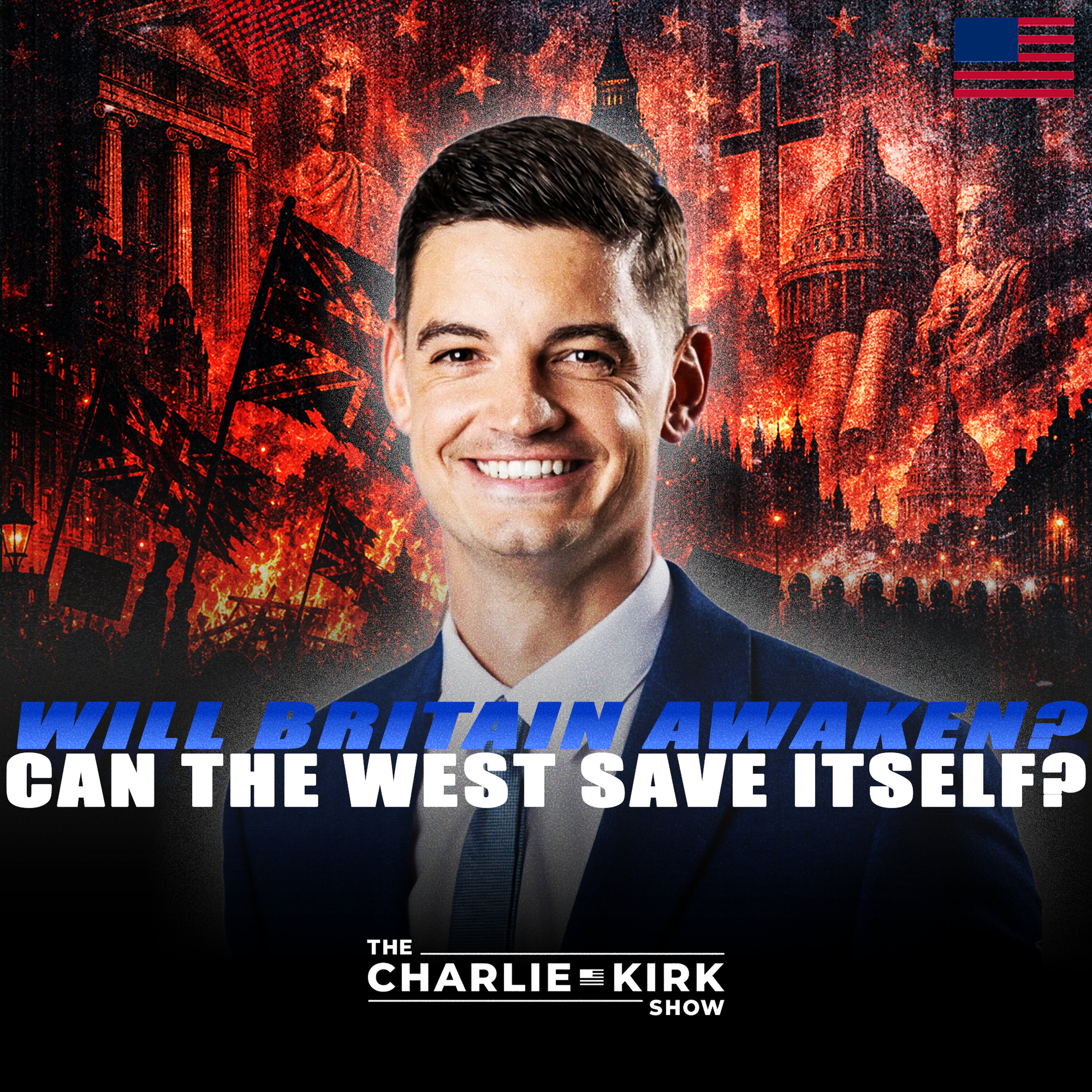
Overview of The Charlie Kirk Show
This episode is a fast-moving mix of political commentary, campaign analysis, cultural criticism, and ideological debate. The main throughline is that the West is at a turning point: Kirk and his guests argue that conservative populism, family formation, border enforcement, and Christian worldview are necessary to reverse what they see as civilizational decline in the U.S. and the U.K. The show spotlights a major Iowa primary win, a South Dakota runoff, unrest in California politics, the Henry Novak murder case in Britain, and broader arguments about immigration, national identity, and the future of the right.
Major Political Stories Covered
Iowa GOP Primary: Zach Lane’s Upset Win
- Kirk opens with an interview with Tyler Boyer and Zach Lane, celebrating Lane’s primary victory in Iowa.
- Lane presents himself as a MAGA/MAHA-style candidate focused on:
- keeping Iowa’s kids in Iowa,
- saving family farms,
- improving education,
- addressing Iowa’s cancer crisis.
- He ties his campaign to:
- rising cancer rates,
- farmland and agricultural consolidation,
- affordability and home ownership,
- regenerative/organic farming,
- opposition to pesticide companies’ liability protections.
- Lane argues that big ag monopolies are squeezing farmers and should face antitrust action and liability for harms.
South Dakota Primary and Senate Pressure
- The show also breaks down South Dakota’s crowded gubernatorial primary.
- Toby Doeden is framed as the MAGA-aligned frontrunner heading into a runoff.
- The result is treated as a warning sign for establishment Republicans, especially in relation to Sen. John Thune and the stalled Save America Act.
- The hosts suggest that if Thune ignores the populist base, he could face a serious challenge.
California and “Spencer Pratt” Coverage
- Kirk briefly turns to California election results, noting that vote counting will take a long time.
- The segment uses a humorous street interview clip about Spencer Pratt as a proxy for anti-establishment politics in Los Angeles.
- The broader point: California remains chaotic, and the political left is still powerful, but there is visible frustration with the status quo.
U.K. Segment: Henry Novak and Institutional Failure
The Case Described
- Ben Leo of GB News joins to discuss the murder of Henry Novak/Nowak in Southampton.
- The transcript describes the case as an example of:
- police bias,
- “progressive race theory,”
- institutional reluctance to confront crime honestly,
- a double standard in how authorities treat white British victims versus minority claims.
- The show emphasizes the disturbing detail that, according to their account:
- the victim was cuffed and treated as the suspect,
- police allegedly failed to prioritize his medical distress,
- the accused and his family allegedly tried to build a false racism narrative.
Broader U.K. Themes
- Leo argues Britain has lost its “mojo” and is now too timid to defend its own people and traditions.
- He connects this case to other national traumas:
- Manchester Arena,
- grooming gangs,
- London Bridge,
- Southport,
- illegal migration.
- The core claim is that British institutions are now more afraid of being called racist than of allowing violence to continue.
Immigration, Shabana Mahmood, and Reform UK
- The conversation turns to Shabana Mahmood, the U.K. Home Secretary, who the show portrays as inconsistent and untrustworthy on immigration enforcement.
- Leo says the likely political answer is Reform UK, led by Nigel Farage, which he believes is best positioned to impose deportations and restore order.
- He is skeptical that Britain has the “spunk” or political will to carry out mass removals, even if public sentiment is hardening.
Dr. Joe Boot: Nationhood, Christianity, and Assimilation
What Makes a Nation?
- Dr. Joe Boot joins to discuss the theological and philosophical basis of nationhood.
- His argument:
- nations are grounded in covenant, faith, and Christian moral order,
- not merely race, geography, or abstract propositions.
- He points to biblical examples like Israel to argue that successful nation-building requires shared worldview and shared moral commitments.
Assimilation and Cultural Survival
- Boot says the West has abandoned the conditions necessary for healthy assimilation.
- He argues:
- mass migration is only one part of the problem,
- deeper issues include family collapse, demographic decline, and loss of Christian identity.
- He says cultures can assimilate only when they are confident, organized, and morally coherent.
- His warning: the West cannot sustain unity if it tries to function with multiple competing moral authorities.
Oren McIntyre on the Future of the Right
What Is the West Fighting For?
- Oren McIntyre joins for a wide-ranging conversation about civilizational decline and conservative strategy.
- His central argument is that the right has often defined itself by what it rejects:
- open borders,
- gender ideology,
- child mutilation,
- family breakdown.
- But he says conservatives still need a clearer positive vision of what they are trying to build.
Tradition as a Living Thing
- McIntyre argues that tradition is not about freezing the past:
- it must be carried forward and adapted.
- He says the 1950s are often romanticized, but what conservatives should actually recover is:
- family stability,
- prosperity,
- one-income household viability,
- social confidence.
Pride Month and Sexual Morality
- The conversation also touches Pride Month and a deleted comment by Rep. Andy Ogles.
- McIntyre says conservatives should not be ashamed to say homosexuality is not a good moral model, but he distinguishes:
- not celebrating it,
- not promoting it,
- not criminalizing private conduct.
- The key distinction, as framed on the show, is between tolerance and forced endorsement.
Trump, Momentum, and the Right’s Internal Factions
- McIntyre gives a mixed but generally favorable assessment of Trump:
- early executive orders were strong,
- the administration later lost momentum,
- domestic wins have been under-discussed.
- He argues the right’s biggest problem is not just opponents, but internal confusion and lack of a coherent goal.
- He says the movement needs:
- more visible success,
- better messaging on domestic issues,
- less fixation on doom and foreign-policy distraction.
Health Segment: Ozempic and GLP-1 Warnings
Main Claims About GLP-1 Drugs
- The show features a sponsor-related interview about Ozempic/GLP-1 drugs.
- The guest warns about side effects allegedly including:
- “Ozempic face,”
- stomach paralysis,
- vision loss,
- organ failure,
- depression/anxiety,
- hair loss,
- pancreatic inflammation,
- “Ozempic breath.”
- The alternative promoted is kimchi probiotic capsules from Brightcore, presented as a natural gut-health solution.
Main Takeaways
- The show frames current politics as a civilizational struggle over identity, family, faith, and sovereignty.
- Kirk’s team emphasizes populist conservatism that blends:
- anti-establishment politics,
- pro-family messaging,
- medical skepticism,
- border enforcement,
- Christian moral language.
- The U.K. discussion is especially bleak: the hosts see Britain as a warning sign for what happens when institutions prioritize ideological sensitivity over public safety.
- A recurring message throughout the episode is that conservatives must do more than resist the left; they need a positive vision for the West and the courage to fight for it.
Notable Themes and Phrases
- “Fight evil and proclaim truth”
- “MAGA + MAHA”
- “Keep Iowa’s kids in Iowa”
- “The UK needs to get its mojo back”
- “We need momentum”
- “Tradition is lived”
- “Do not promote it, do not celebrate it, do not participate in it”