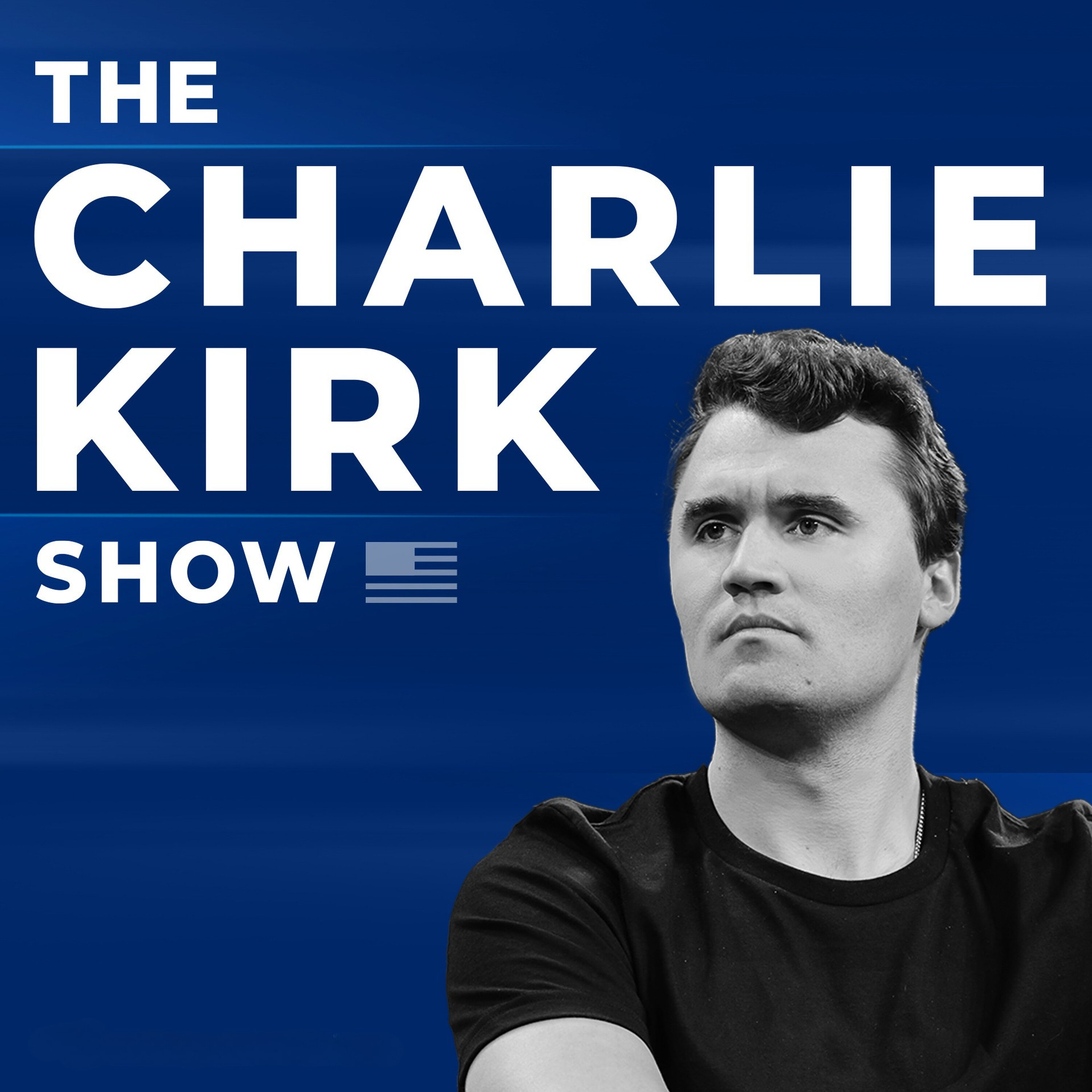
Overview of Who Gets To Replace Lindsey Graham? + Who Is MAGA?
Episode host: Charlie Kirk — March 16, 2026. Guests: Blake (co-host), Jack Posobiec, Libby Emmons (Postmillennial/Human Events), and U.S. Senate primary candidates Paul Dans and Mark Lynch (South Carolina). The show centers on two interlocking debates: (1) What does “MAGA” mean today — a person (Trump) or a lasting coalition/ideology? and (2) whether and how to replace Senator Lindsey Graham in the South Carolina GOP primary. The episode also touches cultural skirmishes (Oscars / SNL / Turning Point halftime), the Iran conflict and U.S. foreign policy, and conservative movement strategy going into 2026.
Key topics covered
- Defining MAGA: Is it synonymous with Donald Trump, or an ideology/coalition that should outlast him?
- Internal Republican friction over foreign policy, spotlighted by the Iran conflict and debates over regime change.
- Coalition dynamics: how the MAGA coalition evolved from 2016 to 2024 and the tensions that evolution produces.
- Culture wars: reactions to the Oscars, SNL sketches, and Turning Point halftime show viewership and cultural influence.
- South Carolina GOP Senate primary: two primary challengers (Paul Dans and Mark Lynch) making the case to unseat Lindsey Graham.
- Domestic priorities argued by guests: immigration moratoriums, ending the filibuster, infrastructure, opioid crisis, budget/deficit concerns.
- Movement strategy: debates about loyalty to Trump versus independent policy stances and building a durable “America First” movement.
Main takeaways
- MAGA remains contested. Trump asserts authority to define it (“I am MAGA”), but guests like Libby Emmons argue MAGA must be a set of values (America First, domestic priorities) to survive beyond one man.
- The Iran conflict sharply exposes a foreign-policy rift on the right: anti-interventionist America Firsters vs. intervention-supporting Republicans (neocons). This divide is politically dangerous and may be exploited by Democrats.
- Movement-building advice repeated by hosts: avoid purely definitional fights; argue policies in public, prioritize coalition addition (not subtraction), and focus on what unites the movement domestically.
- Both South Carolina challengers position Lindsey Graham as a “warmonger” out of step with rank-and-file GOP voters; each pitches a different strength (Paul Dans — Project 2025/administration experience; Mark Lynch — lifelong SC ties, business background, large personal funding).
- Several candidates and hosts favor aggressive domestic-first policies: immigration moratoriums or severe restriction, ending H‑1B/OPT excesses, deportation of illegal immigrants, and rolling back what they view as unconstitutional federal agencies.
- On Senate procedure and leadership: both challengers publicly favor ending the filibuster to advance conservative priorities; they also criticize GOP leadership for underperforming.
MAGA: how the episode frames it
- Two main views:
- Trump-centric: MAGA = Trump’s brand and prerogative; he can declare who or what qualifies as MAGA (Jack and Blake note Trump’s public posts and his ability to define the brand).
- Values/coalition-centric: MAGA = a set of America First policies and cultural values (Libby Emmons emphasizes long-term movement over a single personality).
- Jack Posobiec’s analysis: the MAGA coalition broadened significantly by 2024 (including anti-neocons, libertarians, “Zoomers,” pandemic skeptics, and cultural conservatives), creating inevitable friction on hot-button issues like foreign policy.
- Practical recommendation from hosts: have policy-first debates and avoid exclusionary “is/isn’t MAGA” purges; prioritize addition to win elections.
Foreign policy and Iran — consensus and divides
- General concern across guests about the consequences of regime change in Iran and a desire to avoid long quagmires.
- Trump’s approach (timeline of four–five weeks, public positioning) has created uncertainty; hosts urge prudence and support for troops while debating strategy.
- Strategic notes raised: chokepoints like the Strait of Hormuz, impact on global trade, and the need to think about China as the strategic priority.
- Political consequence: foreign-policy splits are giving Democrats a possible messaging opening to claim they’re the “true” America First on domestic issues — a strategic risk for the right.
Candidate synopses — who they are and their core positions
Paul Dans (challenger)
- Background: longtime MAGA activist, worked in Trump administration (HUD, OPM), involved with Project 2025 and Schedule F initiatives.
- Core platform:
- “Generational change” vs. Graham; trusts Trump but pledges America First policy.
- End the filibuster immediately; pursue strong domestic priorities.
- Immigration: supports a moratorium, ending H‑1B, deportation of illegal immigrants, protect American jobs and student opportunities.
- Prioritize infrastructure, combat opioid crisis, promote vocational education/shop class and “21st-century homesteading.”
- Criticizes Lindsey Graham for foreign adventurism; pledges support for troops but domestically-first approach.
- Campaign tactics: self-funding, digital operations, courting TPUSA support; lauds Project 2025 connections.
- Notable line: “I will get Fauci in an orange jumpsuit” — strong rhetoric on pandemic accountability.
Mark Lynch (challenger)
- Background: lifelong South Carolinian, businessman, heavy personal funding ($5M contribution claimed), ordained deacon, national security/work with Flynn/Guandolo.
- Core platform:
- Emphasizes local roots and business success; contrasts with Dans’ and Graham’s biographies.
- Immigration: advocates deporting illegal aliens and a net-zero legal immigration pause until clean-up; eliminate H‑1B/OPT abuses.
- Foreign policy: pro-Israel personally but insists U.S. sovereignty and finances come first; opposes warmongering and defense-contractor influence.
- Procedure/policy: supports ending filibuster; deficit/budget hawk; wants to abolish or roll back unconstitutional federal agencies and criticizes the Fed.
- Public security stance: warning about “Islamic infiltration” and support for measures like denaturalization/deportation (supportive of SCAM-like measures).
- Campaign pitch: can beat Lindsey Graham due to local roots, financial commitment, and national security credentials.
Cultural moment: Oscars, SNL, and Turning Point halftime show
- Hosts and guests defended Turning Point’s halftime show and contended it outperformed mainstream cultural events in reach (they claimed very high livestream numbers versus Oscars viewership — presented as their claim).
- Critics on the show portrayed Hollywood and awards season as culturally hostile to conservatives and accused films/awards of promoting anti-white or woke narratives.
- SNL sketches mocking conservative figures (e.g., Tucker Carlson) were discussed as part of larger cultural warfare.
Notable quotes and soundbites
- Trump (referenced): “Those people are not MAGA” — used to signal loyalty tests within the movement.
- Charlie Kirk: “Resist ideological fervor… the man in the arena” — urging pragmatic support for the president and national unity in crisis.
- Libby Emmons: “MAGA has more to do with a set of values and perspectives than it does a single man.”
- Jack Posobiec: “Victory is through addition” — coalition-building emphasis.
- Paul Dans: “I will get Fauci in an orange jumpsuit.”
- Mark Lynch: “If I go to the U.S. Senate, I work for America” — stresses national/public duty over foreign loyalties.
Action items, calls to support, and contact info given on-air
- Email show feedback: freedom@charliekirk.com
- Paul Dans campaign: PaulDans.com — sign up / donate (as promoted on the show).
- Social media handles referenced: Dans for Senate on X.
- The hosts encouraged emailing about candidate preference and supporting grassroots organizing (TPUSA and Project 2025 connections highlighted).
- Various sponsor/charity plugs (Preborn ultrasound donations, Medicare help via Chapter, YReFi, All Family Pharmacy) were also read during the program.
Why this matters — implications for conservatives and 2026
- The conservative movement is wrestling with its identity: personality-driven allegiance versus institutionalized America First policy. How that resolves will shape messaging and candidate selection in 2026.
- Foreign-policy disputes (Iran, Israel, broader Middle East posture) are the most likely near-term wedge issue within the GOP—potentially costly if not managed.
- Senate primaries like South Carolina’s are becoming battlegrounds over whether the GOP will shift away from established GOP hawks (e.g., Lindsey Graham) toward candidates who emphasize domestic priorities, immigration restriction, and procedural changes (ending the filibuster).
- Tactical advice from the episode: focus on articulating discrete policy positions, build coalitions around shared goals, and avoid internecine purges that erode voter coalitions.
Bottom line
This episode framed MAGA as an ongoing identity crisis: Trump’s personal brand remains powerful, but many guests argued the movement must translate into a durable, policy-driven “America First” coalition to persist. The South Carolina Senate primary serves as a microcosm of the debate — replacing Lindsey Graham is cast as both a policy and personality fight (warmonger vs. America Firster). The right’s handling of foreign-policy divisions and the ability to add (not subtract) coalition members will be decisive going into 2026.
For more: listen to the full episode at charliekirk.com and reach the show at freedom@charliekirk.com.