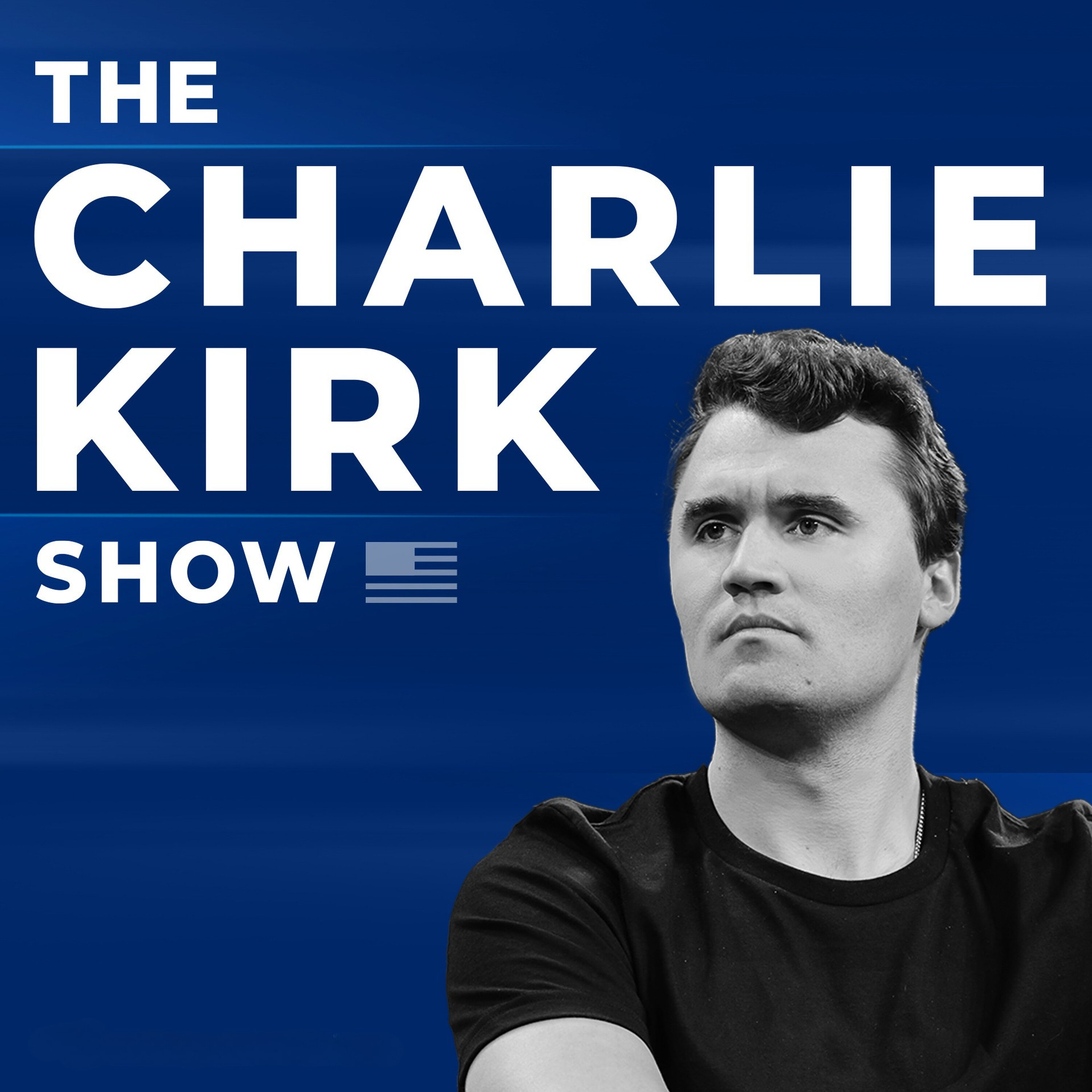
Overview of From the Archives: Charlie On Why Churches Must Engage the Culture
Charlie Kirk delivers a forceful, conservative evangelical call-to-action arguing that American churches must re-engage the public square to defend religious liberty, family and freedom. He mixes theological claims (the gospel, substitutionary atonement), cultural critique (education, secularization, safetyism), and concrete political prescriptions (run for local office, homeschool, build institutions). The talk critiques public-health mandates during COVID, denounces prominent public figures and pastors who counseled political disengagement, and issues a roadmap for renewed Christian civic engagement.
Key points and main takeaways
- Churches must not retreat from politics: political disengagement is unbiblical and allows the state to usurp religious freedom.
- The COVID response revealed failures of "trust the science" as a debate-ender; Kirk argues the public-health response became an exercise in safetyism that sacrificed liberty.
- State-level differences matter: decentralized federalism allowed some states to remain open and protect liberties; citizens should hold local officials accountable.
- American churches have grown weak and partly complicit; secular leftism has effectively filled cultural space Christianity once occupied.
- Many people today prefer "comfortable slavery" to the hard work of freedom; Christians must teach and model liberty tied to responsibility.
- This moment can be either a beginning (revival/building new institutions) or an end (further delegitimization of traditional institutions) depending on church action.
Topics discussed
- Theology and evangelism
- Kirk identifies as an evangelical, presents the gospel succinctly (“Jesus took my place,” substitutionary atonement, grace).
- Encourages listeners to embrace faith and attend/read the Bible (Proverbs, John).
- COVID-19 response & public health
- Criticizes inconsistent public-health messaging (masks, mandates, vaccines for recovered individuals).
- Labels public-health leadership and messaging (e.g., Dr. Fauci) as lacking wisdom and sometimes hypocritical.
- Federalism and state policy
- Praises states that stayed open (Florida, South Dakota, Texas) and contrasts outcomes with states that shut down (New Mexico, California, New York).
- Emphasizes Brandeis’ “laboratories of democracy.”
- Cultural and institutional decline
- Argues institutions (media, tech, colleges, some churches) have lost legitimacy.
- Warns of secularization and the rise of a leftist ideological religion.
- Family, demographics, and education
- Urges earlier marriage and more children; warns of population decline and cultural consequences.
- Calls for aggressive engagement in education: homeschool, support private schools, run for school boards.
- Political engagement and strategy
- Christians should run for office, build alternative institutions, occupy cultural terrain (businesses, media, education, arts).
- Uses the biblical term ecclesia to argue churches should be public-square engagement centers.
Notable quotes and assertions
- "If the most important thing for you is just feeling good, you're going to end up miserable. But if the most important thing is doing good, you will end up purposeful."
- "The gospel in four words is: Jesus took my place."
- "Trust the science" is often used as a conversation ender; real science demands continuous inquiry.
- "We prefer comfortable slavery over dangerous freedom" — paraphrase of the Israelites preferring Egypt to wilderness.
- The church is the only institution between secular power and people’s ultimate loyalty: if worship centers on something other than government, it weakens centralized control.
Criticisms and targets
- Public-health officials and pandemic mandates (inconsistency, overreach, hypocrisy).
- Pastors and church leaders who preach political disengagement (names mentioned: Rick Warren, Andy Stanley).
- State leaders who kept schools/businesses closed (specific New Mexico governor criticized).
- Cultural elites (media, tech, universities) accused of moral and intellectual failure.
Action items & recommendations
- Political engagement:
- Run for local offices (school board, mayor), support pro-liberty candidates, and be active in civic life.
- Education:
- Prioritize children’s education: homeschool if possible, support effective private schooling, volunteer to help homeschooling families.
- Build alternative institutions:
- Start or support Christian businesses, media outlets, arts, and cultural organizations.
- Family & pro-life action:
- Encourage marriage and childbearing; support pregnancy services (Kirk asks for donations to fund ultrasounds and pro-life efforts).
- Church-level steps:
- Churches should publicly assert religious liberty, open for worship, and mobilize congregants into civic life.
- Personal:
- Read the Bible (Proverbs, John), consider faith, subscribe to the Charlie Kirk Show podcast (ask made in talk), and support pro-life charities.
Tone, audience & context
- Tone: combative, urgent, evangelical, politically conservative.
- Intended audience: conservative Christians, church leaders, Turning Point supporters, and politically active conservatives seeking a religious rationale for civic action.
- Context: delivered during/after the COVID pandemic; mixes spiritual exhortation with political strategy.
Bottom line
Kirk frames the COVID era and current cultural trends as a kairos moment: churches must stop compartmentalizing faith and engage aggressively in culture and politics to preserve religious liberty, family, and freedom. He offers theological grounding, cultural analysis, and concrete civic steps for churches and individuals to build parallel institutions and reclaim influence in education, government, and culture.