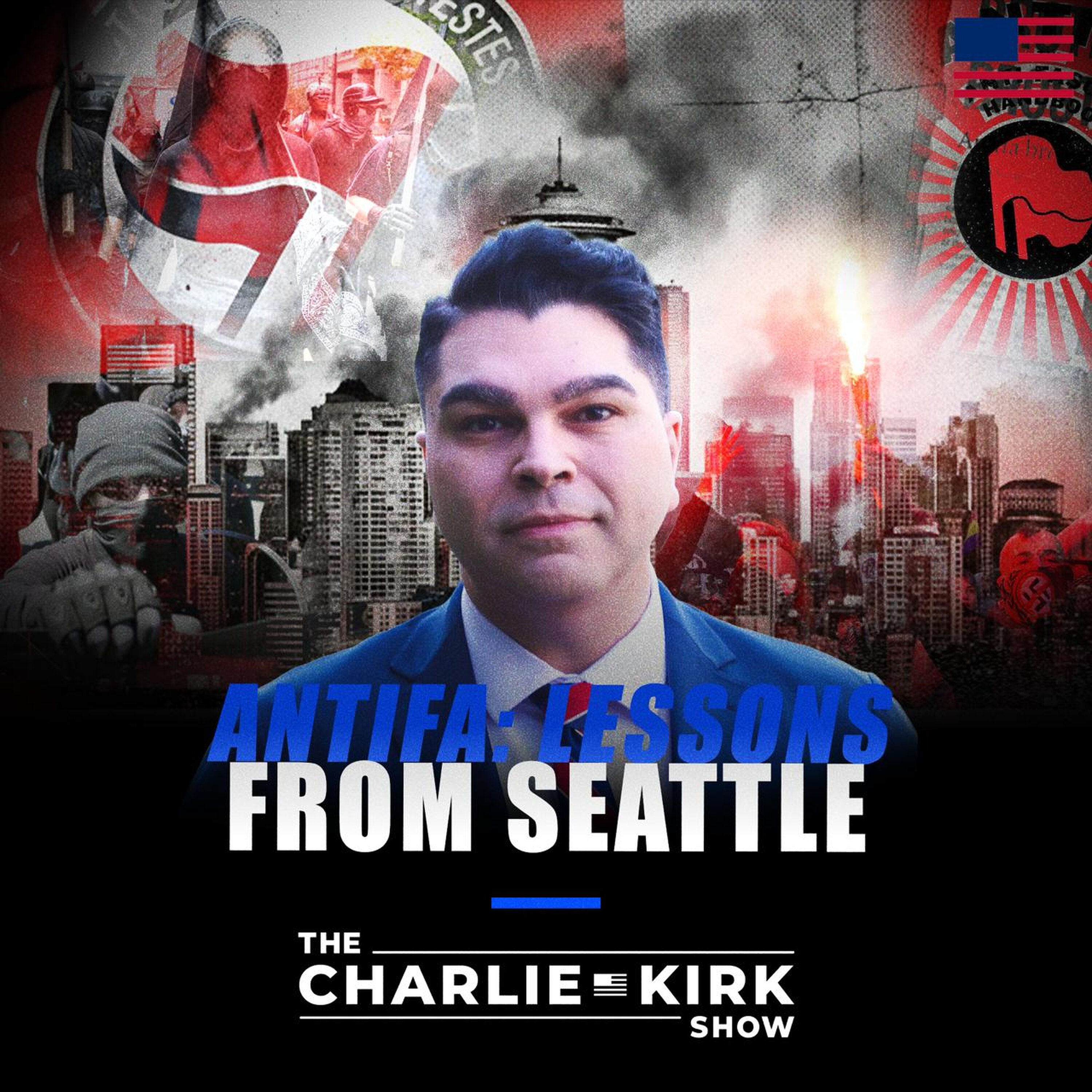
Overview of Antifa: Lessons From Seattle
This episode of the Charlie Kirk Show (host Charlie Kirk) focuses on organized left-wing activism in Seattle and nationally — with emphasis on Antifa-style tactics, recent clashes with ICE/DHS, and the political and cultural fallout after the Minneapolis shooting of Alex Preddy. Guests include Jason Rantz (SeattleRed.com), who describes on-the-ground dynamics in the Pacific Northwest, and Alex Marlowe (Breitbart), who analyzes the federal response and messaging. The conversation mixes policy recommendations, tactical media critique, and broader cultural commentary (including a detour on the Super Bowl halftime controversy and attacks on evangelical Christianity).
Guests & format
- Host: Charlie Kirk (Turning Point-aligned commentary).
- Primary guests: Jason Rantz (Seattle-based commentator, seattlered.com) and Alex Marlowe (Breitbart editor-in-chief / host).
- Style: interview + roundtable analysis interspersed with sponsor ads and pre-recorded clips.
Key topics discussed
- Nature and organization of Seattle-area Antifa/leftist activist networks.
- Comparison to Black Lives Matter protests (2020) and size/trajectory of current mobilizations.
- Minneapolis incident: the shooting death of Alex Preddy during an ICE operation, subsequent media and political reactions.
- Federal response: initial DHS/White House messaging, personnel changes (Bovino removed, Tom Homan installed).
- Tactical and messaging considerations for enforcing immigration law and responding to activist interference.
- Cultural angles: concerns about Somalian fraud rings, Super Bowl halftime performer controversy (Bad Bunny), and online attacks on evangelical Christianity.
Main arguments & takeaways
- Organized but smaller: Jason Rantz argues the activist infrastructure is highly organized (the “protest industrial complex”) but not as large as 2020 BLM protests; it relies on repeat participants and professional organizers.
- Tactics: Protesters often seek to physically impede ICE/DHS operations; organizers and some left politicians encourage confronting agents, which can produce violent confrontations and “martyr” narratives.
- Media and martyrdom: When confrontations lead to casualties, activists and sympathetic media use those deaths to amplify outrage, recruit, and raise funds/followers — a repetitive cycle.
- Messaging mistakes: Immediate, broad labels (e.g., calling the shooter a “domestic terrorist” quickly) are criticized as unforced errors that undermine credibility; clear, disciplined messaging and evidence-first responses are advised.
- Enforcement & deterrence: Guests urge resolute enforcement of immigration law, not appearing weak; they endorse tactical changes and leadership realignment (Tom Homan) to restore discipline.
- Political opportunity: The guests argue left-wing extremism and unappealing spokespeople create political openings for conservatives and religious communities to mobilize.
Notable quotes and soundbites
- Jason Rantz: “Progressive protest industrial complex” — framing the ecosystem of organizers, activists, and sympathetic officials.
- Jason: “They’re against, on the radical left, all enforcement of immigration laws. That is a radical position that is not shared by the vast majority of this country.”
- Alex Marlowe: “Tom Homan is the man. He was put on earth for these exact moments.”
- Charlie Kirk (clip cited): “You cannot have liberty if you do not have a Christian population.”
Policy and tactical recommendations (as discussed)
- Recenter federal response on enforcement actions (deportations, anti-fraud operations) and pivot public messaging quickly back to results.
- Avoid premature, inflammatory labels or claims without clear evidence; let investigations proceed and present disciplined messaging.
- Deploy experienced, credible personnel (example: Tom Homan) to lead sensitive operations and public communications.
- Publicize and exploit left-wing extremism and poor spokespeople to weaken public sympathy for activist causes.
- Local suggestion: investigate and confront organized fraud (e.g., alleged Somali fraud rings) and criminal networks tied to immigration exploitation.
Cultural and side discussions
- Super Bowl/Bad Bunny: Guests debated whether artists critical of U.S. policies should be showcased at major national events; conservative counter-programming (All-American Halftime Show) was mentioned.
- Social-media extremism: A clip of a woman denouncing evangelical Christians was used to argue that hostile, dehumanizing rhetoric from the left helps conservative recruitment and moral framing.
- Sponsors and ads intermittently present (mortgage, mobile carrier, energy ad) — show mixes news commentary with promotional content.
Controversies, uncertainties, and caveats
- Facts about the Minneapolis shooting were contested and evolving in the conversation; guests repeatedly noted incomplete information and criticized early, definitive claims from either side.
- Several assertions (e.g., about organizers’ intent, the size of activist networks, or specific fraud rings) rely on guest reporting/opinion and should be corroborated with independent reporting.
- The show frames events from a conservative/pro-law-enforcement perspective; listeners should be aware of ideological lens shaping interpretations.
Bottom line / What listeners should walk away with
- The episode argues that organized left-wing activists in cities like Seattle are disciplined and can cause disruptive confrontations with law enforcement, but they’re not as large as the 2020 BLM surge.
- Effective response requires disciplined, evidence-based messaging, competent leadership of enforcement agencies, and visible law enforcement results to avoid being perceived as weak.
- Cultural battles (media narratives, performer choices, social-media rhetoric) are treated as part of the larger political struggle; the guests encourage conservative mobilization and faith-based responses as corrective forces.