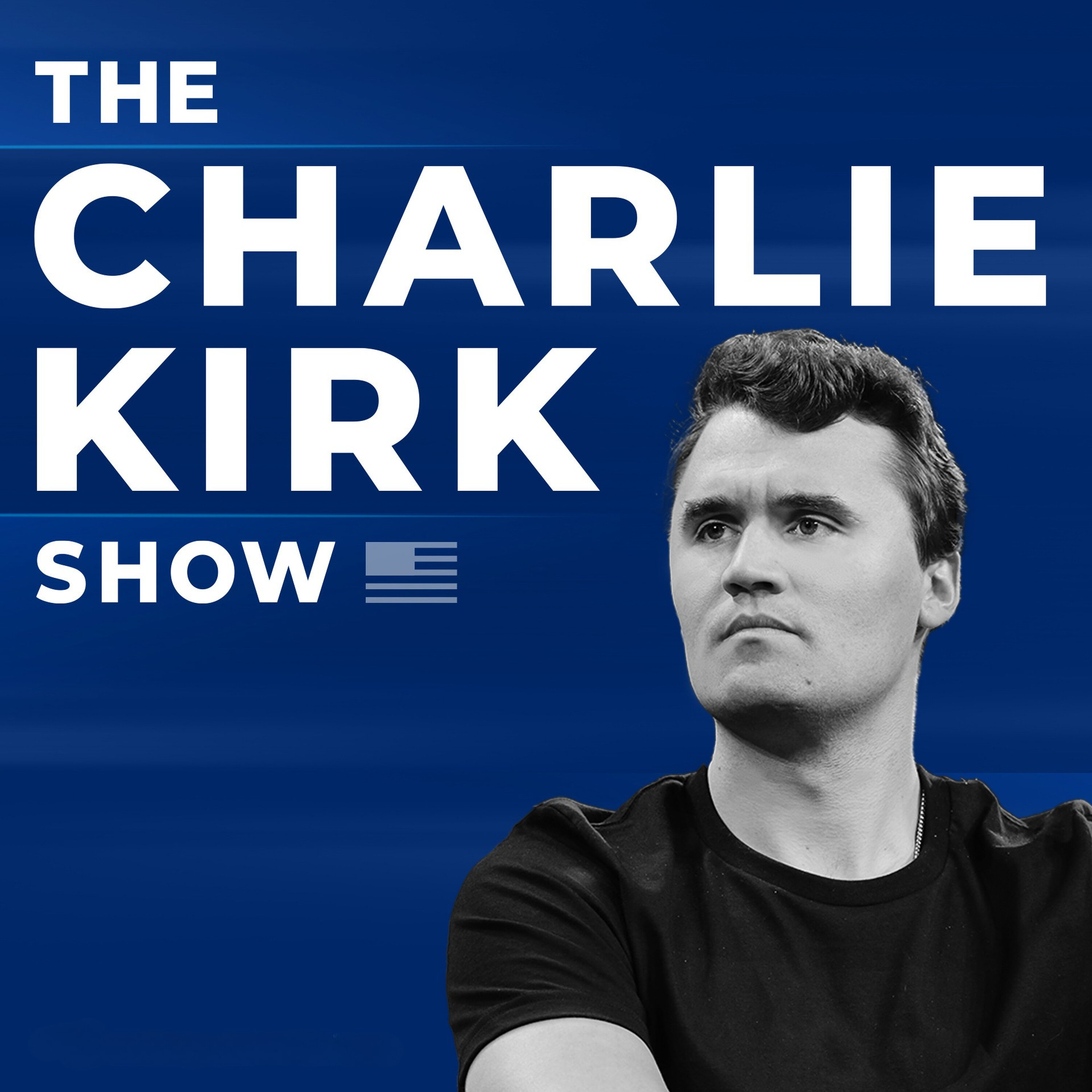
Overview of Say No To Doomerism + The DSA Murderers Row Goes To Michigan
This episode centers on Charlie Kirk’s warning against “doomerism” on the right while spotlighting what he sees as dangerous far-left ascendance in Democratic politics. The show focuses heavily on Michigan’s Democratic Senate primary, where Abdul El-Sayed is expected to win, and frames his candidacy as part of a broader “DSA murderers’ row” of radical, anti-American politics. The episode also criticizes Utah Sen. John Curtis for backing a state-sponsored visa/immigration proposal, features a conversation with Wisconsin congressional candidate Michael Alfonso, and includes a deeper discussion with Nick Freitas and Helen Andrews about demoralization, race politics, and the future of American civic life.
Key Themes and Takeaways
- Kirk argues that the left is becoming more openly radical, especially through DSA-aligned candidates and identity-based politics.
- He strongly rejects the idea that America should rely on more immigration to solve labor shortages, calling it a long-running lie that benefits business at the expense of workers and culture.
- The episode repeatedly emphasizes that conservatives need to stay engaged, avoid black-pilling, and focus on building institutions, families, and movements.
- A major throughline is that race-based politics, DEI, and open-ended grievance narratives are destabilizing American life.
Michigan Democratic Primary: Abdul El-Sayed and the DSA
Why the race matters
Kirk treats the Michigan Democratic Senate primary as a major warning sign. He says Abdul El-Sayed is likely to win and could become Michigan’s first Muslim senator, framing that as politically significant and potentially alarming given his ideological allies.
Kirk’s critique of El-Sayed
He portrays El-Sayed as:
- aligned with the far left and DSA-style politics,
- hostile to America’s founding principles,
- sympathetic to anti-Israel and anti-American activists,
- a polished political operator who hides his real views.
Notable concerns raised
- El-Sayed’s association with Hasan Piker, whom Kirk describes as extreme and violent in rhetoric.
- A resurfaced clip where El-Sayed describes America as founded on slavery, removal of peoples, and racial injustice.
- The argument that the Democratic Party is moving toward “full Euro leftism,” with open borders and anti-market economics.
Immigration, Labor, and Sen. John Curtis
The Utah visa proposal
Kirk sharply criticizes Sen. John Curtis for backing a proposal that would let states sponsor visas tailored to local labor needs.
Main objections
- He argues that the business community will never be satisfied with enough cheap foreign labor.
- He says immigration pressure has already driven major demographic and cultural change.
- He frames the proposal as a backdoor amnesty, especially because it includes a pathway to legal residency for some undocumented immigrants.
Kirk’s broader argument
He says:
- the U.S. has been told for decades that it needs more workers,
- that claim is overused and often false,
- automation and AI make the old labor-shortage argument even weaker,
- America should prioritize wages, workers, and national cohesion over business demands.
Interview with Michael Alfonso: Wisconsin, Socialism, and Young Conservatives
Michael Alfonso, a 26-year-old Republican candidate in northwest Wisconsin, discusses his campaign and the rise of socialism in the state.
Main discussion points
- He warns that the left is pushing socialism into schools, universities, and local politics.
- He says parents are increasingly considering homeschooling because public schools are becoming ideological.
- He describes his own background working construction to put himself through college debt-free.
- He says he wants to represent younger conservatives who understand the stakes for the next generation.
Riley Gaines event and school board controversy
Alfonso discusses a rally with Riley Gaines in New Richmond, Wisconsin, centered on:
- a school board’s refusal to act when a boy was using the girls’ bathroom,
- a teenage girl, Ella Fry, who spoke out and received backlash,
- the broader issue of protecting women’s spaces and resisting gender ideology in schools.
Affordability and socialism
The conversation also touches on:
- young people struggling with housing, food, and cost of living,
- the appeal of “free stuff” politics,
- the claim that socialism worsens the problem by creating more suffering rather than solving it.
Nick Freitas on Doomerism and Demoralization
One of the episode’s central segments is a discussion with Nick Freitas about online pessimism on the right.
Core argument
Freitas says it is destructive to claim:
- elections are meaningless,
- both parties are the same,
- nothing can be done,
- the only honest response is to give up.
What he’s pushing back against
He argues that this style of pessimism:
- demoralizes voters,
- helps the left by encouraging apathy,
- is often more emotional than strategic,
- rewards influencers who complain but never build anything.
Yuri Bezmenov and “active measures”
Freitas connects the current mood to Soviet-style demoralization campaigns:
- institutions can outlive the regime that created them,
- modern left-wing narratives still reflect old ideological “active measures,”
- the goal is to convince people that the West is irredeemable.
His positive alternative
He says conservatives should:
- defend Christendom and Christian truth,
- build purpose around God and family,
- stop treating politics as a cycle of outrage,
- remember that the hardest thing is to build something durable.
Helen Andrews on Race Politics and the “Racial Crossroads”
Helen Andrews joins to discuss her article on America’s “racial crossroads.”
Her thesis
Andrews argues that:
- the racial framework built in the 1960s no longer fits a much more diverse America,
- race-based governance becomes more toxic as the country becomes less white,
- the current system encourages permanent racial conflict.
Key concepts
She describes modern DEI and HR structures as similar to Soviet commissars:
- ideological enforcers inside institutions,
- a pressure to conform to a political line,
- a system that treats race as central to every interaction.
Concerns about the future
She warns that:
- race-based lawsuits can only go so far,
- Democrats are better at racial grievance politics than conservatives are,
- the long-term answer must be freedom of association and moving away from race-based redistribution.
Why she sees danger in current trends
Andrews argues that:
- the left’s anti-white narrative can be adopted by immigrants and their children without personal connection to American history,
- demographic change makes racial politics more combustible,
- cases like Kamala Harris’s candidacy and DEI-driven leadership failures show the system’s weaknesses.
Main Quotes and Ideas
- “If they can’t get your vote, they will settle for your apathy.”
- “You can’t beat something with nothing.”
- “The only way to avert that bad outcome is to go back to freedom of association.”
- “It is morally lazy to be a doomer.”
- “God and family” are presented as the antidote to political despair.
Bottom Line
This episode is a broad call to resist both left-wing radicalism and right-wing despair. Kirk and his guests argue that America is facing serious structural problems around immigration, race politics, education, and demoralization—but they insist the answer is not surrender. Their message is to stay active, build institutions, reject black-pilling, and defend a specifically Christian, pro-family, pro-American vision of the country.