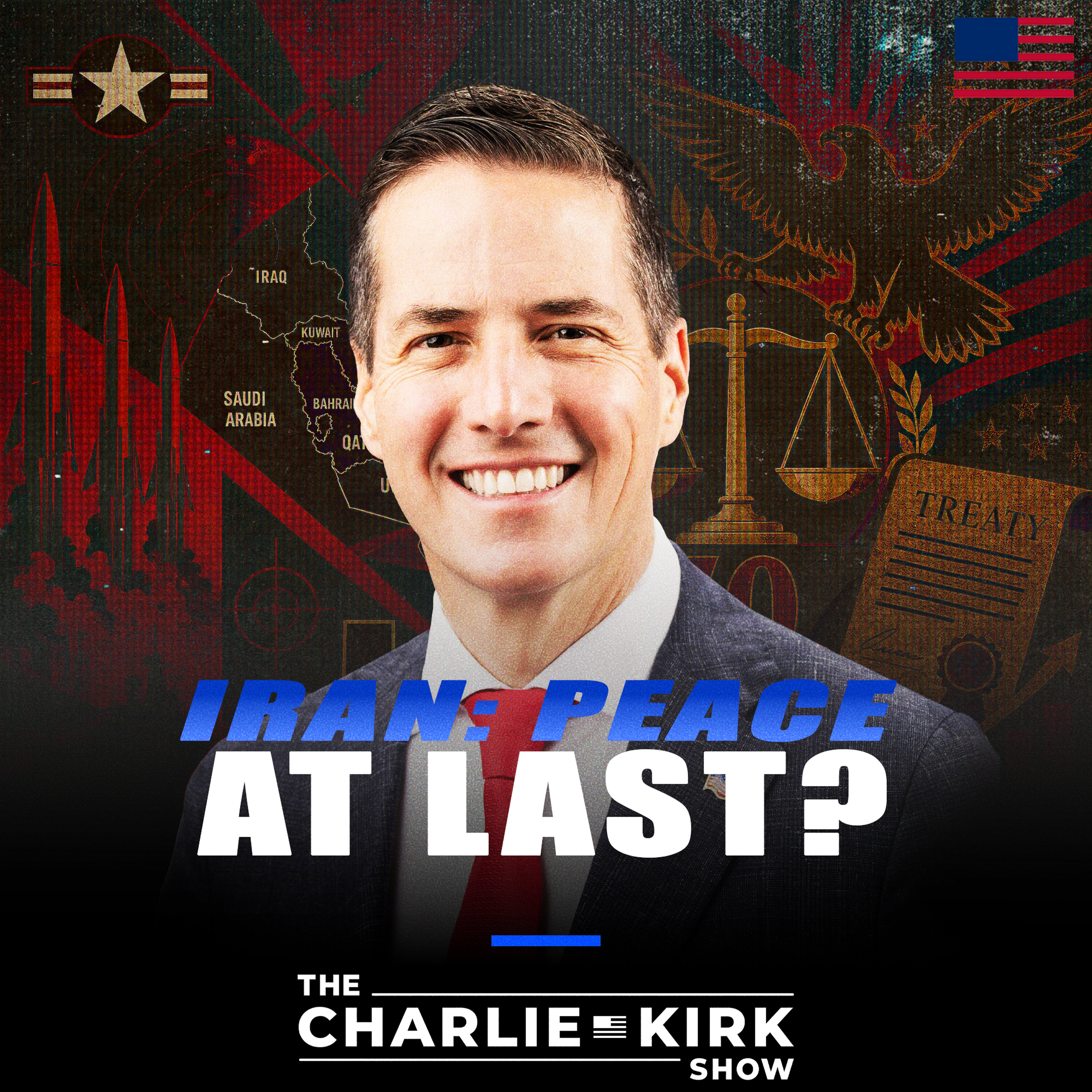
Overview of Iran: Peace At Last?
This episode of the Charlie Kirk Show centers on two major themes: the Texas GOP runoff between Ken Paxton and John Cornyn, and emerging hopes for a negotiated peace framework with Iran. Charlie Kirk argues that both fights reflect the broader America First battle against establishment politics, endless foreign conflict, and political complacency. The episode also features conversations with Steve Dace on faith, American founding principles, and passing those values to the next generation, plus Noah Rothman on the history and modern resurgence of left-wing political violence.
Texas Runoff: Paxton vs. Cornyn
Charlie opens with a high-stakes push for Texas voters to back Attorney General Ken Paxton in the runoff against Senator John Cornyn.
Core argument
- Paxton is framed as the grassroots, Trump-endorsed, America First candidate.
- Cornyn is portrayed as a Washington establishment figure who has drifted from Texas conservatives.
- Charlie stresses that low-turnout runoff elections give individual votes outsized power.
Main talking points
- Turnout matters: voters were urged to cast ballots before the 7 p.m. deadline and bring friends or family.
- Money imbalance: Charlie and Paxton discuss the roughly $150 million spent against Paxton, much of it from D.C.-based interests.
- Establishment messaging: Cornyn’s claim that Paxton would be an “albatross” is dismissed as a recycled talking point, including language Cornyn once used against Donald Trump in 2016.
- Political meaning: a Paxton win would be read as a rebuke of the Republican establishment and a victory for the conservative base.
Iran: Peace Deal, Nuclear Threat, and the Strait of Hormuz
A major portion of the episode focuses on reports of a possible U.S.-Iran agreement after recent military pressure and strikes.
Charlie’s framing
- He argues Trump’s objective is not endless war or regime change, but:
- preventing Iran from getting a nuclear weapon,
- securing the Strait of Hormuz,
- lowering energy prices,
- and extracting tangible concessions before any sanctions relief.
Key points discussed
- The deal structure is described as “no dust, no dollars”: Iran must first give up nuclear material before receiving relief.
- Charlie warns listeners not to trust speculative headlines about the terms of the deal.
- The show emphasizes that any sanctions relief should be conditional and incremental, tied to verified Iranian compliance.
- Charlie says the U.S. should declare victory if its strategic goals are met and avoid getting trapped in a forever conflict.
Strategic takeaways
- Peace is presented as an America First goal, not weakness.
- Gas prices and domestic priorities are tied to foreign policy success.
- Charlie repeatedly argues that the U.S. should not seek to remake Iran via occupation or regime change.
Senator Bernie Moreno on America First Foreign Policy
Senator Bernie Moreno joins to reinforce the argument that the Iran negotiations fit an America First worldview.
Main points from Moreno
- Iran must never have a nuclear weapon because it would be used against the U.S. or its allies.
- Trump’s use of force created leverage for a deal.
- The proper outcome is:
- opening the Strait of Hormuz,
- preventing nuclear proliferation,
- and doing so without an endless war.
Broader argument
- Moreno says Democrats and critics are misrepresenting the deal without knowing the details.
- He argues Trump is capable of balancing strength and diplomacy.
- The conversation suggests this could be a historic foreign policy achievement if it leads to durable peace.
Steve Dace on Faith, America, and the Next Generation
Steve Dace discusses his children’s book, Why Independence Day? America Is Great Because God Is Good, and why teaching America’s Christian heritage matters now more than ever.
Core themes
- America’s founding is presented as rooted in providence, biblical worldview, and limited government.
- Dace argues that children need a clear understanding of:
- why America is exceptional,
- why government must remain limited,
- and why freedom is tied to Christian moral order.
Notable ideas
- If people are not angels, government must exist — but it must be constrained because rulers are sinners too.
- America’s story is described as spiritually and historically improbable, showing God’s hand in national development.
- Dace says despair is incompatible with Christianity: resurrection means hope is always possible.
Why it matters now
- Dace warns that the country is at a generational tipping point.
- He argues that if America fails to transmit its founding principles, those principles may be lost.
- He encourages content that draws people closer to God and Christ-like living.
Noah Rothman on Left-Wing Political Violence
The final major segment features Noah Rothman discussing his book Blood and Progress: A History of Left-Wing Violence in America.
Thesis of the conversation
- The left has a long, often minimized history of political violence.
- Public discourse tends to overstate right-wing violence while downplaying or excusing violence on the left.
Key claims
- The pattern includes:
- anarchist bombings,
- radical movements of the 1960s and 1970s,
- and modern street violence and coordinated disruption.
- Rothman argues that some statistical claims about right-wing violence are corrupted by broad definitions that include non-political acts.
- He says the left often treats street mobs and radical protests as politically useful rather than dangerous.
Modern examples discussed
- Occupy Wall Street
- George Floyd-era unrest
- Antifa-style tactics
- The Portland courthouse siege
- The CHAZ/CHOP takeover in Seattle
Larger warning
- Rothman says many on the left rationalize violence as “direct action” or justified resistance.
- He argues political institutions and media outlets often minimize or excuse this behavior.
- His goal is to force a more honest public reckoning with violence across the political spectrum.
Main Takeaways
- Texas runoff: Charlie urges Texas conservatives to vote for Ken Paxton as a direct rebuke to the establishment.
- Iran policy: the episode frames peace negotiations as a potentially historic America First success if they prevent nuclear proliferation and secure the Strait of Hormuz.
- Faith and heritage: Steve Dace argues America’s future depends on teaching the next generation its Christian and constitutional foundations.
- Political violence: Noah Rothman warns that left-wing violence is deeper and more historically embedded than mainstream narratives admit.
- Overall message: the episode is about choosing peace over war, principles over establishment politics, and long-term national renewal over decay.
Calls to Action Mentioned
- Vote in the Texas runoff before polls close.
- Support America First candidates and causes.
- Pray for peace in Iran and for Ken Paxton in Texas.
- Teach children America’s founding story and Christian heritage.