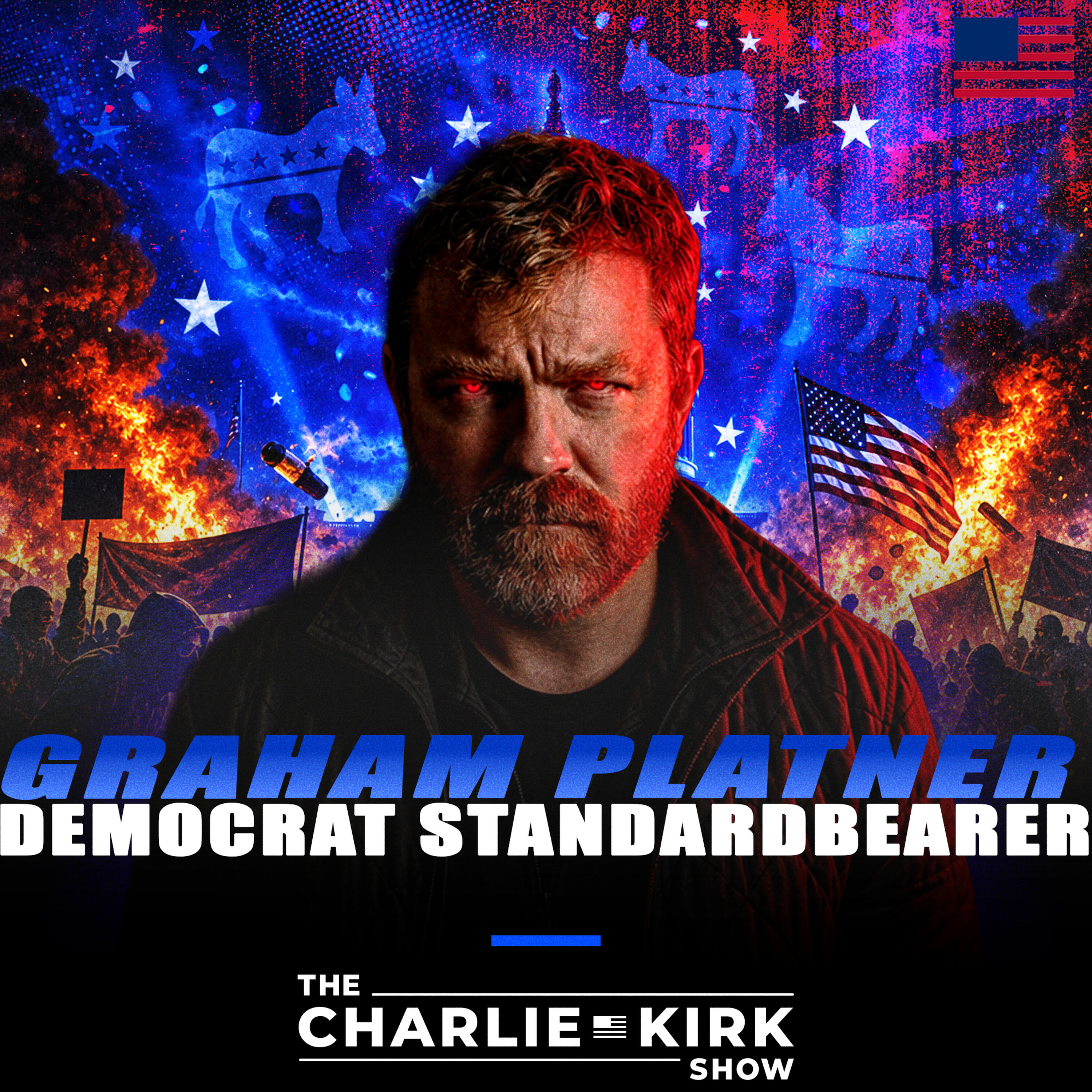
Overview of Graham Platner, Democrat Standardbearer
This episode of the Charlie Kirk Show covers a mix of breaking legal updates, political commentary, and cultural criticism. The biggest themes are Charlie’s skepticism of the left’s strategy in politics and institutions, his opposition to Pride Month normalization, and his broader argument that America needs to restore patriotism, marriage, and family formation. The show also features interviews with Rachel Campos-Duffy about her new America 250 book and Rob Henderson about fertility, gender polarization, and the growing divide between conservative and liberal life choices.
Main Topics Covered
Tyler Robinson hearing update
Charlie opens with live coverage of the Tyler Robinson hearing in Utah, focusing on:
- A defense request for a prosecutor to be held in contempt over media comments.
- Disputes over whether certain videos from the incident should be shown publicly during the preliminary hearing.
- A judge’s decision to set a later evidentiary hearing rather than immediately finding contempt.
- The court’s ruling that the preliminary hearing will remain public, which Charlie presents as the right outcome.
Graham Platner controversy
A major segment focuses on Graham Platner, a Democratic Senate candidate in Maine:
- Charlie emphasizes old allegations and resurfacing material, including:
- A Nazi tattoo he allegedly had covered up.
- Disturbing comments from old Reddit posts.
- Allegations of infidelity and sexually explicit behavior on dating apps.
- Charlie highlights Platner’s wife publicly defending the marriage, noting they reportedly have multiple counselors involved.
- The point Charlie makes is that despite repeated controversies, Platner’s campaign continues to gain momentum, which he sees as evidence that Democratic voters care more about defeating Republicans than about personal character.
Delaney Hall / ICE protests
Charlie devotes a long section to the anti-ICE protests around Delaney Hall in New Jersey:
- He and TPUSA Frontlines reporters describe the protests as organized, chaotic, and violent rather than spontaneous grassroots activism.
- They argue the detainees are being treated well and that the protests are fueled by left-wing activists looking to create a martyr narrative.
- Charlie contrasts the media’s framing with what he says are facts about detainees, food, medical care, and the high level of organization among protestors.
Pride Month / June criticism
Another major theme is Charlie’s frustration with Pride Month:
- He argues June has become a month devoted to celebrating what he sees as cultural degeneracy.
- He criticizes major institutions and sports leagues, especially the MLB, for promoting Pride-themed content.
- His broader complaint is that American culture celebrates exceptions, identity politics, and ideology rather than marriage, children, and the nuclear family.
Guest Segments
Rachel Campos-Duffy: All American and America 250
Rachel Campos-Duffy joins to discuss her book All American, a collection of essays celebrating patriotism ahead of America’s 250th anniversary.
Key points:
- The book recently hit the New York Times bestseller list.
- Its purpose is to encourage Americans, especially younger people, to love the country again rather than be ashamed of it.
- She discusses the role of road trips in family bonding and national identity.
- She explains how her husband, Transportation Secretary Sean Duffy, is promoting the Great American Road Trip as part of America 250.
- She and Charlie also discuss how the left reacted negatively to efforts to beautify Washington, D.C., arguing that critics oppose improvements mainly because Trump supports them.
Rob Henderson: fertility, gender, and modern family breakdown
Rob Henderson joins for a deeper discussion on:
- The gender gap in education.
- The rise in liberal young women vs. conservative young men.
- Falling marriage and fertility rates.
- How modern culture discourages motherhood and family formation.
Key arguments from the conversation:
- Conservative women are having more children than liberal women.
- Women increasingly want men who match or exceed them in education and income, but the pool of such men is shrinking.
- Modern culture teaches people to prioritize career, independence, and self-fulfillment over marriage and children.
- Henderson says smart people often fail not because of low IQ, but because they lack conscientiousness—discipline, diligence, and consistency.
Core Takeaways
1. Charlie sees politics as a struggle over culture, not just policy
A recurring message is that elections and institutions are downstream from broader cultural values:
- Patriotism vs. shame
- Family vs. individualism
- Order vs. chaos
- Tradition vs. ideological experimentation
2. The show argues America is rewarding dysfunction
Charlie repeatedly says that public institutions, media, and Democrats often elevate:
- Scandalous behavior
- Anti-family messages
- Activist chaos
- Identity-based grievance
3. Marriage and children are presented as the antidote to social decline
Across multiple segments, the show’s central prescription is:
- Get married
- Have children
- Build stable families
- Reinforce faith, discipline, and responsibility
4. The left is portrayed as highly organized but morally disordered
Charlie’s framing is that the left:
- Mobilizes foot soldiers effectively
- Uses media narratives strategically
- Lacks stable moral foundations
- Relies on anti-Trump sentiment and anti-tradition politics
Notable Themes and Arguments
Patriotism as civic renewal
The Rachel Campos-Duffy interview centers on a belief that America should be celebrated openly:
- Road trips, monuments, and shared history matter.
- National pride should be restored through family experiences and education.
Family formation as a civic issue
Charlie and Rob Henderson both argue that low fertility is not just a personal problem, but a civilizational one:
- Fewer families mean weaker communities.
- Childless adulthood can lead to isolation and regret.
- Societies become less child-friendly and more self-focused.
Institutions rewarding the wrong incentives
Across the episode, Charlie suggests that:
- Media rewards outrage.
- Universities reward ideological conformity.
- Politics rewards spectacle.
- Cultural institutions reward rebellion over responsibility.
Bottom Line
This episode is a wide-ranging commentary on politics, culture, and civilization, tied together by Charlie Kirk’s recurring message: America needs to stop celebrating decay and start rewarding faith, family, patriotism, and discipline. The news updates and guest interviews all reinforce that theme, whether the topic is a controversial Senate candidate, anti-ICE riots, America 250, or the decline in marriage and fertility.