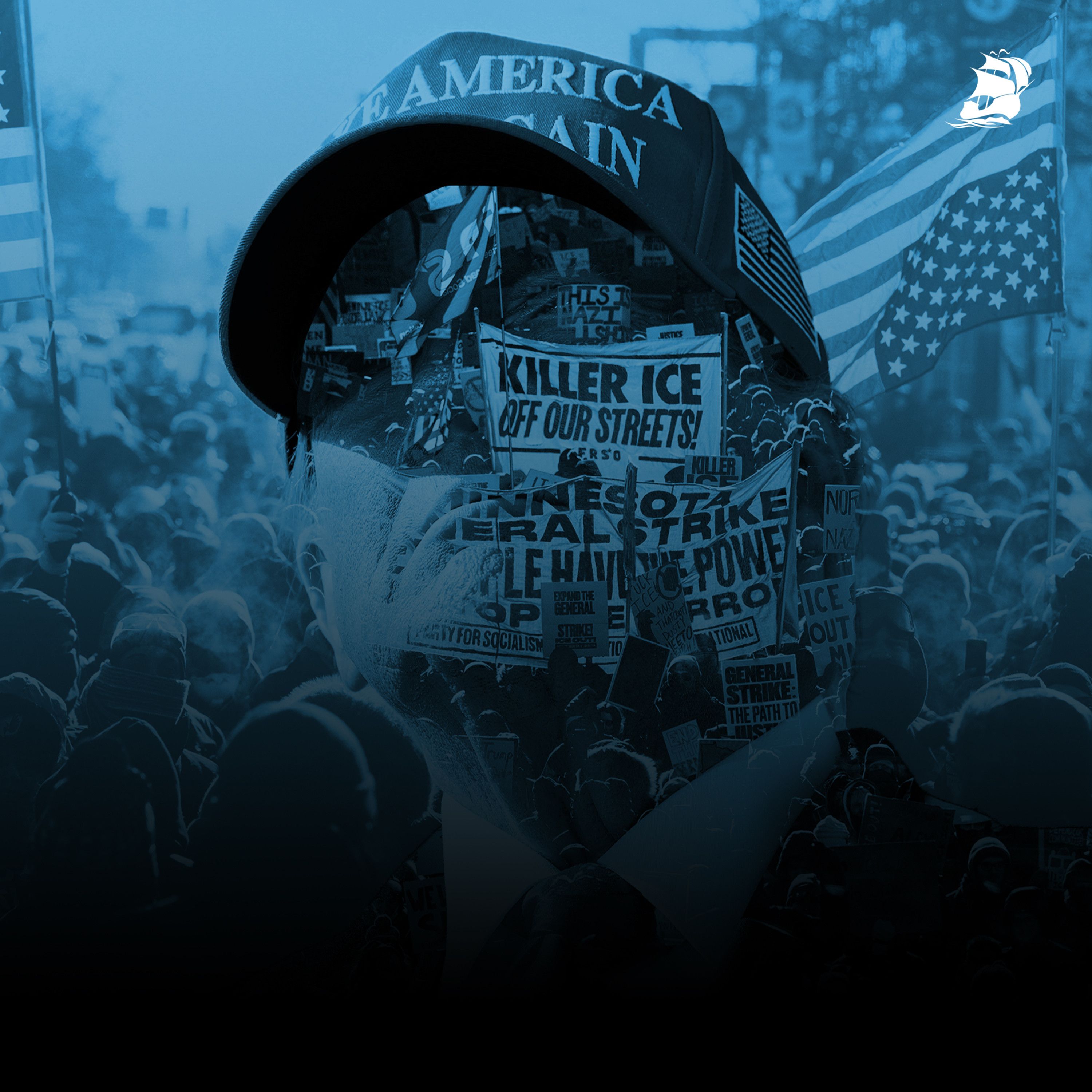
Overview of The Bulwark Podcast — Ta-Nehisi Coates: "This Is Armed Identity Politics"
This episode of The Bulwark (host Tim Miller) features Ta-Nehisi Coates discussing his Vanity Fair column "The Homeland Is a War on America" and broader themes: the rhetorical power of the word “homeland,” the federalization and weaponization of domestic security (DHS/ICE/CBP/FBI), the rise of what he calls “armed identity politics,” media consolidation and journalistic decline, recent events in Minneapolis and Fulton County, and the moral/political stakes of U.S. policy toward Gaza. The conversation mixes historical context (abbott abolitionist parallels, Viola Liuzzo), concrete news updates, critique of progressive organizing vocabulary, and a plea for clarity and seriousness in public argument.
Key topics discussed
-
The term “homeland” and its rhetorical resonance
- Peggy Noonan’s 2002 critique and Coates’s argument that DHS’s name carried latent “blood and soil” implications that have culminated in recent years.
-
Homeland Security, policing and federal power
- Merging of border security and anti-terror apparatus after 9/11.
- How norms failed to prevent centralized, top-down state violence—expanded resources, cross-jurisdictional deployments, and detention practices.
- Characterization of recent federal behavior as an attempt to build a “white supremacist army within the government.”
-
“Armed identity politics”
- Propaganda, meme culture, spectacle (ASMR, staged imagery), and explicit recruitment used by state actors and allies to weaponize identity-based narratives.
- Distinction: precedent exists, but current scale, coordination, and theatricality are qualitatively different.
-
Minneapolis and national enforcement actions
- Discussion of the murder of Renee (Renee?) Good and subsequent messaging from local officials (e.g., Ron Johnson quote).
- Concerns about sustained federal tactics being used in multiple cities; DHS/ICE behavior framed as national and systematic.
-
Historical parallels and white allies
- Abolitionist comparisons: white people putting bodies on the line historically (e.g., Viola Liuzzo) and modern examples of cross-racial solidarity.
- Liuzzo’s story: murdered by white supremacists; FBI disinformation campaign that smeared her afterward.
-
Gaza and Jared Kushner’s “master plan”
- Coates condemns technocratic, top-down planning for Gaza that excludes Palestinians’ agency—calls it dystopian and potentially ethnic-cleansing in consequence.
-
Media, journalism, and the “anti‑woke” turn
- Worries about hiring/commentary choices at major outlets (CBS example), layoffs of reporters who do reporting, and the elevation of “takes” over investigative journalism.
- The broader erosion of trust in experts and elites (cites Chris Hayes's framing).
-
Internal movement critique
- Coates critiques some progressive vocabulary and performative guilt (e.g., “white fragility” as a lightning-rod example) but urges grace and historical perspective—movements are messy and learn as they go.
Main takeaways
- Words, names, and frames matter: naming DHS “Homeland” carried cultural/ideological baggage that has contributed to today's politics.
- The present U.S. domestic-security posture is not merely incremental—Coates argues its scale, coordination, and theatricality mark a sharp, dangerous intensification.
- Propaganda and spectacle are being used intentionally by state actors to recruit, recruit visually, and normalize punitive governance—what Coates calls “armed identity politics.”
- Historical memory matters: lessons from abolition and civil‑rights-era complexity should temper quick denunciations of imperfection in contemporary organizing.
- Media structures are changing in ways that risk weakening journalism’s watchdog role; this has real consequences for democratic accountability.
- Coates urges clarity, careful language, and sustained organizing over virtue-signaling and performative apologies.
Notable quotes / memorable lines
- “It is armed identity politics.”
- “You can’t really design a system that is foolproof against somebody who is determined to become a tyrant.”
- On Gaza planning: “The Palestinians themselves are completely off screen.”
- “You wanted this era of anti‑woke. You got it.” (critique of media and corporate responses)
- On Viola Liuzzo: FBI disinformation “traumatized her family… that was the price she paid with her life.”
News items & specific events referenced
- Vanity Fair piece: Coates’s article “The Homeland Is a War on America.”
- Minneapolis: murder of Renee Good (discussion of official narratives and local/federal responses), and questions about ICE/CBP troop movements and messaging.
- Fulton County: FBI raid of election operations warehouse seeking 2020 ballots—Coates finds this ominous and destabilizing.
- Jared Kushner’s PowerPoint at the “Board of Peace” proposing redevelopment zones for Gaza—Coates denounces the plan as dehumanizing and possibly ethnic-cleansing in practice.
- CBS staffing and editorial changes: concern over firing reporters and hiring commentators with “takes” over reporting.
People & sources mentioned (for follow-up)
- Peggy Noonan (2002 column on “homeland”)
- Russ Feingold (interview/history of constitutional limits)
- Spencer Ackerman — Reign of Terror (history of war on terror)
- Viola Liuzzo (civil-rights martyr; FBI smear)
- Jelani Cobb, Elijah Lovejoy, Fannie Lou Hamer (historical references)
- Alex Preddy (Minneapolis officer mentioned), JD Vance, Stephen Miller, Ron Johnson
- Chris Hayes (book referenced re: “Twilight of the Elites”)
Practical recommendations / action items Coates implies
- Treat contemporary federal security expansions seriously—monitor DHS/ICE/CBP/FBI actions and rhetoric.
- Support independent journalism and reporters doing on-the-ground reporting (financially or by subscribing to outlets that invest in reporting).
- Read historical accounts of abolition and civil rights to better understand movement messiness and durability.
- Avoid reducing complex views to slogans; prefer sustained argument and concrete policy critique.
- Pay attention to policy toward Gaza and insist on Palestinian agency in any reconstruction or governance conversations.
Who should listen / read this episode
- People following U.S. domestic security policy and civil‑liberties threats.
- Audiences concerned with media consolidation, journalism's future, and political rhetoric.
- Activists and organizers wrestling with messaging, solidarity, and movement strategy.
- Anyone seeking a historical lens on current political violence and the moral stakes of state power.
Final note
The episode is a mix of rigorous historical framing and urgent contemporary warnings. Coates presses for clarity in language and seriousness in civic defense: name what’s happening, study precedent, and work to shore up institutions—while recognizing movements are imperfect and evolve. Read his full Vanity Fair piece for the extended argument.