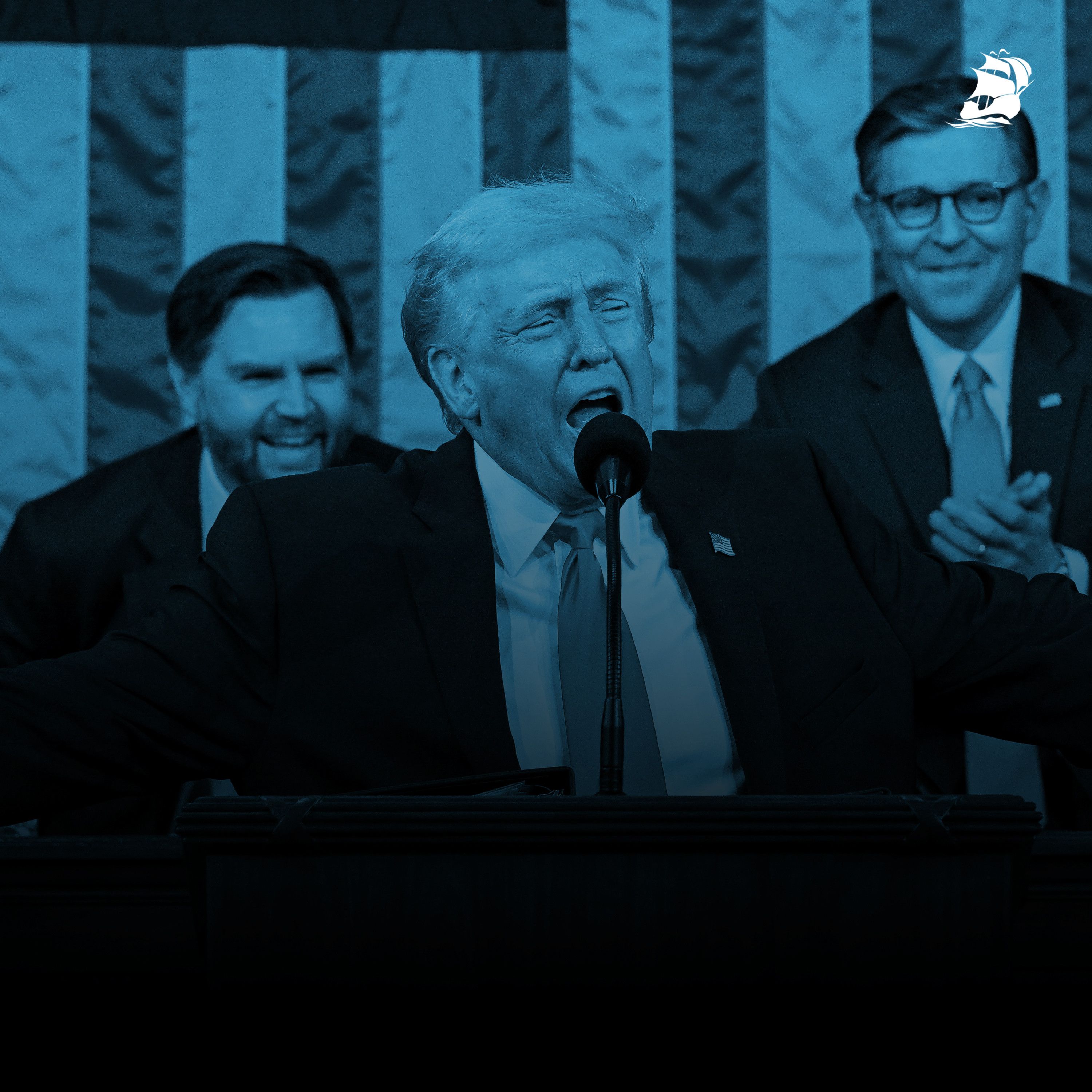
Overview of Susan Glasser: Trump’s Industrial-Scale Lies (The Bulwark)
Tim Miller interviews New Yorker staff writer Susan Glasser about Donald Trump’s recent State of the Union and the broader political and geopolitical picture it revealed. The conversation dissects the speech’s tone and tactics (performative, long, and often factually false), explores the administration’s messaging and political strategy (immigration scare tactics, culture-war appeals), and connects those domestic maneuvers to larger risks: attacks on free speech, media consolidation and “media capture,” threats to independent institutions (DOJ, DHS), and dangerous brinkmanship on Iran and Ukraine.
Main takeaways
- The State of the Union was chiefly theatrical — long, performative, and internally inconsistent. It mixed a boastful, “everything is great” sales pitch with a darker, fear-driven attack on immigrants and Democrats.
- Many claims in the speech (especially about the economy and “the affordability crisis”) were misleading or false; the speech relied on emotion and spectacle rather than coherent policy proposals.
- The speech’s immigration messaging was designed to energize Trump’s base and raise turnout, but it’s unclear it will persuade undecided or moderate voters.
- Naming J.D. Vance a “fraud czar” was richly ironic given Trump’s own legal history; the move appears symbolic and politically calculated.
- There is real concern about media consolidation and authoritarian-style pressure on media owners (mergers involving Warner Bros. Discovery, Netflix, Paramount; Ellison/Trump allies); Susan frames this as “media capture,” comparable to tactics seen in illiberal democracies.
- Free-speech attacks are multi-front: DOJ scrutiny of critics, threats to reporters and public figures, DHS use of surveillance technology (facial recognition, Palantir) against protesters — these trends are alarming and form part of a larger dismantling of norms.
- Foreign policy signals are contradictory: heavy U.S. forces deployed against Iran, mixed rhetoric about the Iranian nuclear program, and an apparent realignment away from supporting Ukraine — all of which raise the risk of miscalculation or escalation.
Topics discussed
Domestic politics and the State of the Union
- Tone and structure: described as part Variety-show/part-autocrat-host — a mix of medal ceremonies, celebratory moments, and long anti-immigrant, anti-Democrat tirades.
- Two competing messages: “America is great because of me” vs. “Democrats and illegal immigration are destroying America.” These mixed messages undercut each other for broader audiences.
- Political aim: primarily turnout/energizing the base, not persuasion. The speech used fear and spectacle (e.g., “stand if you care about Americans more than illegal immigrants”) to rally supporters.
- Lack of concrete policy: promised focus on affordability didn’t yield substantive proposals; many claims didn’t hold up to fact-checking.
Media consolidation, pressure, and “media capture”
- High-profile corporate moves: Warner Bros. Discovery, Netflix, Paramount bids, and investor activity (Ellisons, other Trump allies) are raising concerns about owner-level influence over media.
- Susan warns this resembles media capture in illiberal regimes (e.g., Viktor Orbán’s Hungary) and could undermine independent reporting if owners with partisan agendas gain control.
- Trump’s public threats toward companies (e.g., Netflix) and his allies’ involvement in media deals signal a new playbook: pressure owners rather than individual reporters.
Free speech, DOJ, and law enforcement concerns
- Multi-pronged erosion: investigations of critics, pressure on tech companies for user data, DHS surveillance of protesters (facial recognition, Palantir) and heavy-handed ICE operations in neighborhoods.
- Susan stresses the First Amendment as the key bulwark against tyranny; the administration’s mixed use of law enforcement and the DOJ threatens civic freedoms.
- Susan Rice’s comments about corporate accountability and “ledgers”: seen as both an important reminder of accountability and a complicated, risky rhetoric that could be politicized.
Foreign policy: Iran, Ukraine, and global alignments
- Iran: huge U.S. military deployments around Iran, ambiguous signals on whether strikes or broader action are imminent. The speech mixed claims that Iran’s nuclear program had been “obliterated” with warnings of imminent threats — an inconsistent message.
- Ukraine: the podcast notes a UN vote and concern that U.S. policy appears to be shifting or at least ambiguous; Susan argues Trump’s approach looks like appeasement and business-first dealings favoring Russia-friendly actors.
- Europe: worry about U.S. alignment with right-wing, Russia-friendly governments and interference in European politics, which could reshape NATO-era consensus.
Notable quotes and lines
- Susan Glasser: “It was long and it was wrong.” (summarizing the State of the Union)
- On Trump’s relationship with truth: “Trump has been given a pass on lying to the country on an industrial scale.”
- On free speech: “If we don't have free speech, then we just don't have a free country.”
- Tim Miller on the speech’s dual tone: “There were two speeches in there… the huckster-pitchman speech and the ‘Democrats/illegal aliens are destroying everything’ speech.”
- On media capture: “It is media capture that we're seeing… a fusion between a favorable oligarchy and a government that is open for business and for being purchased.”
Implications and recommended next steps (for readers / watchers)
- Treat the speech’s claims skeptically — follow reliable fact-checks on economic and immigration assertions.
- Monitor media ownership deals and corporate governance for signs of political capture; support independent journalism through subscriptions and watchdog organizations.
- Watch developments in DOJ independence and congressional oversight: institutional safeguards matter and need vigilance.
- Track U.S. military deployments and official policy statements on Iran and Ukraine closely; ambiguous signals increase risk of escalation or miscalculation.
- Be alert to erosion of civil liberties (surveillance tech used on protesters, prosecutions/pressure on critics); consider supporting legal defense funds, civil-liberties groups, and transparency initiatives.
- Read Susan Glasser’s reporting (New Yorker) and The Divider (co-authored with Peter Baker) for deeper context.
Who should read this summary
- Anyone trying to understand how the State of the Union fits into the Trump administration’s broader strategy.
- Readers concerned about media consolidation, erosion of democratic norms, and U.S. foreign-policy risks.
- Voters and civic activists tracking threats to free speech, press independence, and institutional checks and balances.
Episode metadata
- Program: The Bulwark Podcast
- Host: Tim Miller
- Guest: Susan Glasser (The New Yorker)
- Core focus: analysis of Trump’s State of the Union, media capture, free-speech threats, and foreign-policy risks (Iran, Ukraine)
Further reading
- Susan Glasser’s New Yorker pieces (search for her State of the Union column)
- The Divider (Susan Glasser & Peter Baker) for background on the Trump presidency and political polarization
- Reputable fact-check outlets (AP, NYT Fact Check, Washington Post Fact Checker) for claims made during the speech