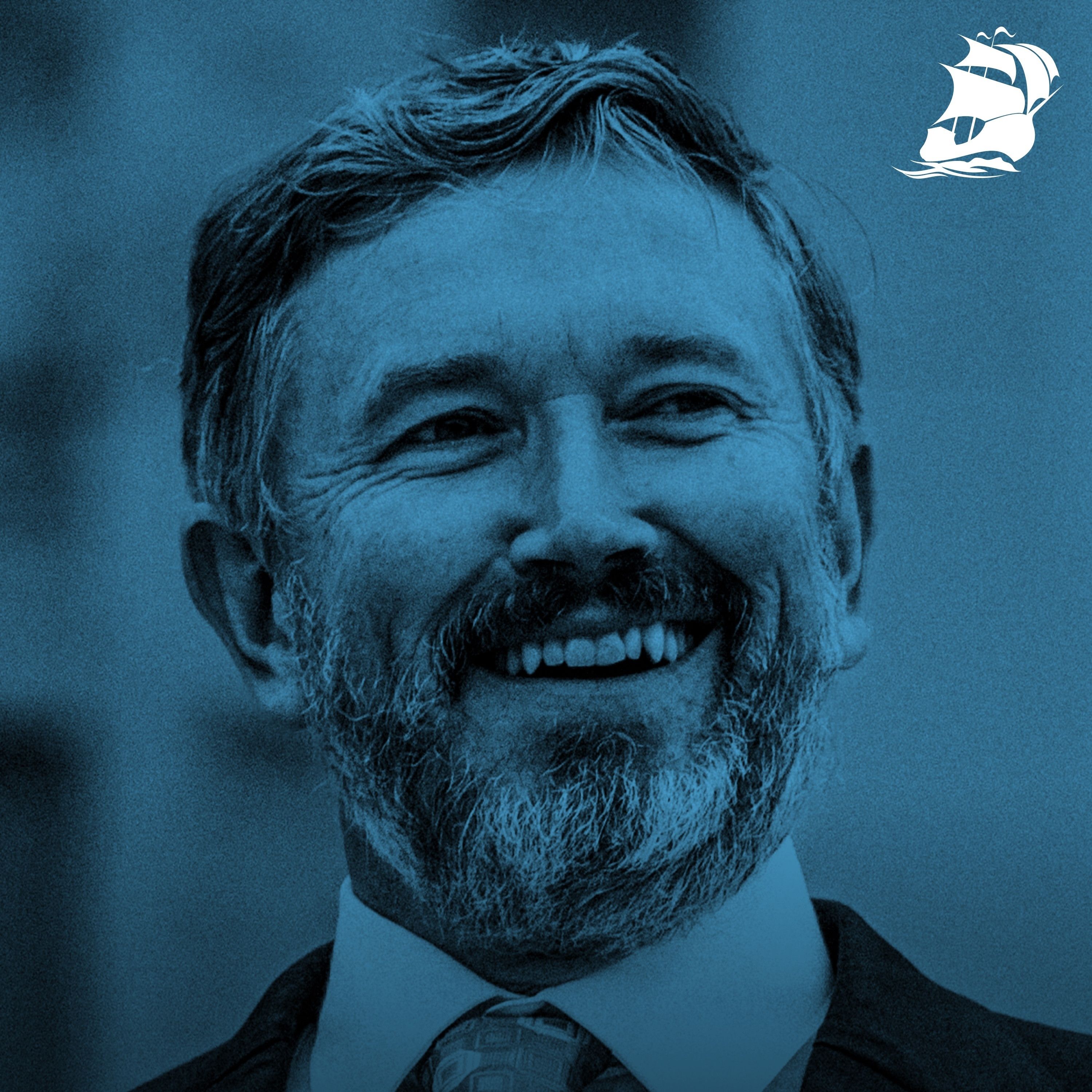
Overview of The Bulwark Podcast — "Sam Stein: The Ridiculously Unserious President"
Tim Miller interviews Sam (Samuel) Stein, managing editor of The Bulwark. The conversation mixes reporterly take, political critique and dark humor as they parse two big themes: the administration’s handling of the war with Iran (strategy, cost, civilian harm, messaging) and the broader dysfunction of the Trump-era governing project (immigration policy, cabinet chaos, political theater). They close with the show’s recurring “cabinet rankings” segment and a tour through domestic political flashpoints.
Main topics & takeaways
1) War with Iran — facts, failures, and accountability
- Current situation: heavy casualties and displacement in the region — estimates noted: ~1,500 Iranians dead, eight U.S. soldiers killed; up to millions displaced (mentions UN and IEA reporting). Oil/transport disruptions: Iraq and Oman closed oil terminals after tanker attacks; largest supply disruption in history per IEA.
- Critique of rationale: Sam and Tim repeatedly question why the U.S. is escalating — no convincing public explanation. They doubt strategic thinking and present the most generous interpretation: the campaign was prompted by Israeli security concerns and Trump’s appetite for “things going boom.”
- Command-and-control and competence concerns: reporting suggests poor planning, failure to consult experts (JVL and Bill Kristol criticized the operation as run by incompetents), and predictable Iranian asymmetric responses not adequately anticipated.
- Civilian harm and targeting errors: the bombing of a girls’ school is discussed; preliminary U.S. reviews suggest U.S. responsibility (“we fucked up”). The hosts reject administration denials and call the lack of empathy and basic acknowledgement unconscionable.
- AI targeting question: early speculation about AI hallucination causing the strike is largely dismissed; available reporting points to outdated targeting data rather than an autonomous AI error — still, they say we should verify whether defense AI systems hallucinate targets.
- Costs: first week of the war cost estimated at $11.3 billion (~$1.5B/day); concerns about fiscal impact and broader economic effects.
Notable quote:
- “If you’re going to kill somebody, it’s a good start to have a reason.”
2) Economic & supply-chain fallout
- Energy: tanker attacks and oil-terminal closures are already affecting global supply and prices.
- Fertilizer (urea) dependency: the Port of New Orleans stores much imported urea (fertilizer); ~45% of tradable urea comes from the Persian Gulf. Disruptions will raise costs for farmers and raise grocery prices via higher fuel and fertilizer costs.
- Agricultural labor & “crawfish crisis”: seasonal-worker visa shortages are forcing Louisiana processing plants idle during peak crawfish season — an anecdote Tim treats as emblematic: produce and fruit prices will rise; migrant seasonal labor policies are a practical economic problem.
- Broader inflation implications: just as inflation had been cooling, war-driven energy and agricultural disruptions may reverse progress, hurting ordinary Americans.
Notable line:
- “Don’t fuck with crawfish.” (Tim’s personal rallying cry about supply impacts)
3) Immigration policy, DHS leadership & funding stalemate
- New DHS pick: discussion of Mark Wayne Mullen (name variants noted) replacing Kristi Noem-era figures; scandals around Noem get more attention than policy change. Sam argues policy continuity is likely — hardline practices remain intact despite personnel swap.
- Policy implications: Mullen’s reported views (support for masked ICE agents, National Guard deployments, opposition to judicial warrants) suggest little substantive change.
- Funding and politics: DHS is in a partial funding shutdown; confirmations (including Mullen) will intersect with debates over DHS funding. Senate dynamics post-rule changes make bargaining different than past practice — less incentive for cross-party compromises.
- Public optics matter: Sam notes that some immigration abuses became politically salient because videos made them visible — changing faces without changing policy may not reduce public revulsion.
4) Domestic politics, GOP dynamics, and presidential unseriousness
- Trump’s behavior: portrayed as inattentive, focused on headlines and spectacle (rallies, celebrity encounters, golf), and prone to self-aggrandizing misstatements (e.g., claiming “we’ve already won”).
- Trump-era performative rituals: the shoe-gifting incident (Trump giving matching shoes as a “loyalty” test) is picked apart as humiliating, theatrical loyalty enforcement.
- 2028 “hot stove”: Mar-a-Lago conversations about successors (rumors of Marco Rubio being popular among the crowd, speculation Trump may anoint a successor; Don Jr., JD Vance dynamics).
- Key primaries and potential grifts:
- Oklahoma Senate vacancy: governor Kevin Stitt considering appointees including oil magnate Harold Hamm — Sam frames this as “buying a Senate seat” risk.
- Texas Republican runoff: John Cornyn vs. Ken Paxton dynamics complicated by Tribune on Trump endorsement, pressure to demolish the filibuster for partisan aims.
- Filibuster: debate over whether to protect or reform it; hosts express mixed views—filibuster is misused now but eliminating it would be consequential.
5) Cabinet rankings (recurring segment)
- Purpose: a satirical/serious gauge of who’s most harmful/stupid/inept in the cabinet.
- Pool of names discussed included: Marco Rubio, Scott Bessent, Pete Hegseth, Pam Bondi, Brooke Rollins, Howard Nutlik (Nutlick/Nutluck variants), Lori Chavez DeRemer, RFK Jr., Chris Wright, Tulsi Gabbard, Doug Burgum, John Ratcliffe, others.
- Finalized “worst five” lists (hosts’ differing picks):
- Sam’s top five worst: 1) Pete Hegseth, 2) Marco Rubio, 3) Pam Bondi, 4) Howard Nutlick, 5) RFK Jr.
- Tim’s top five worst: 1) Howard Nutlick (Epstein-related deception), 2) Tulsi Gabbard (outsider behavior—Fulton County), 3) RFK Jr., 4) Pam Bondi, 5) Pete Hegseth.
- Themes: corruption, incompetence, public-health harms (RFK and reduced vaccine seriousness), and optics matter (public resentment over egregious behavior).
Notable moments & quotes
- Sam on the administration’s war rationale: “I can’t accept it because it’s hard to understand what any of it is for.”
- On the school bombing: “Whether it was cloud or out-of-date targeting…our own review…says we fucked up. We did this. We are responsible.”
- Tim on immigration & seasonal labor: “This is a win-win, frankly, for the U.S. society.”
- On Trump’s priorities: repeated mockery of his fixation on spectacle (YMCA dancing, meeting WWE personalities, sneaker gifts).
Actionable items, suggestions & recommended follow-ups (from the podcast)
- Follow Bulwark’s Takes feed and Sam’s reporting for deeper daily coverage and analysis.
- Watch reporting on the girls’ school strike and official U.S. investigations for accountability updates.
- Monitor supply-chain impacts: fertilizer (urea) imports and seasonal-labor visa policy—expect grocery price/produce impacts and regionalized food supply stress.
- Track DHS funding negotiations and Mullen confirmation for immigration policy changes or continuity.
- Keep an eye on Oklahoma and Texas Senate developments (appointments and primaries) — possible cronyism and filibuster fights.
- Expect more political theater from the White House; don’t conflate spectacle with strategy.
Tone & framing
- The episode’s moral/analytic frame: the administration is unserious and often incompetent; theatrical media moments mask (but don’t substitute for) governing competence. The hosts blend frustration, sarcasm and policy critique — stressing the human cost of bad decisions (civilians dead/displaced, economic harm, public-health setbacks).
Sponsors & segments
- Several sponsor reads/supporting ads sprinkled through the episode (Delete.me, 3 Day Blinds, TurboTax full-service, LifeLock, Venmo Stash). Hosts paused for these but returned to policy discussion.
Quick summary (one-paragraph)
Sam Stein and Tim Miller argue the administration’s Iran policy lacks a coherent public rationale, is being prosecuted clumsily, and is producing large human and economic costs — from displaced civilians and a likely U.S. strike responsibility to global oil and fertilizer shocks. They tie those failures to a broader pattern of Trump-era governance: spectacle over substance, personnel changes without policy reform, immigration dysfunction (seasonal-worker shortage hurting agriculture), and opportunistic politics. The show closes with a tongue-in-cheek “worst cabinet members” ranking that doubles as a critique of corruption and incompetence across departments.